
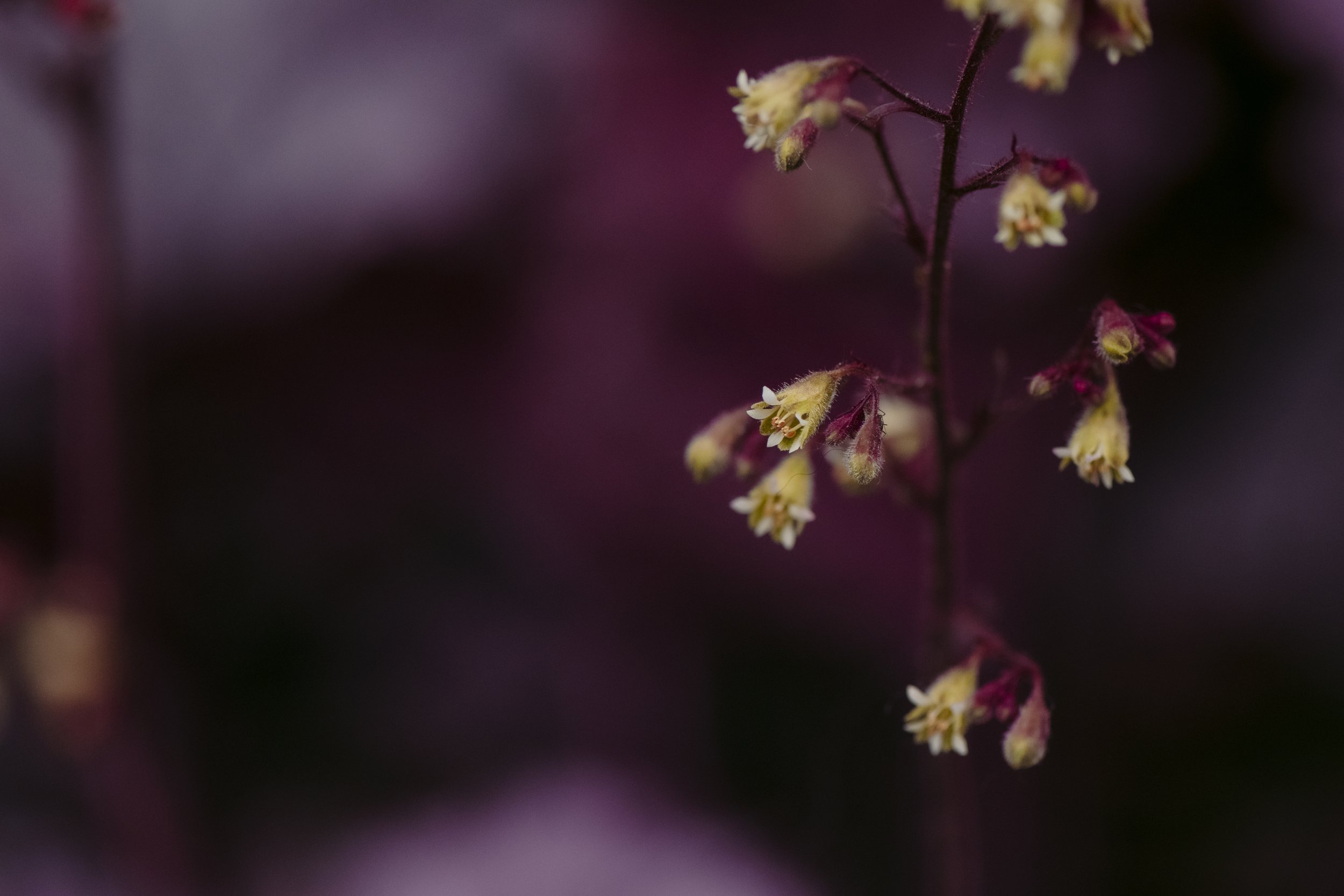


The Dye Garden…
The Dye Garden is the second iteration of our Makers’ themed garden, building on our 2025 show garden ‘The Maker’s Meadow’.
Our design offers ideas for creating a beautiful, climate- adapted garden curated with plants that can be used to create natural dyes. Our work draws design inspiration from artists, healers, and naturalists in an effort to rewild our urban spaces. We aim to showcase the reciprocal relationship between ecological gardening and artistic endeavors, fueled by the optimism that guides our regenerative approach.
It is our hope that this garden offers a moment of peaceful reflection amidst the liminal space that exists within the cycles of nature — grief, rebirth and transformation — culminating in a renewed sense of hope that quietly germinates in anticipation of spring.
-
Our garden has been particularly inspired by the recent publication Shrouded in Light: Naturalistic Plantings Inspired by Wild Shrublandsby Kevin Phillips Williams and Michael Guidi of the Denver Botanical Gardens. The authors challenge our industry to embrace the lessons gleaned from wild spaces in terms of resilience and adaptation that honor the cyclical rhythms and relationships of the natural world.
The Mountain West settings displayed in Shrouded in Light relate to another inspirational text; Harvesting Color: How to Find Plants and Make Natural Dyes by Rebecca Burgess. The author explores the wild spaces of the Mountain West, Southwest and California using mostly native plants to wildcraft natural dyes that create beautiful textile displays.
Mix this enlivened attempt with a dash of alchemy, and we hope to create a space that is steeped in ancient practices that honor the abundance of spring and the seasonal, life-giving cycles of the natural world.
-
Our work is dedicated to the idea of rewilding the urban garden by prioritizing natural materials for low-impact garden and creative endeavors, a practice built upon centuries of wild-crafting now actively being reclaimed by modern ecological landscape designers and those designers like us that like to explore what is just slightly off the beaten path.
Our garden is nestled in the scrub/shrublands and woodlands of the mountain west as the setting for our garden. The palette of this region allows us to:
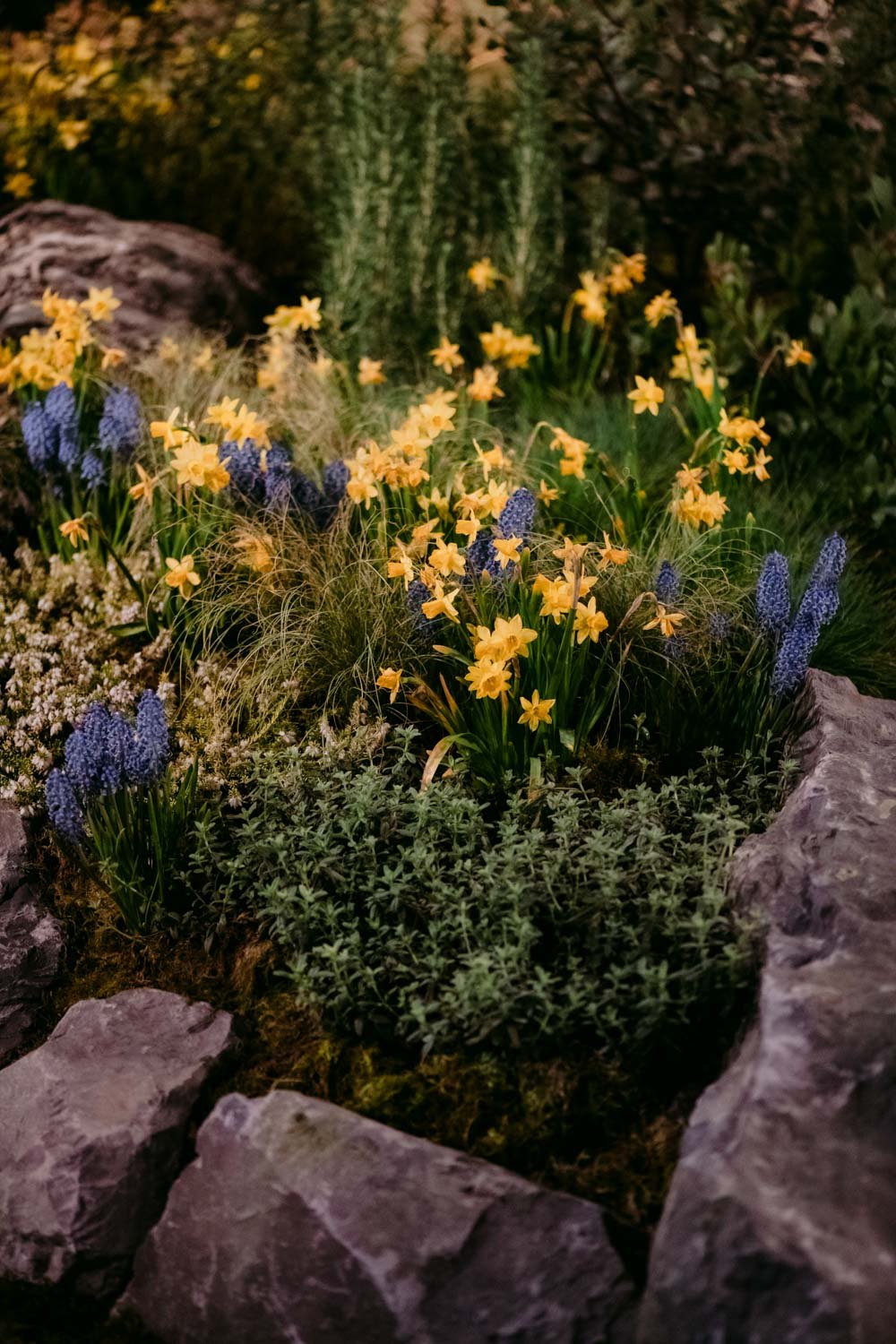
Create lush and unique climate adapted planting combinations inspired by the alpine-style scrub/shrublands and stone arrangements.
Exhibit a range of dye plants that can be added to the PNW garden that are both ecologically beneficial and offer opportunities for artistic endeavor.
Accentuate the reciprocal relationship between ecological gardens and our chosen forms of botanical artistry.
Prioritizing natural materials in landscape construction.
Embrace the concept of rewilding as a grounding principle in ecological home garden creation.
Thank you to all of our nursery sponsors for sharing the extensive plantings in the garden: LB Nursery, JB Nursery, T&L Nursery, Plants Northwest, Northwest Nurseries. A huge thank you to Mutual Materials and Pacific Topsoil that make this event possible!
-
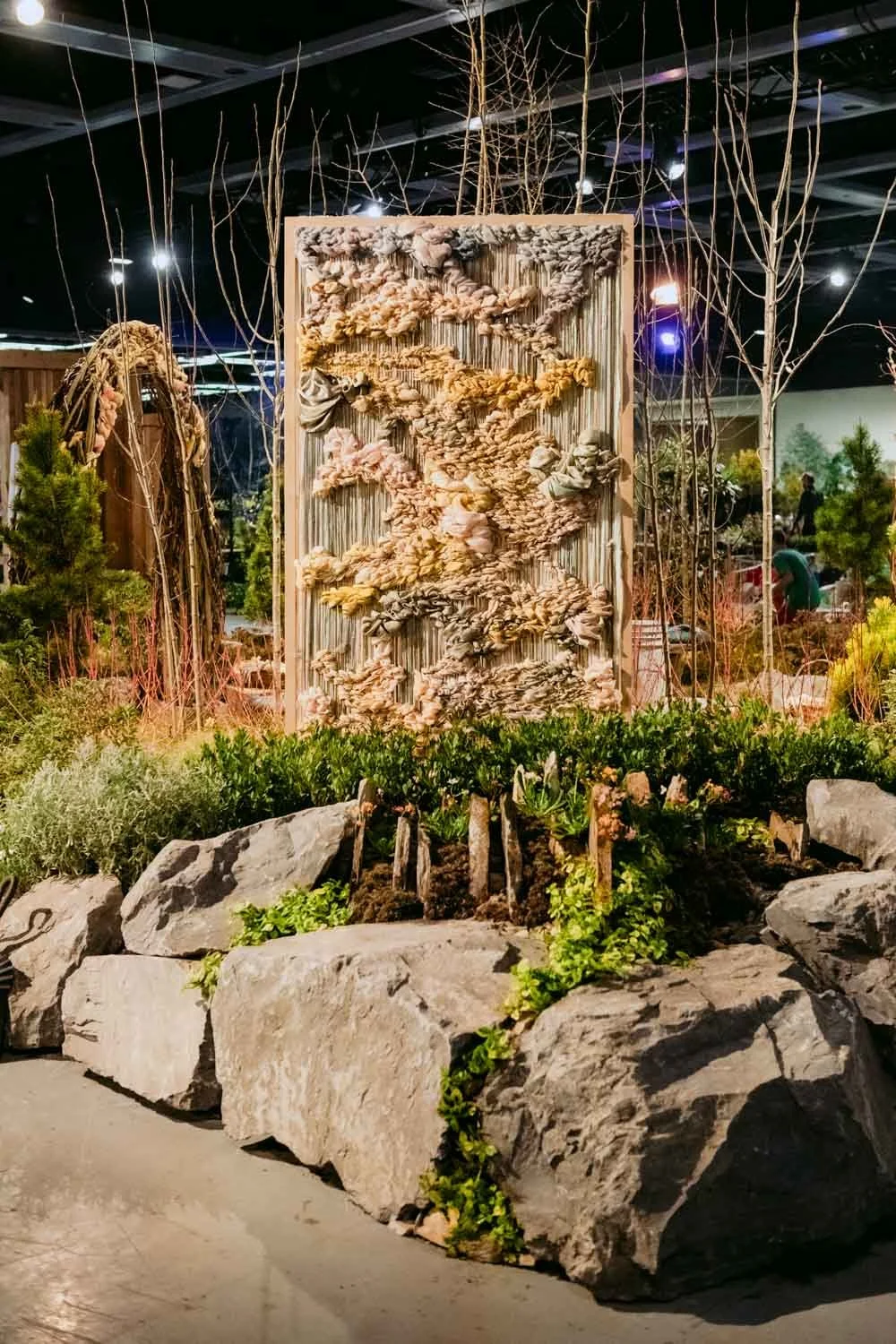
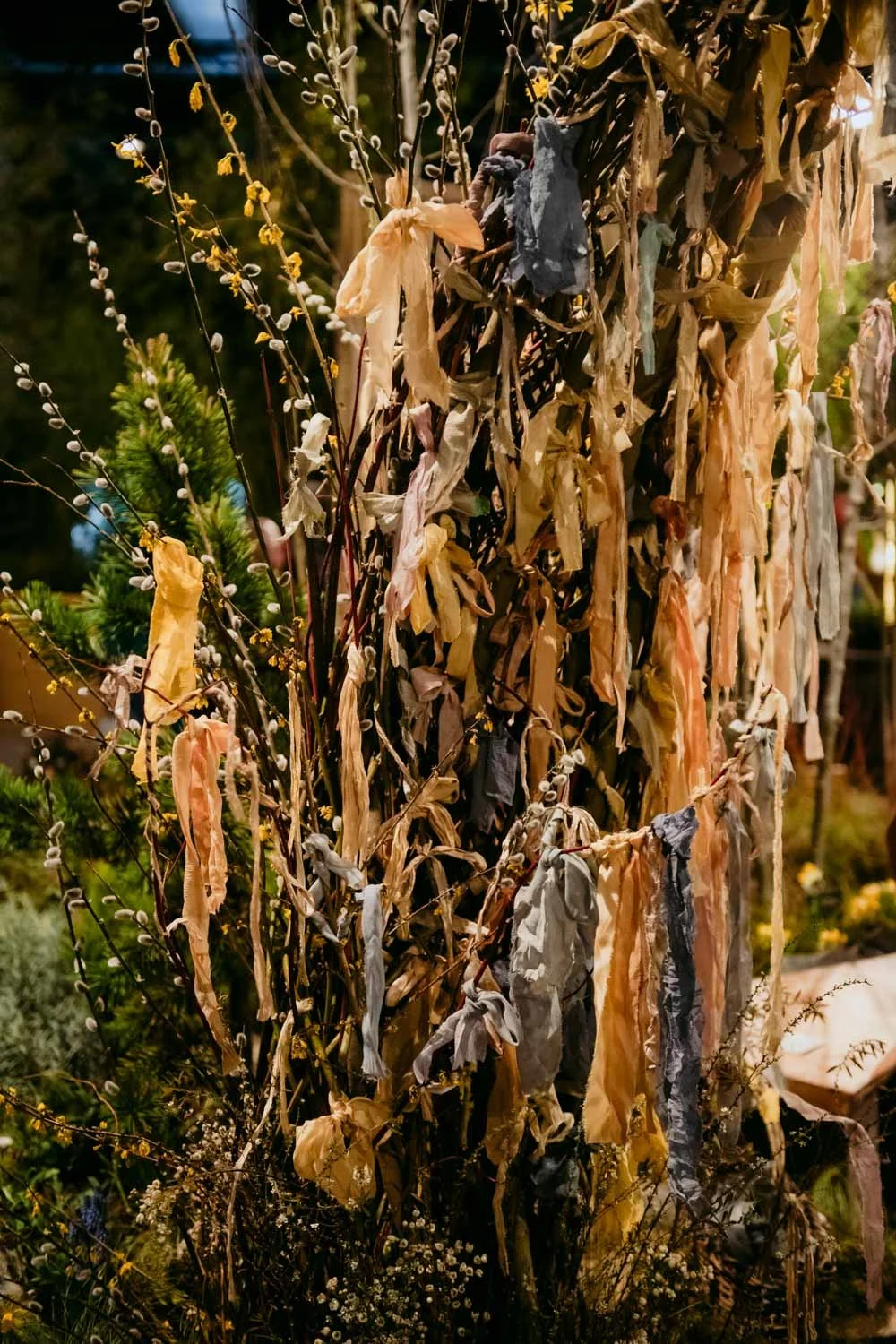
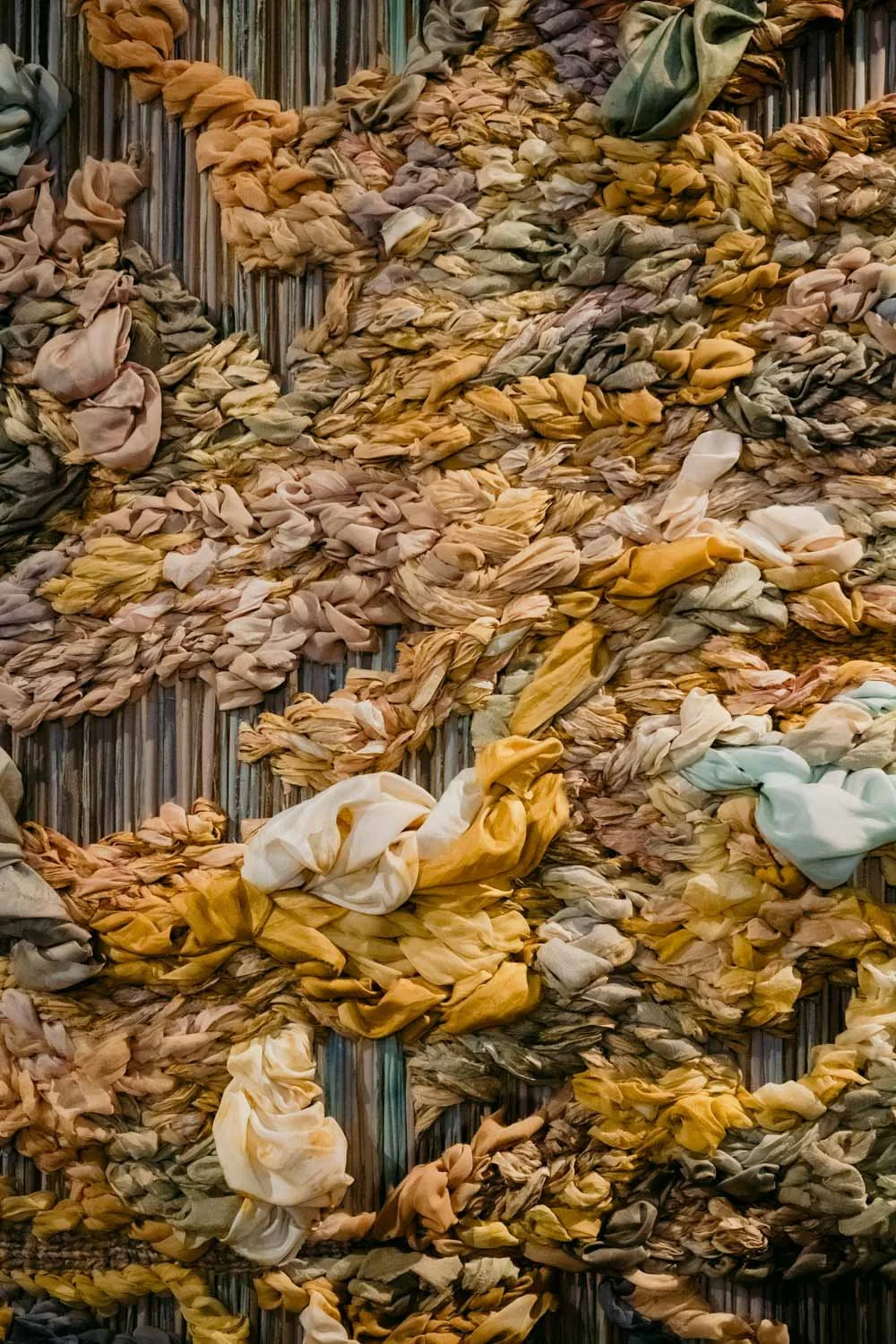
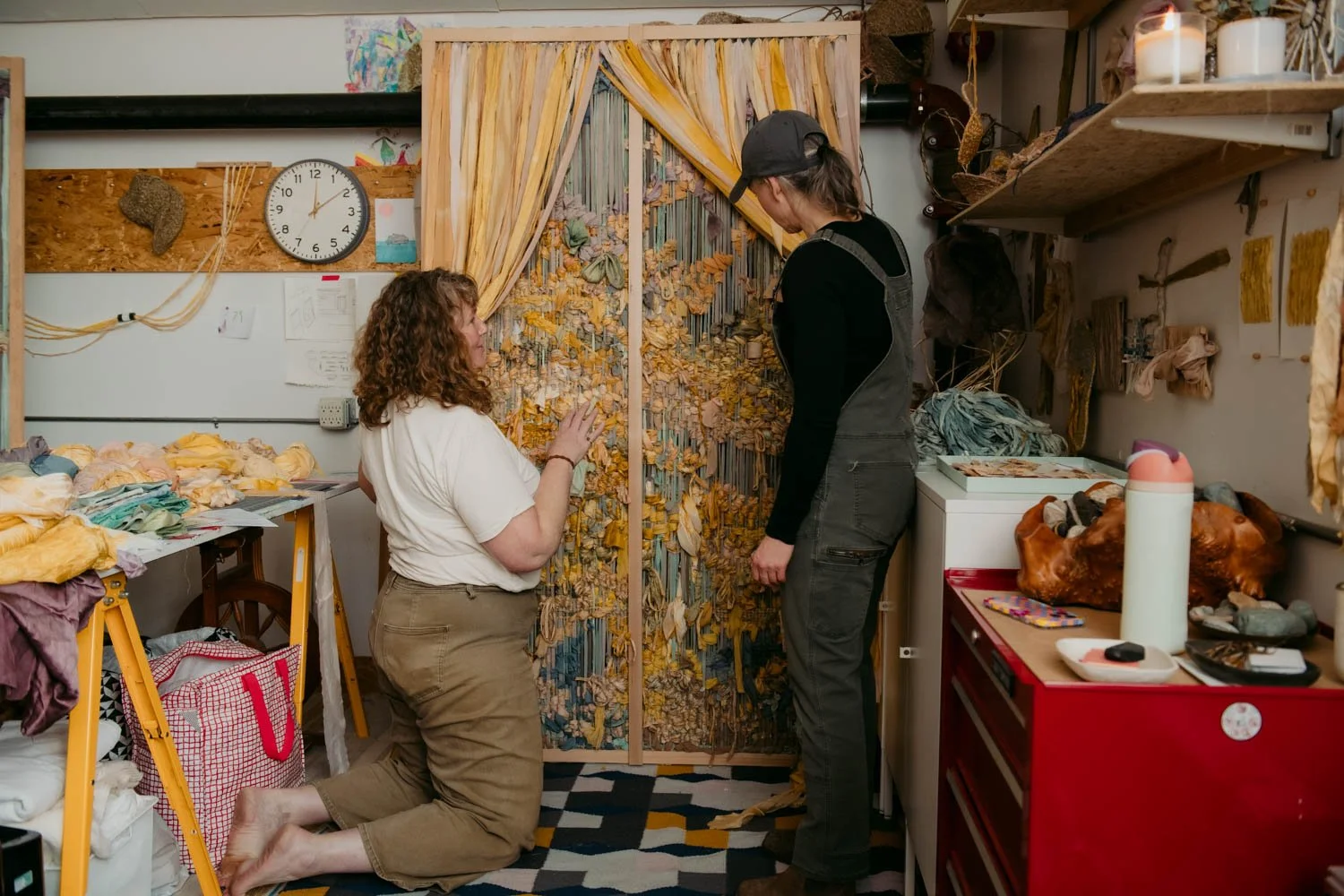
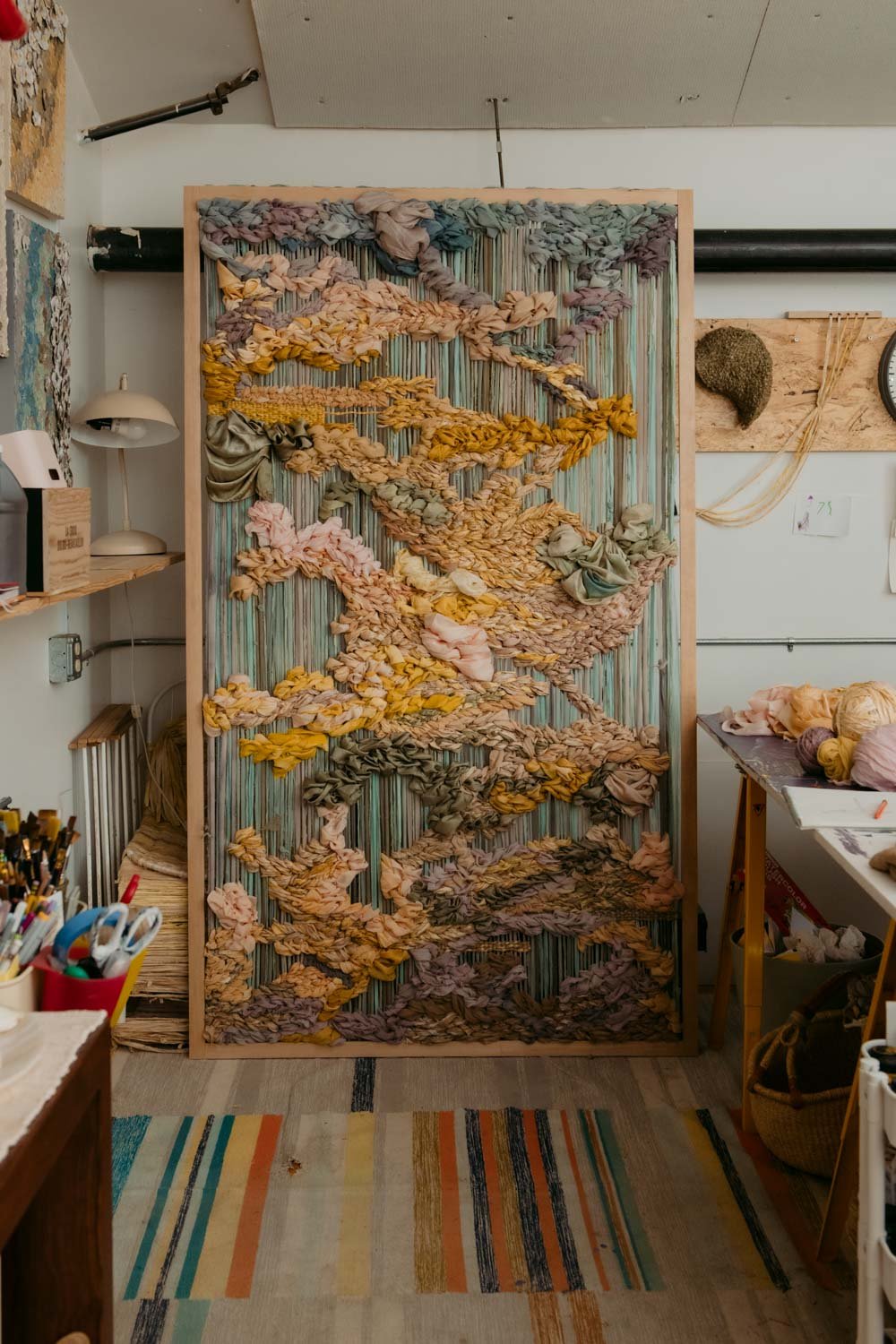
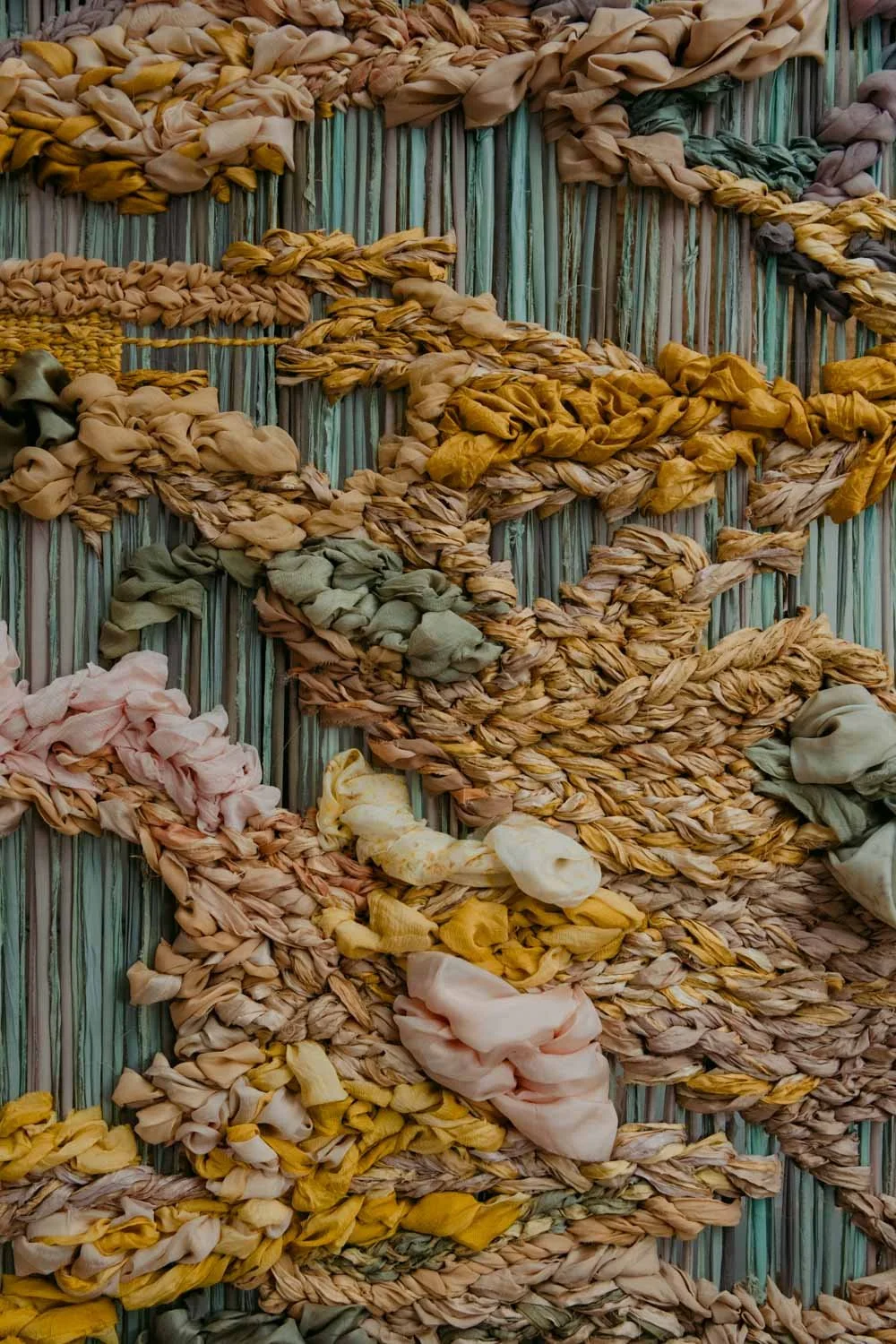
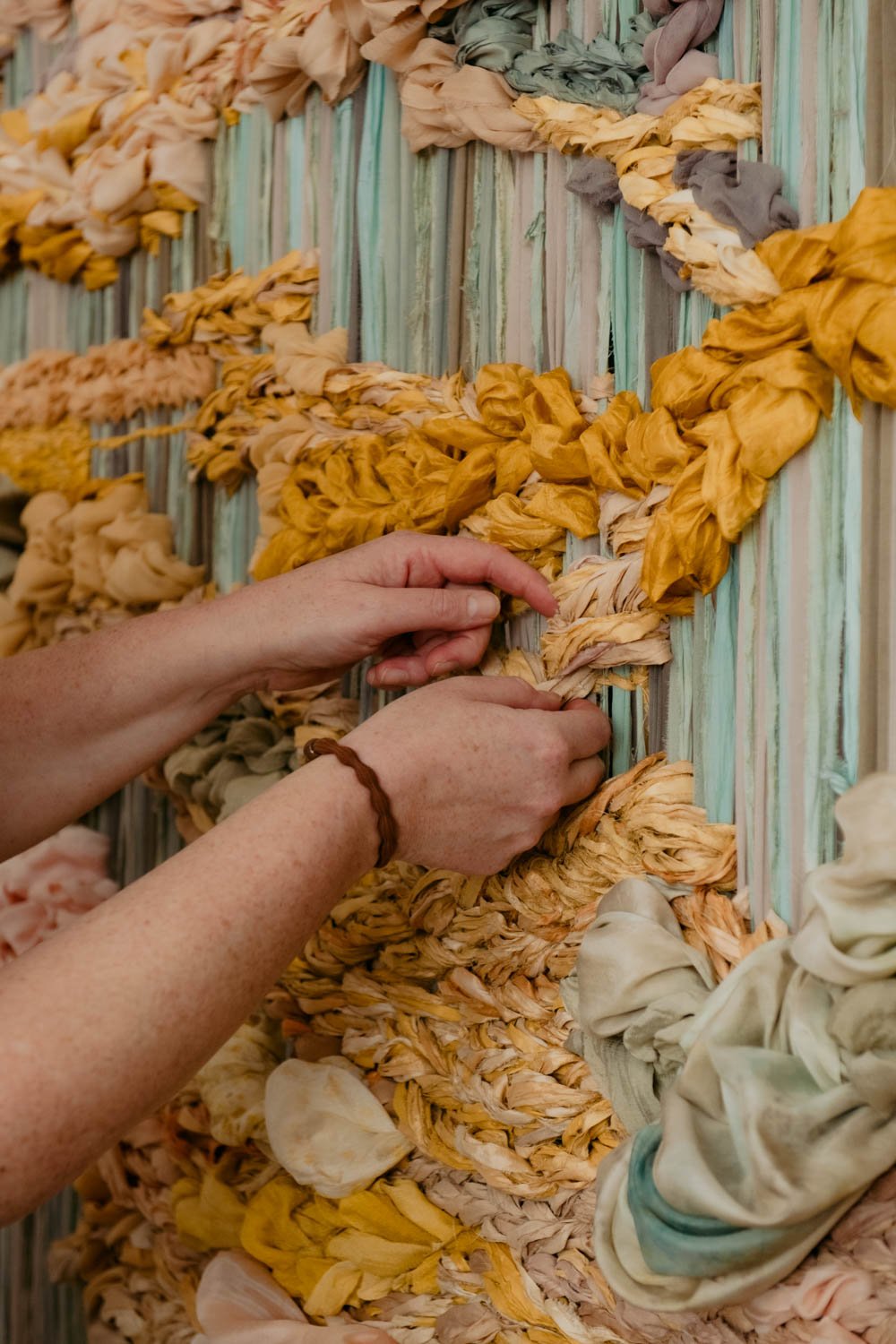
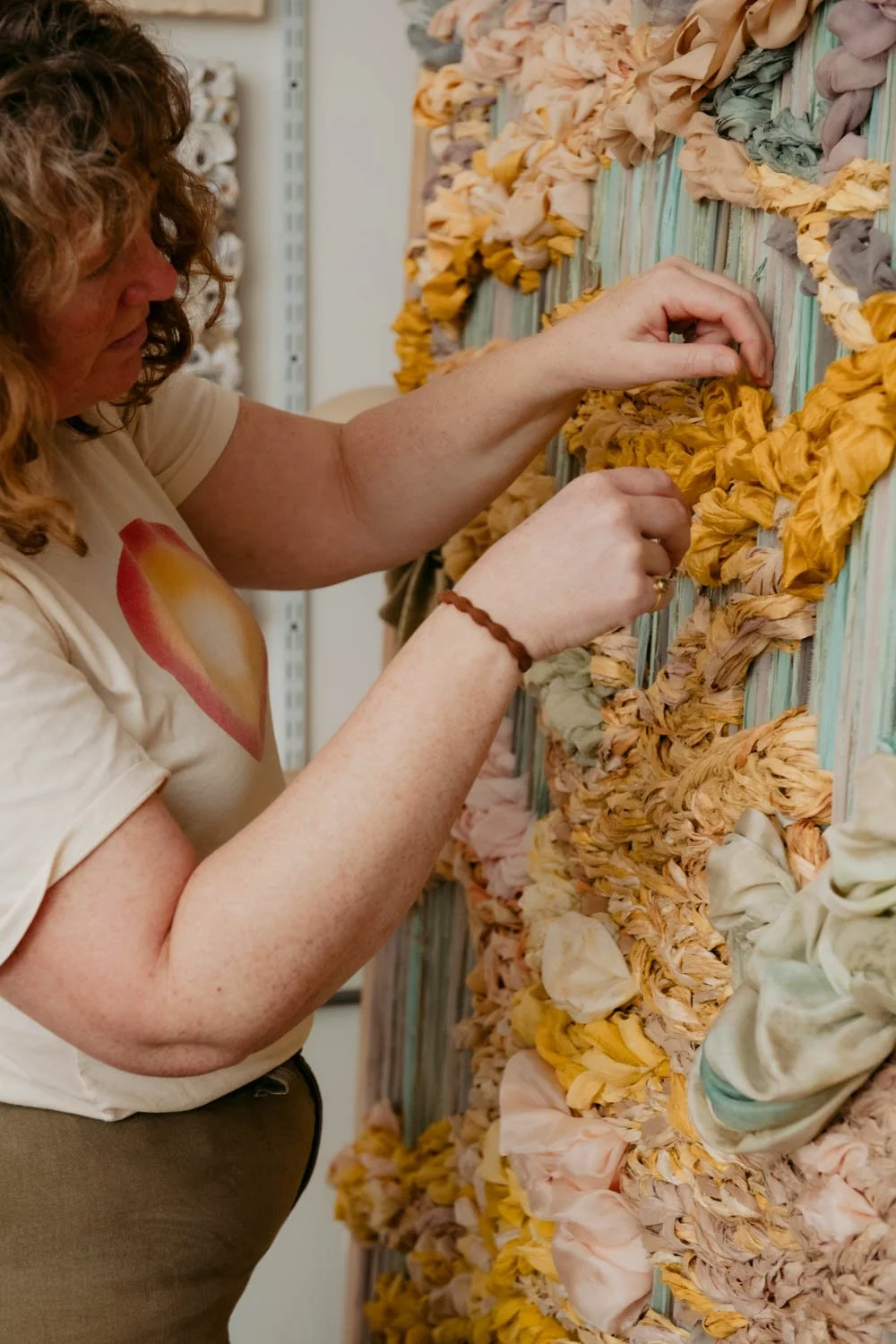
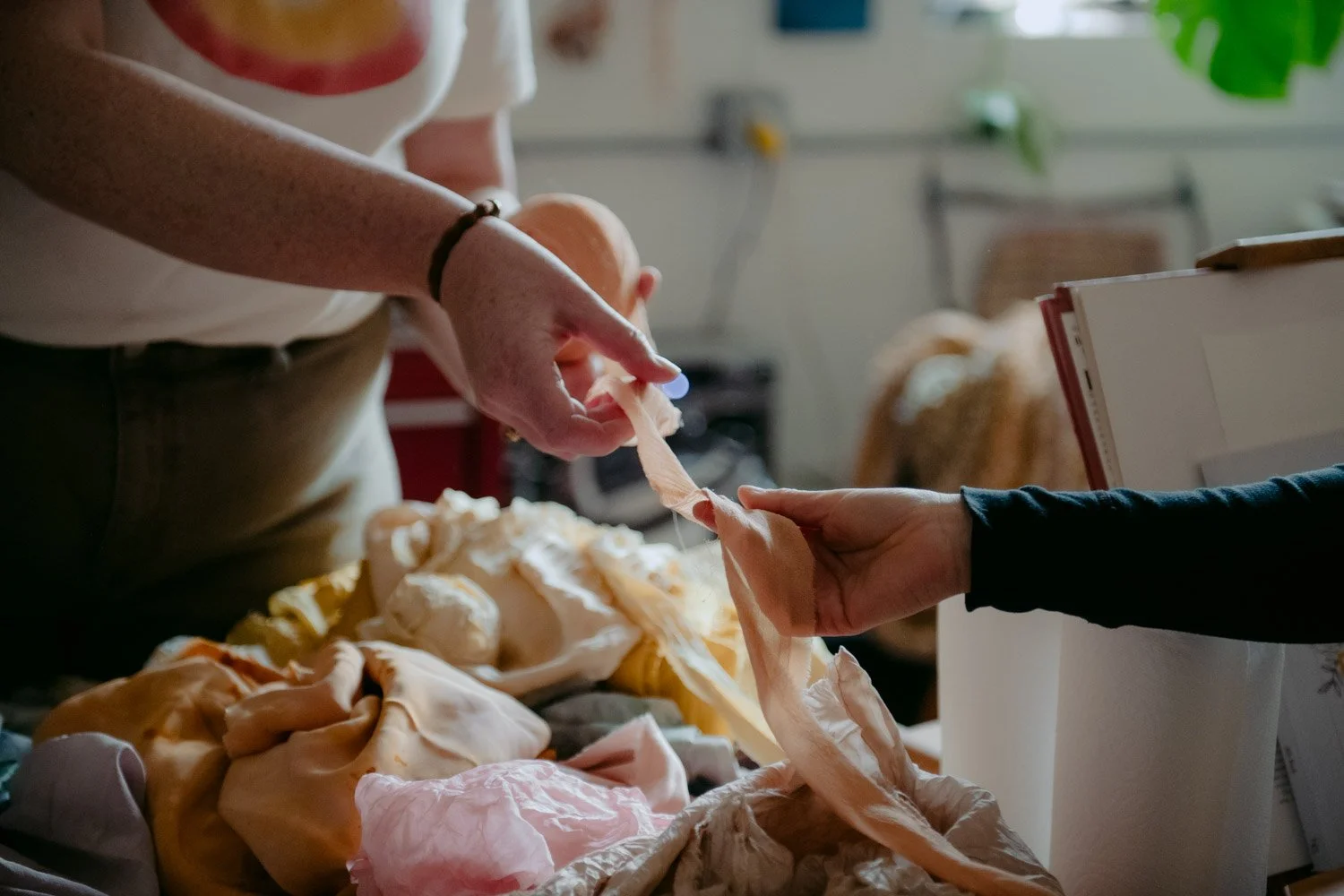
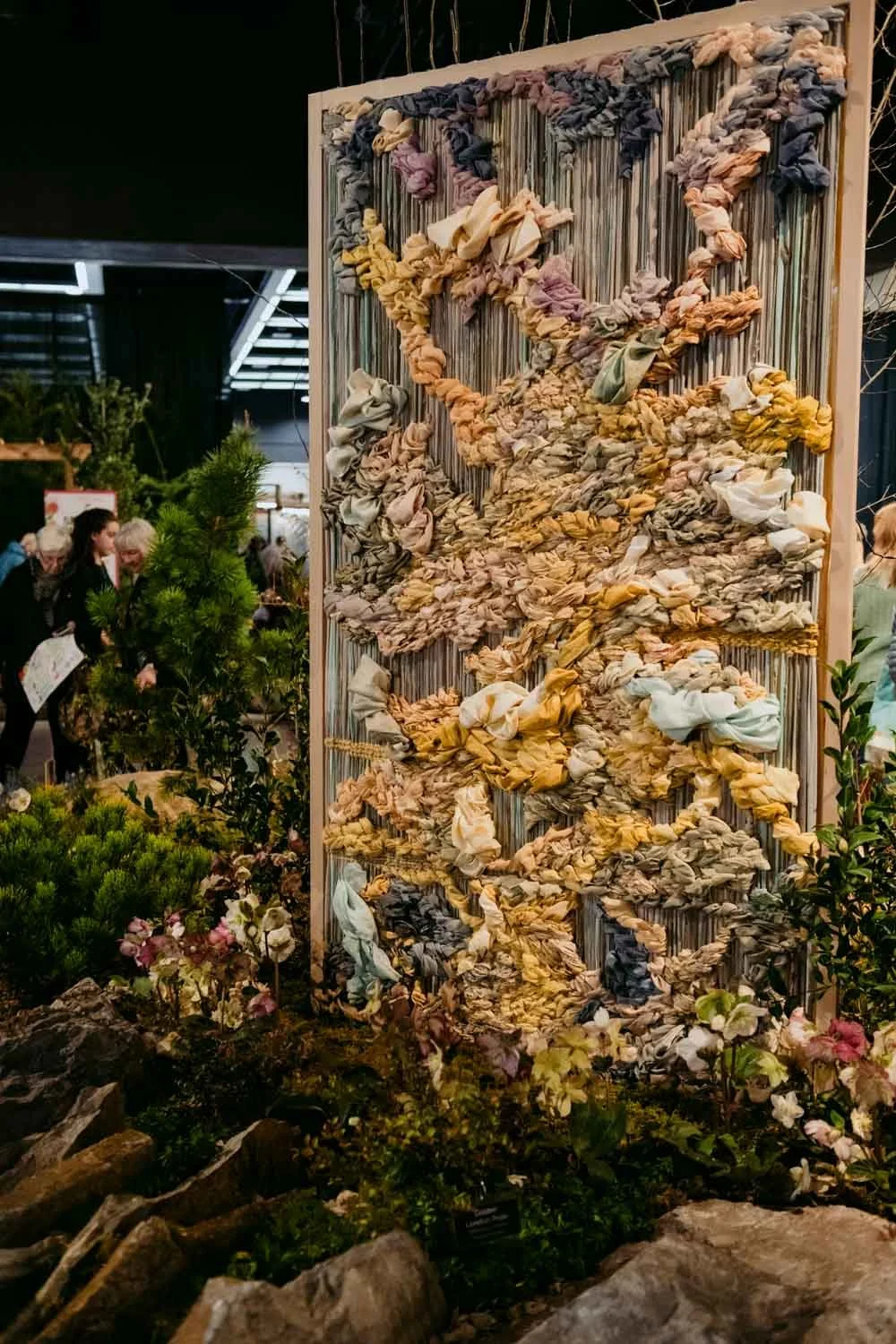
Naturally Dyed, Woven Silk Panels from Artist Rachel Grunig
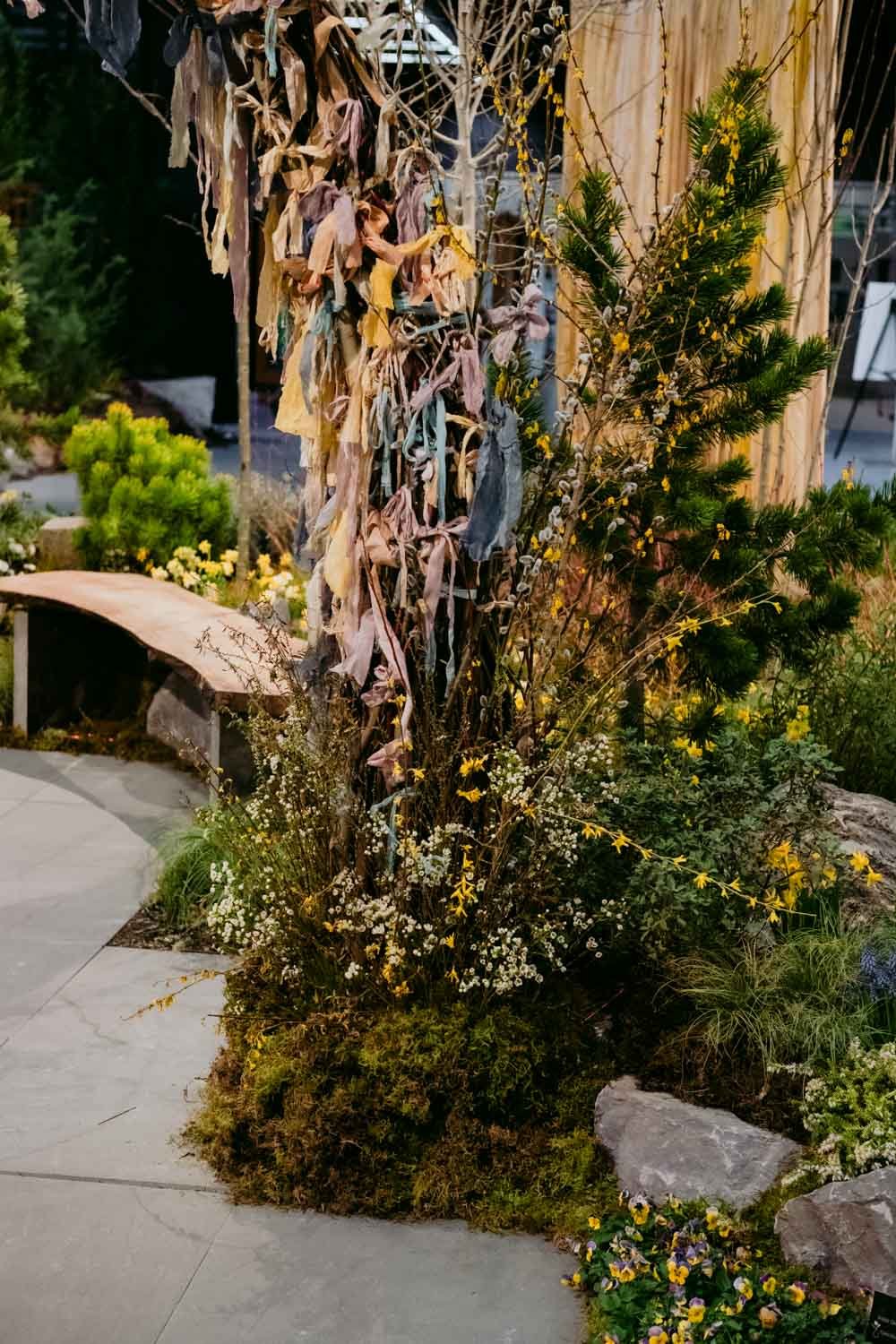
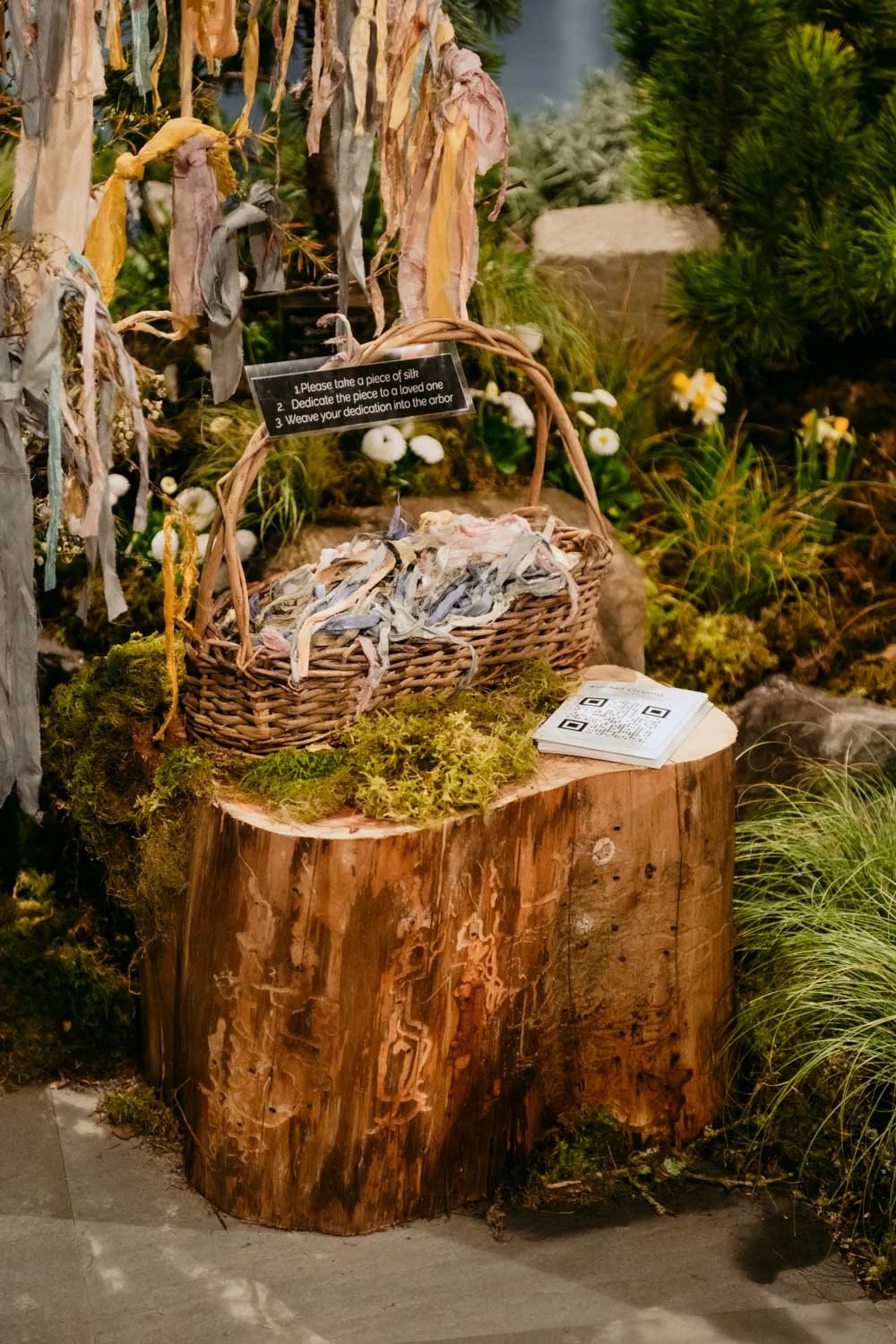
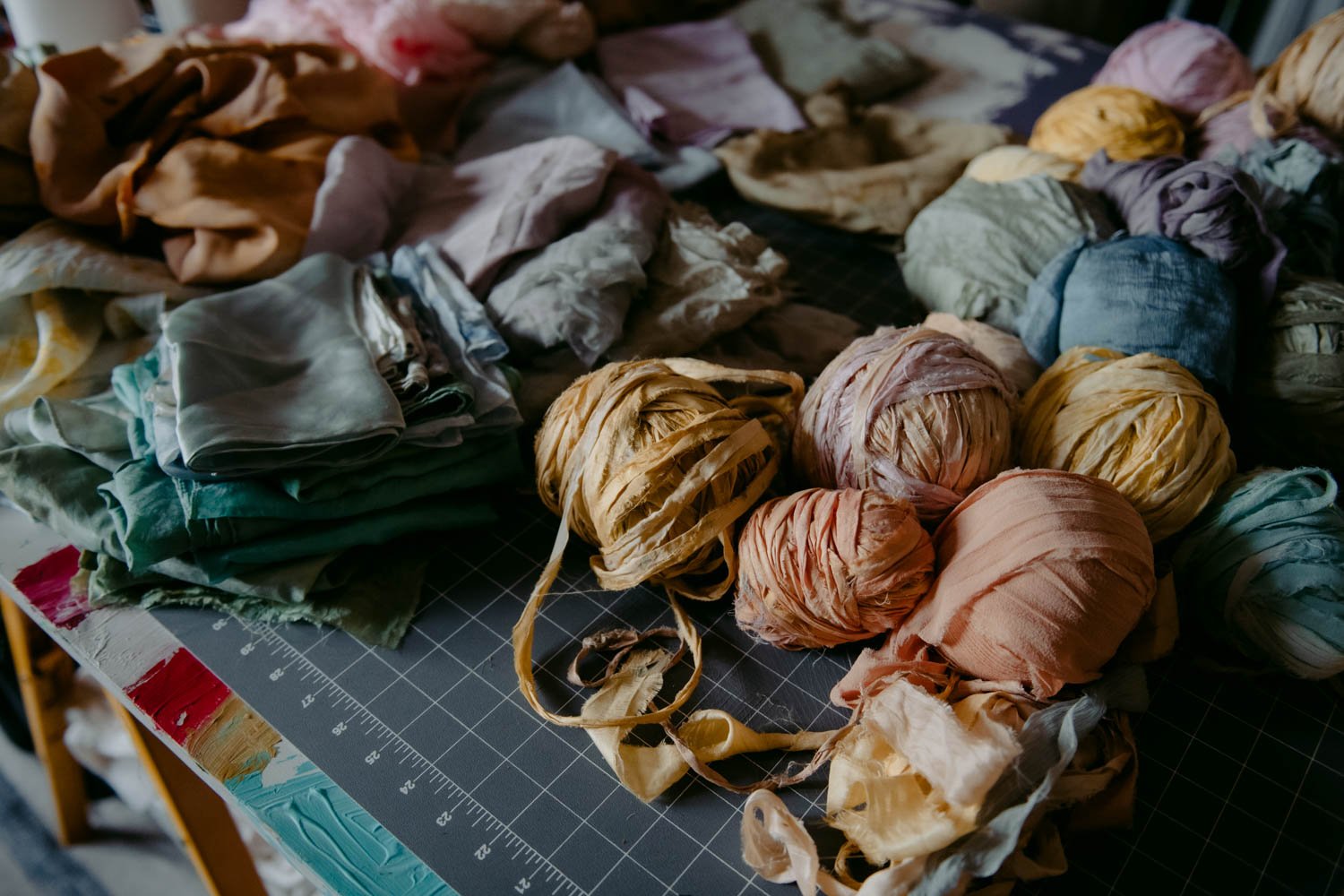
The Dye Garden will feature work from artist Rachel Grunig, whose ethereal works are created from foraged and cultivated plants rendered into natural dyes. Rachel uses dyes repurposed silk to create unique textile weavings and installations that emulate natural forms. We are honored to partner with this super talented creator!
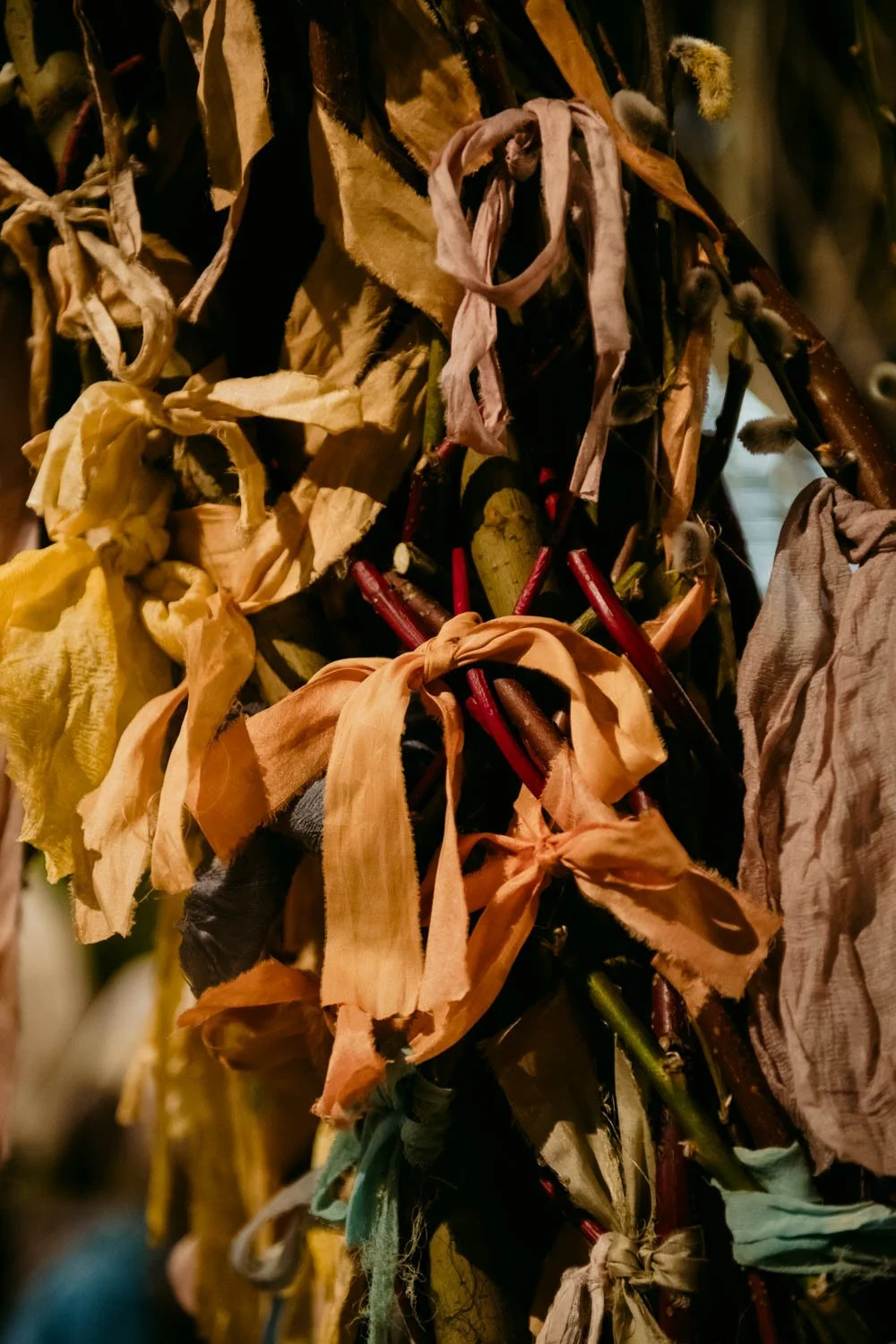
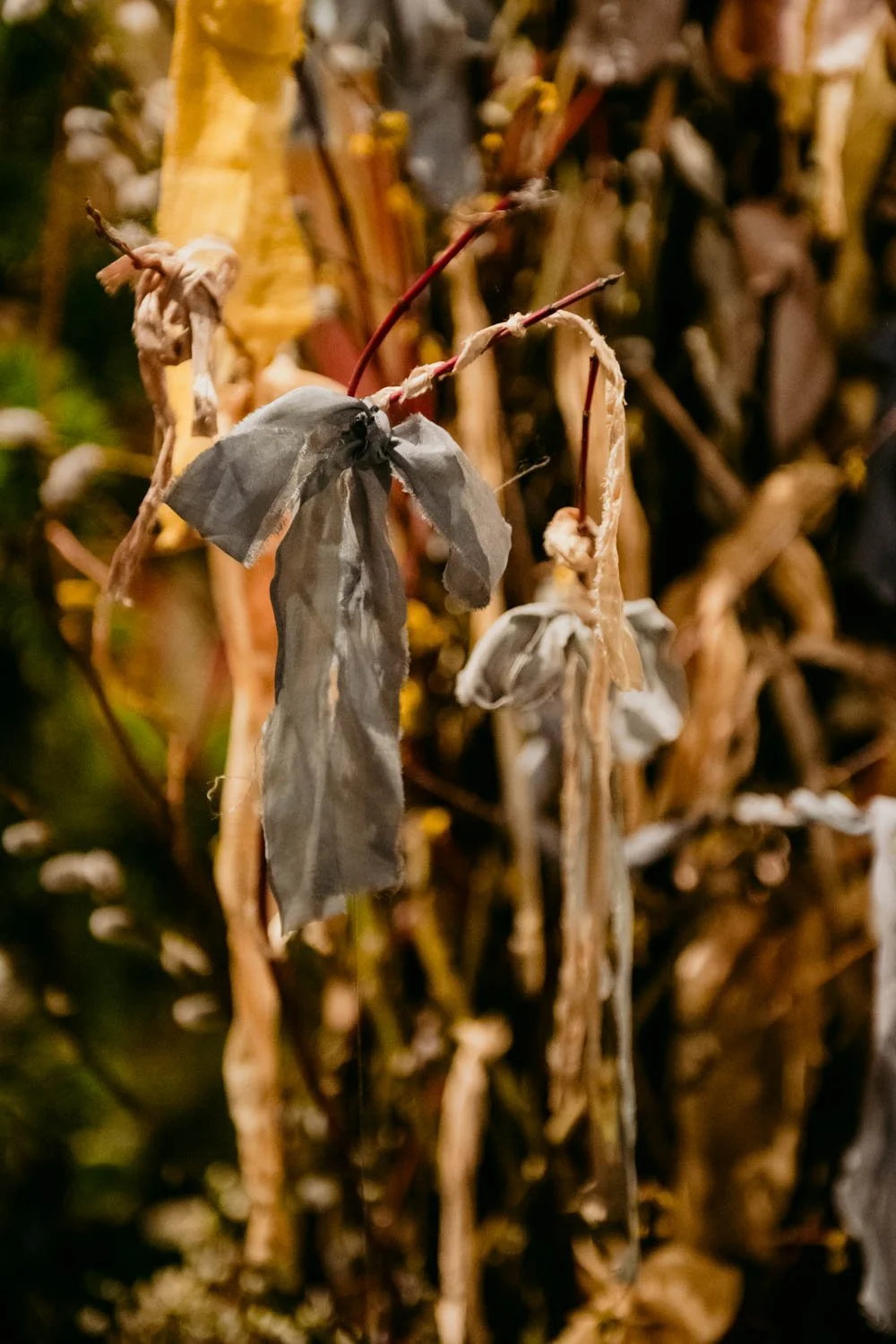
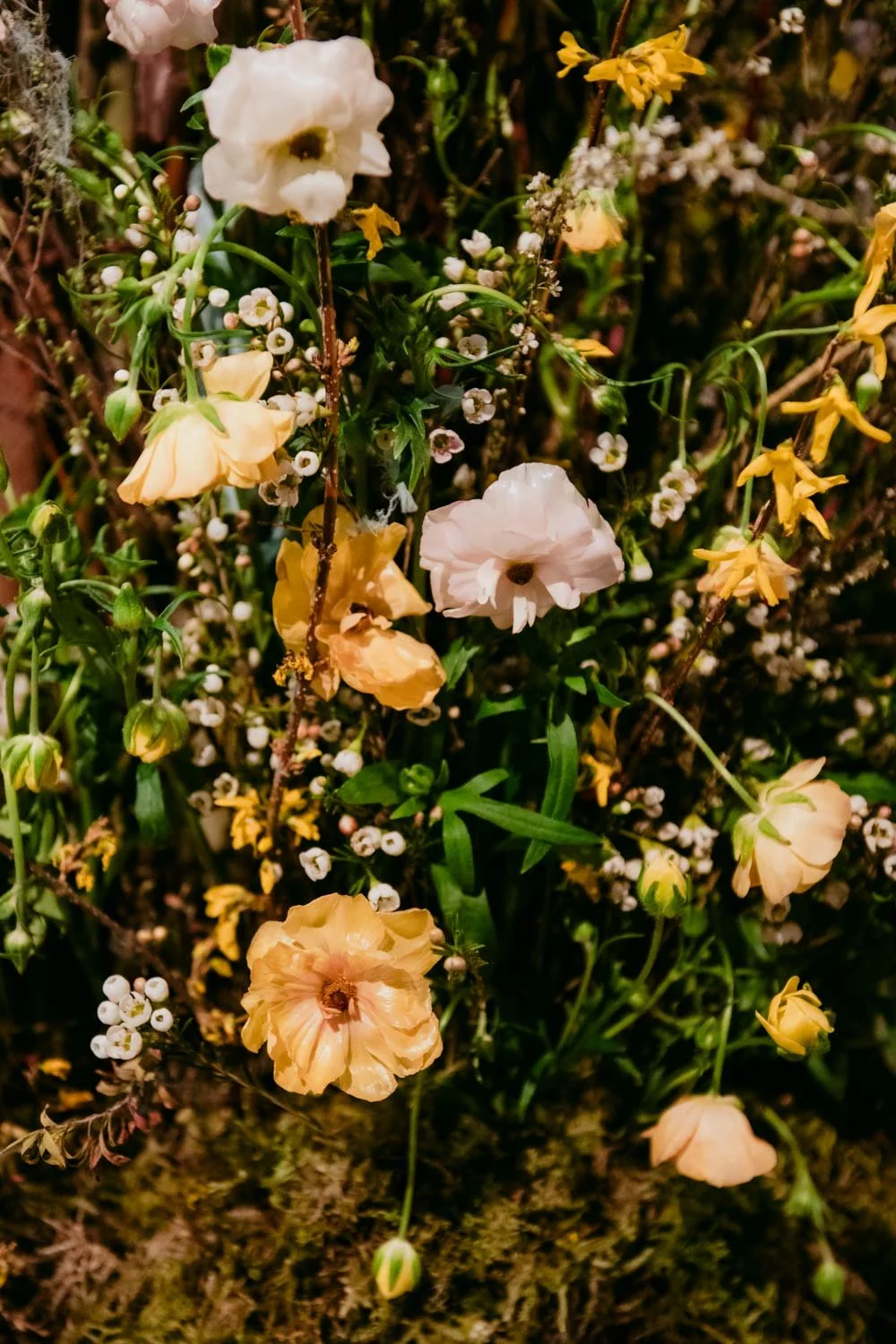
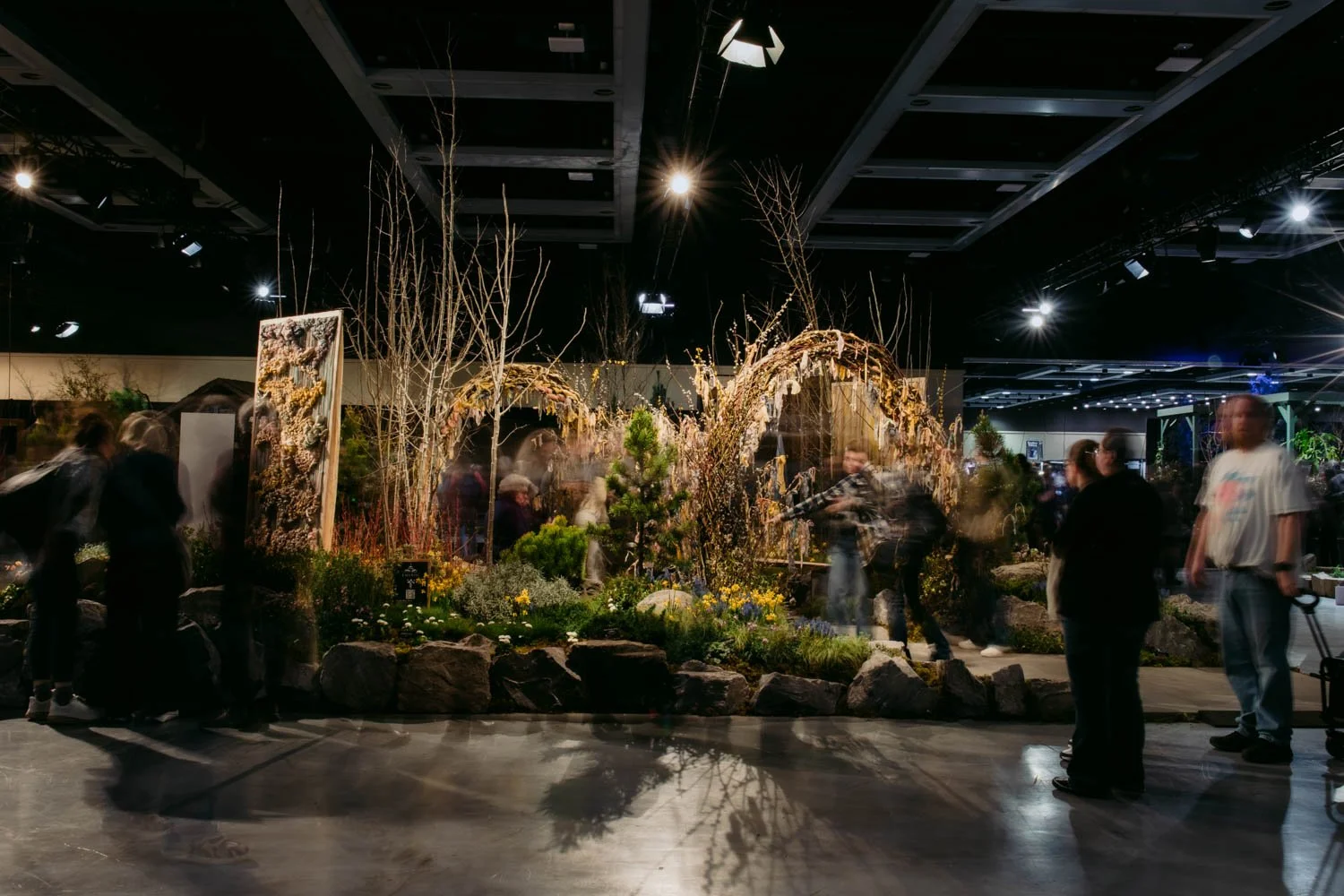
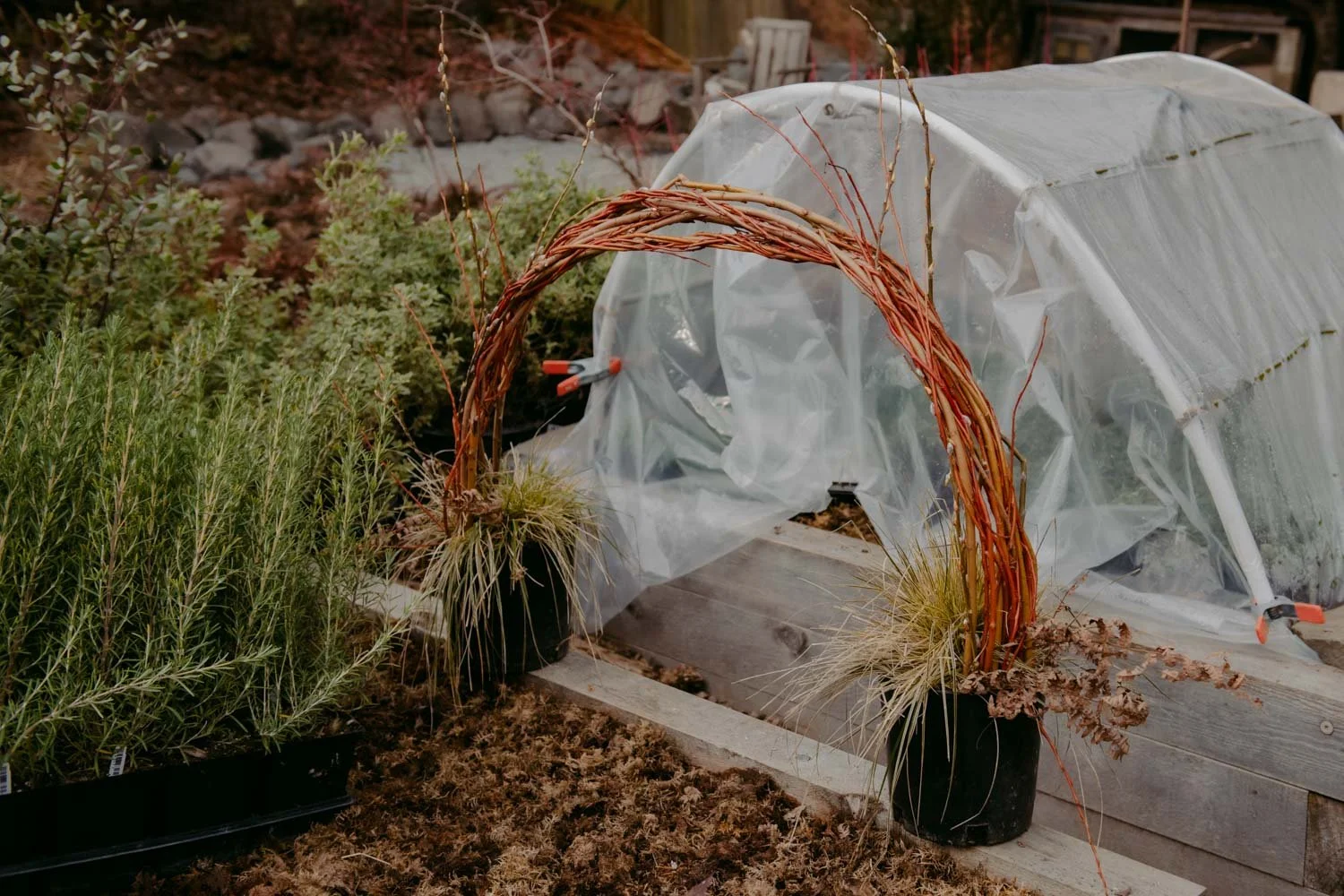
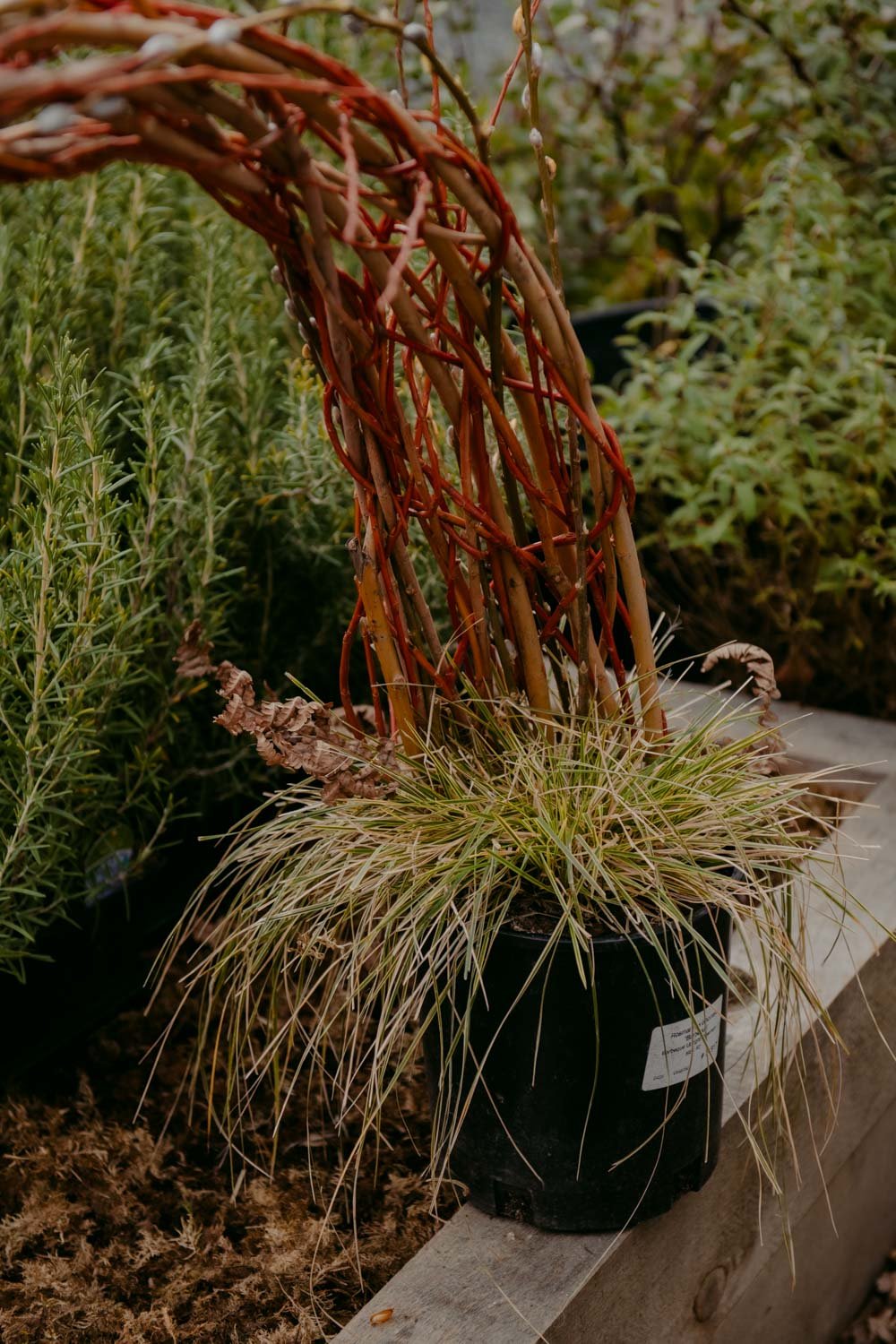
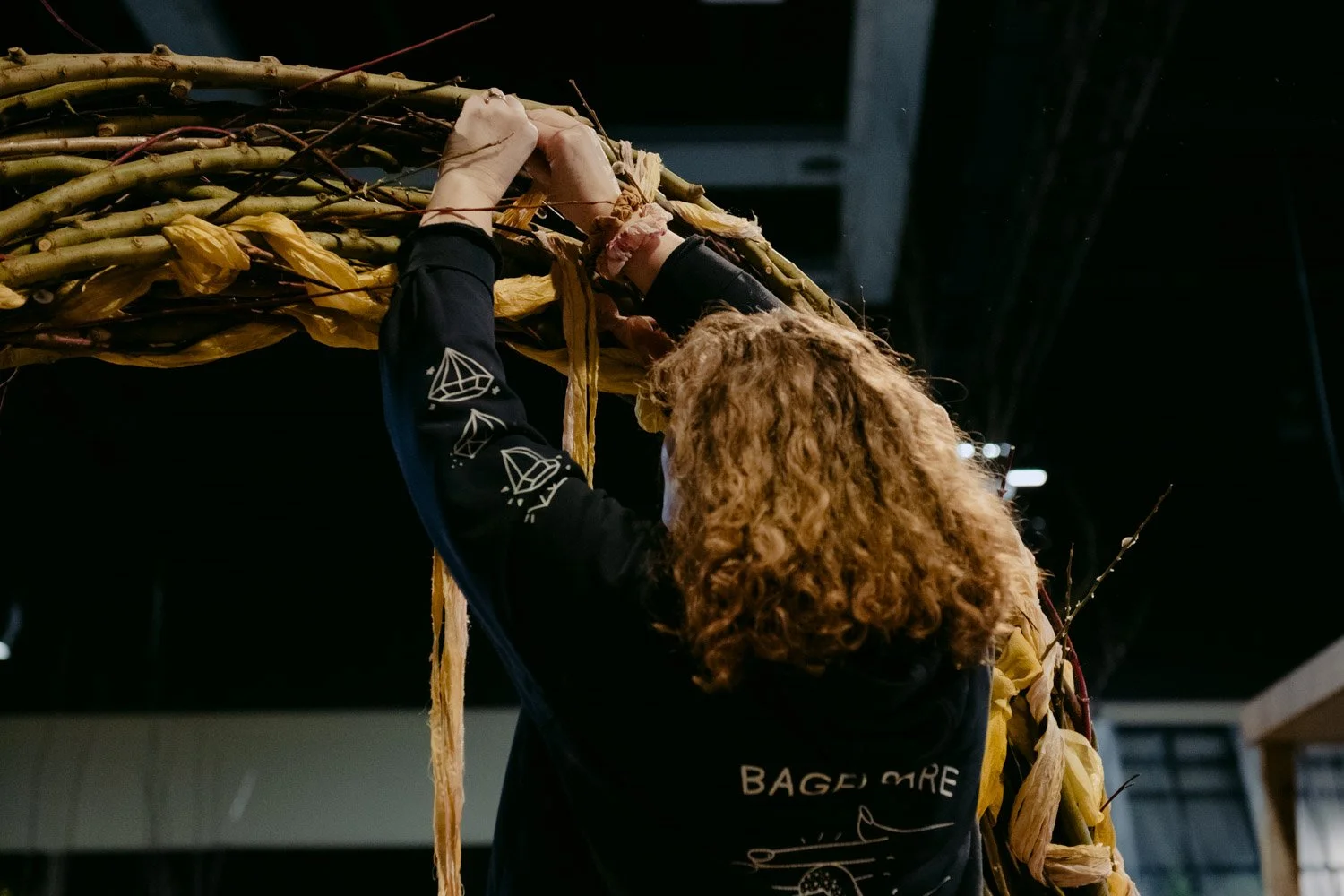
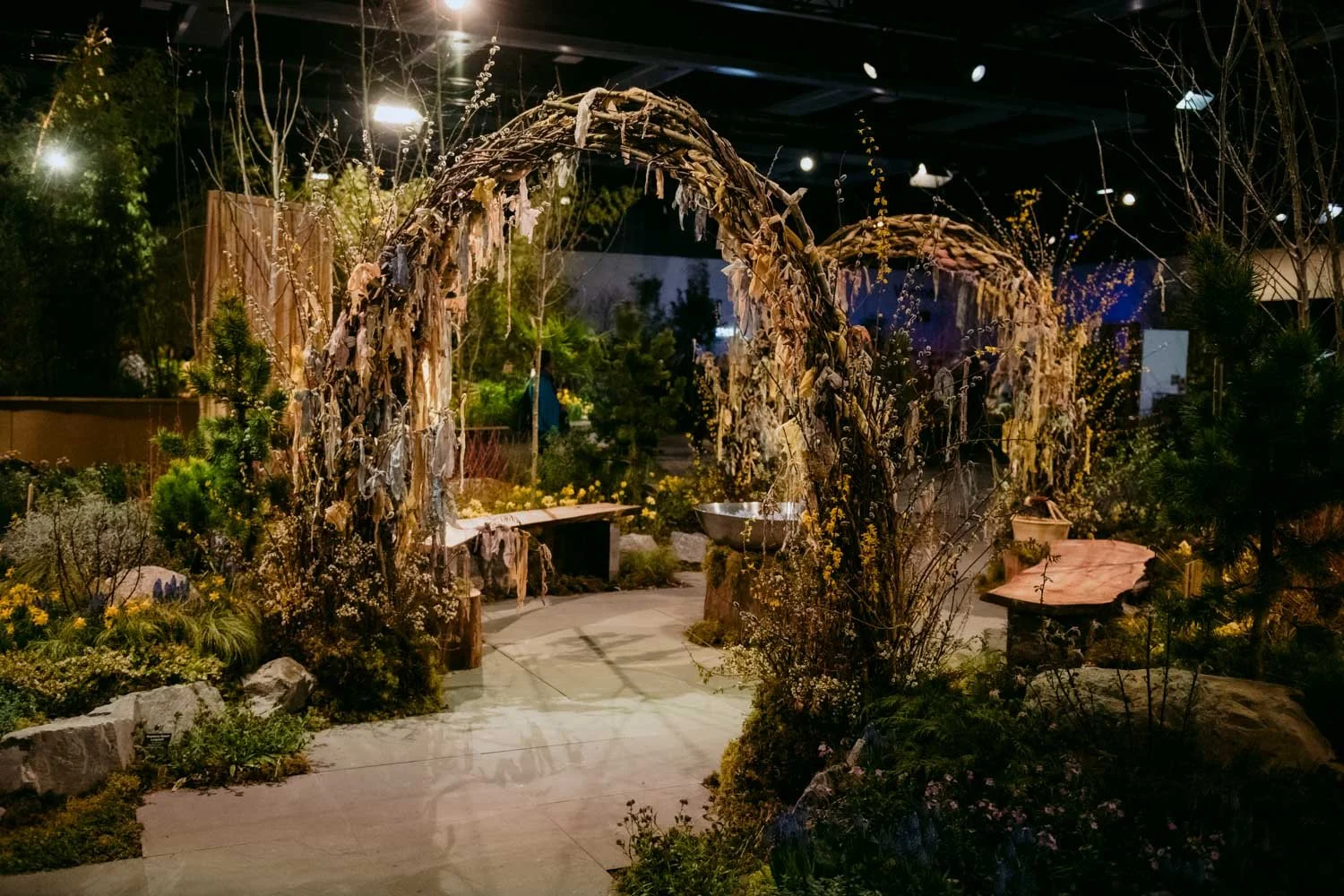
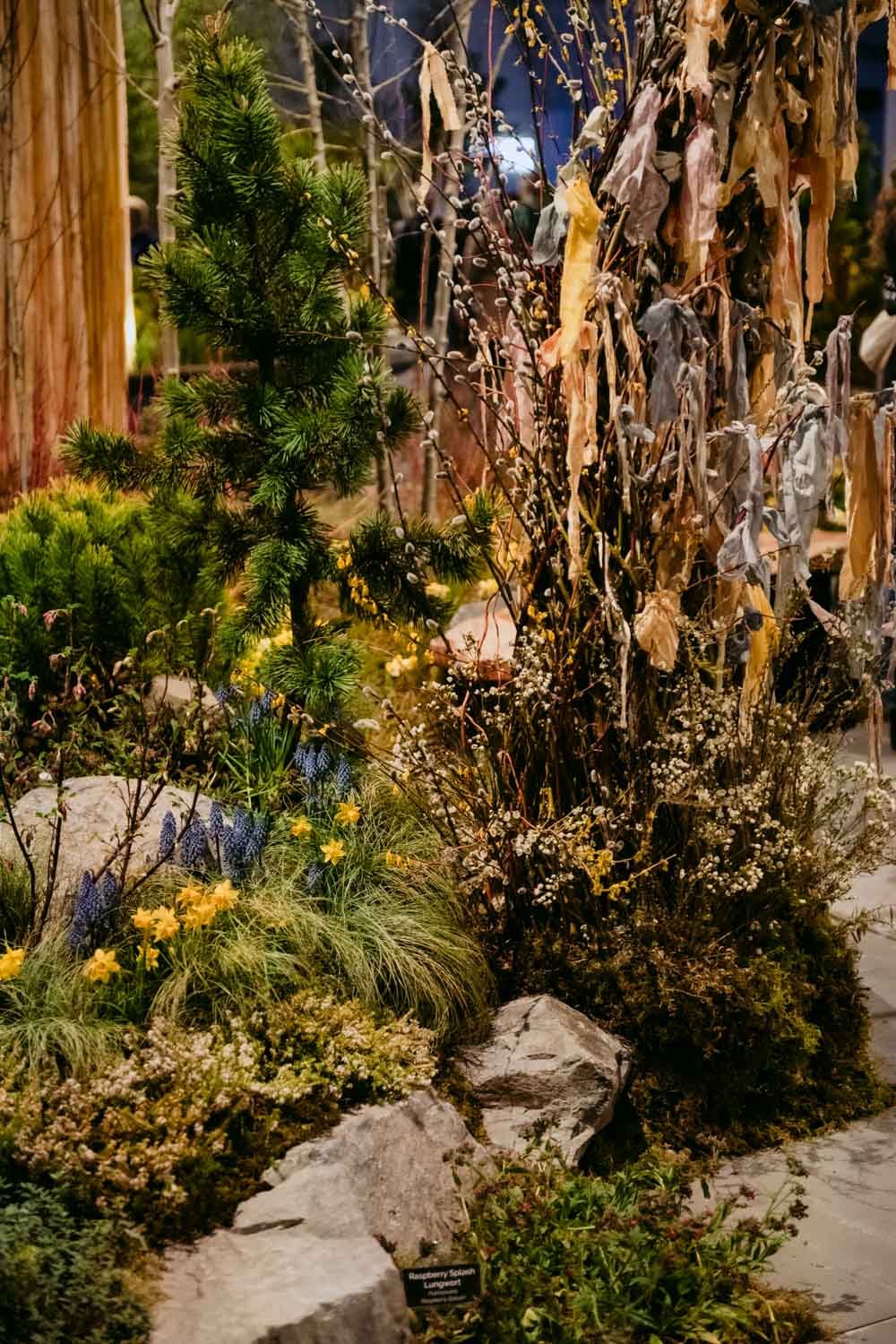
Natural Willow Arbors Festooned with Dye Florals and Silk Weavings
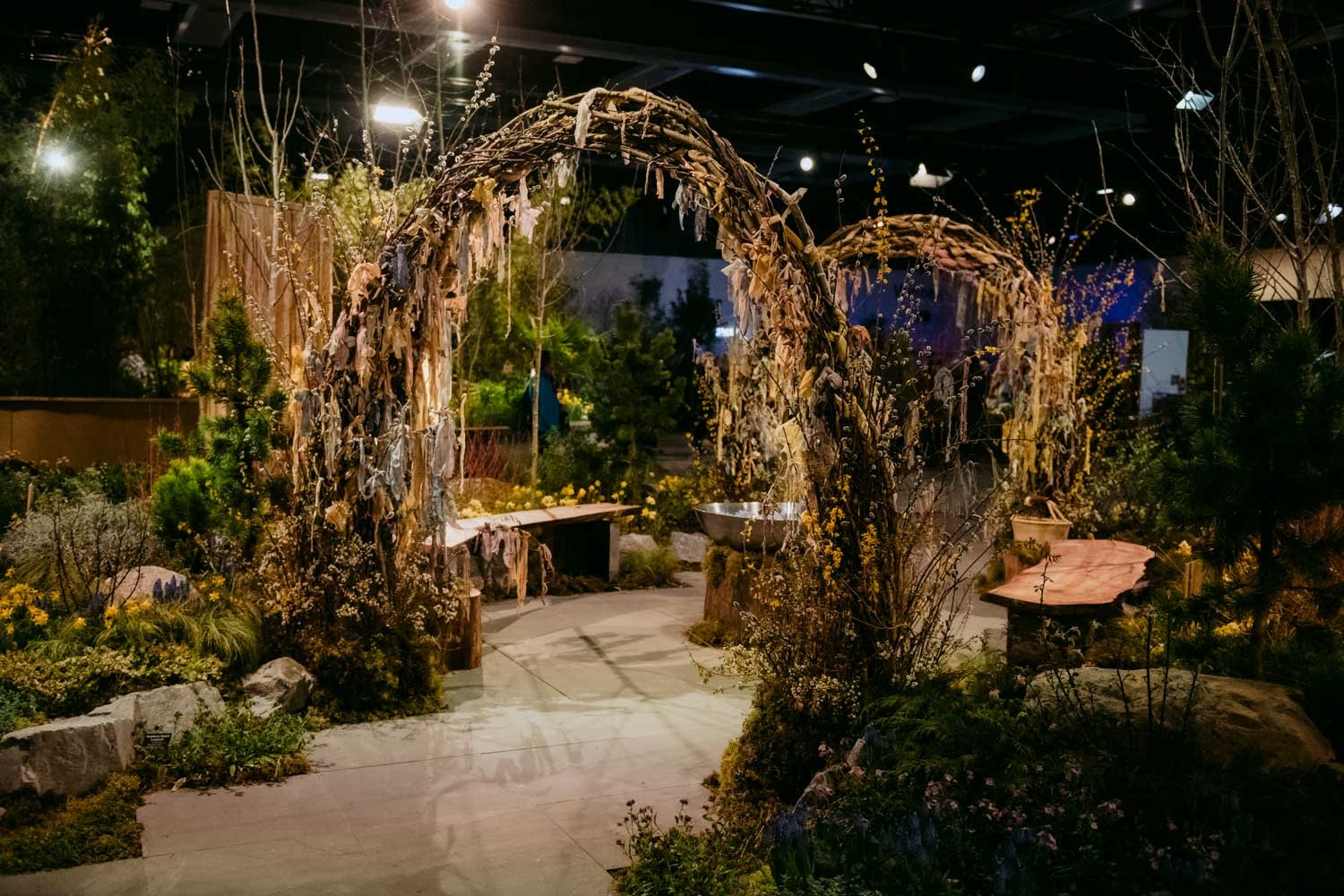
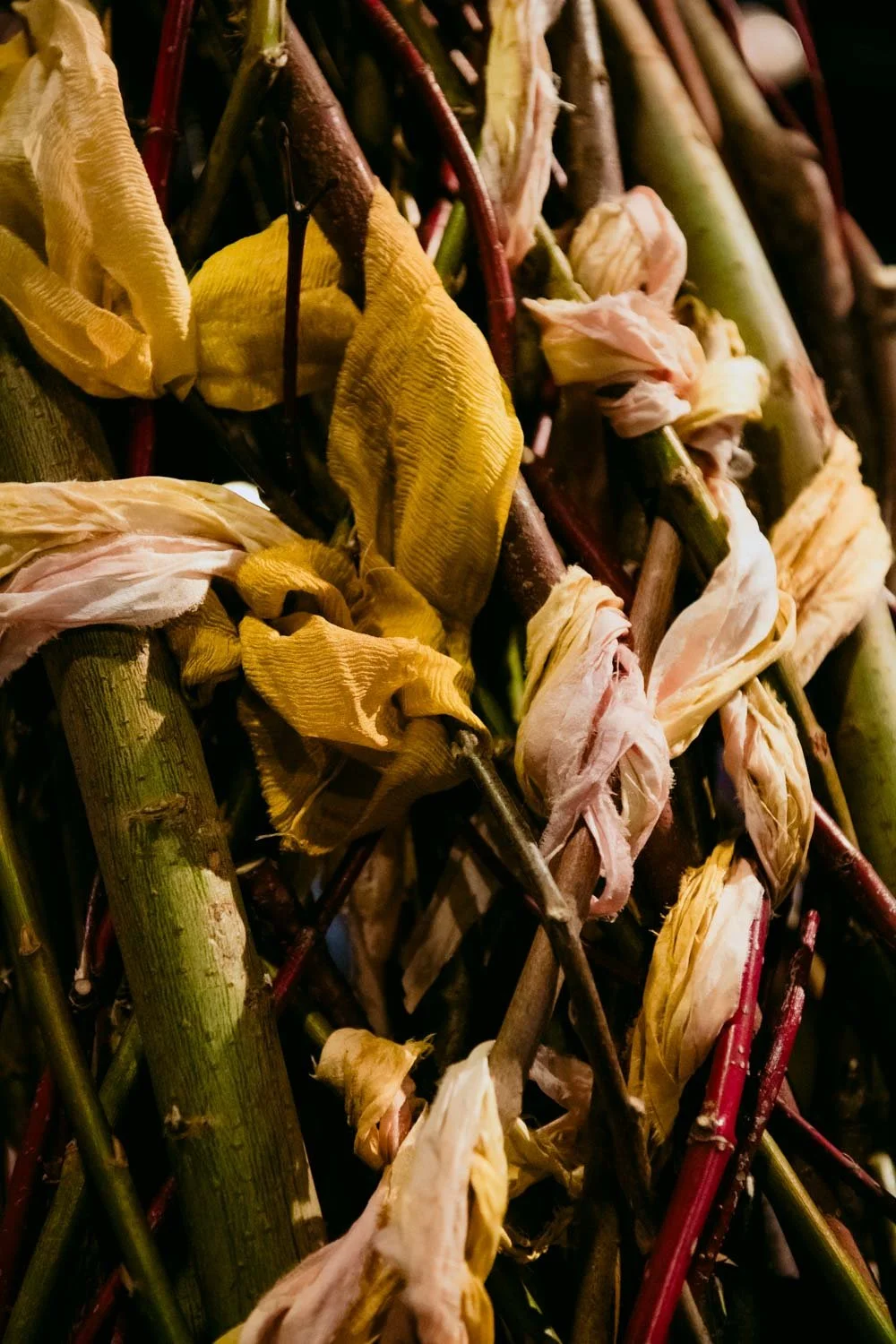
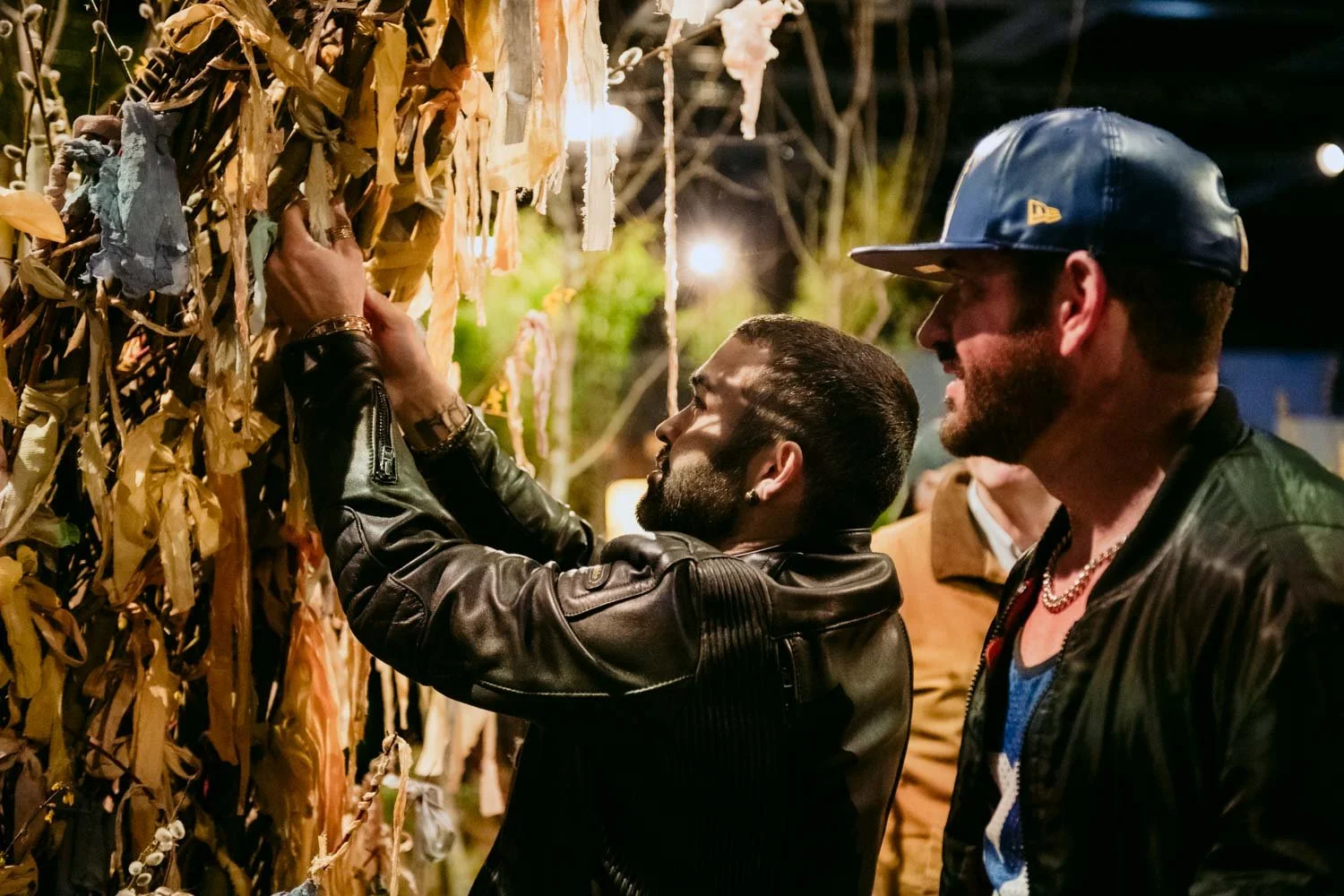
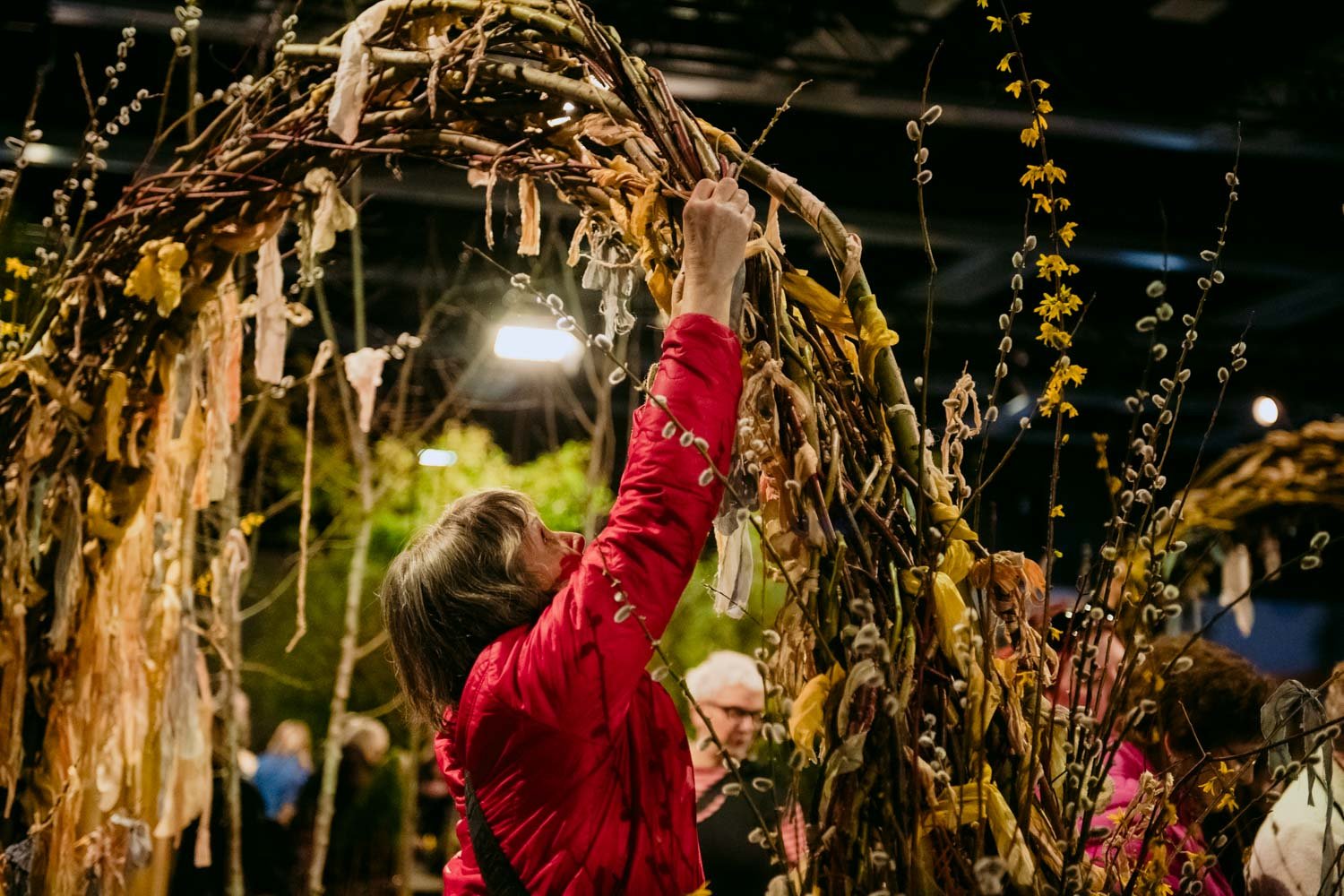
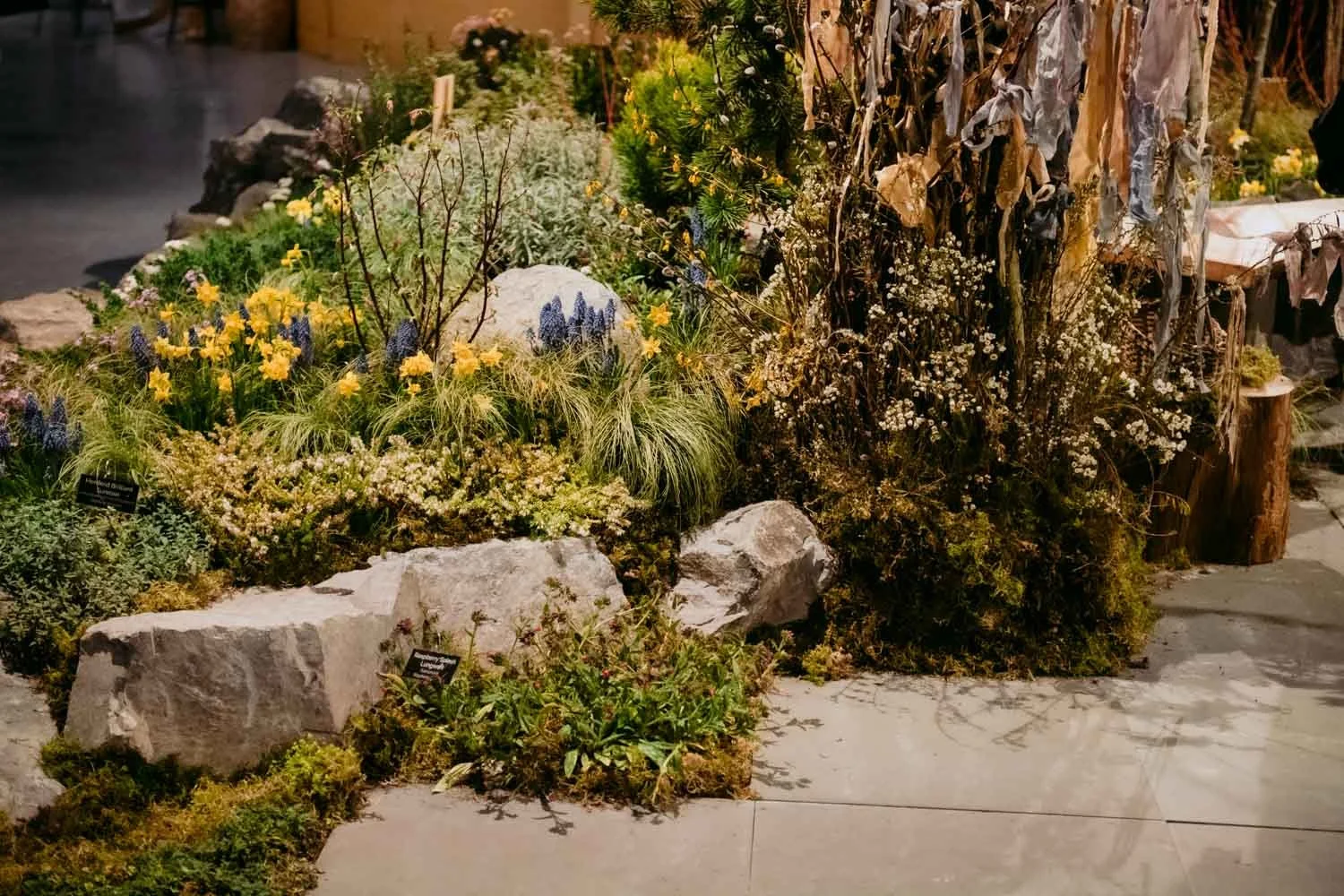
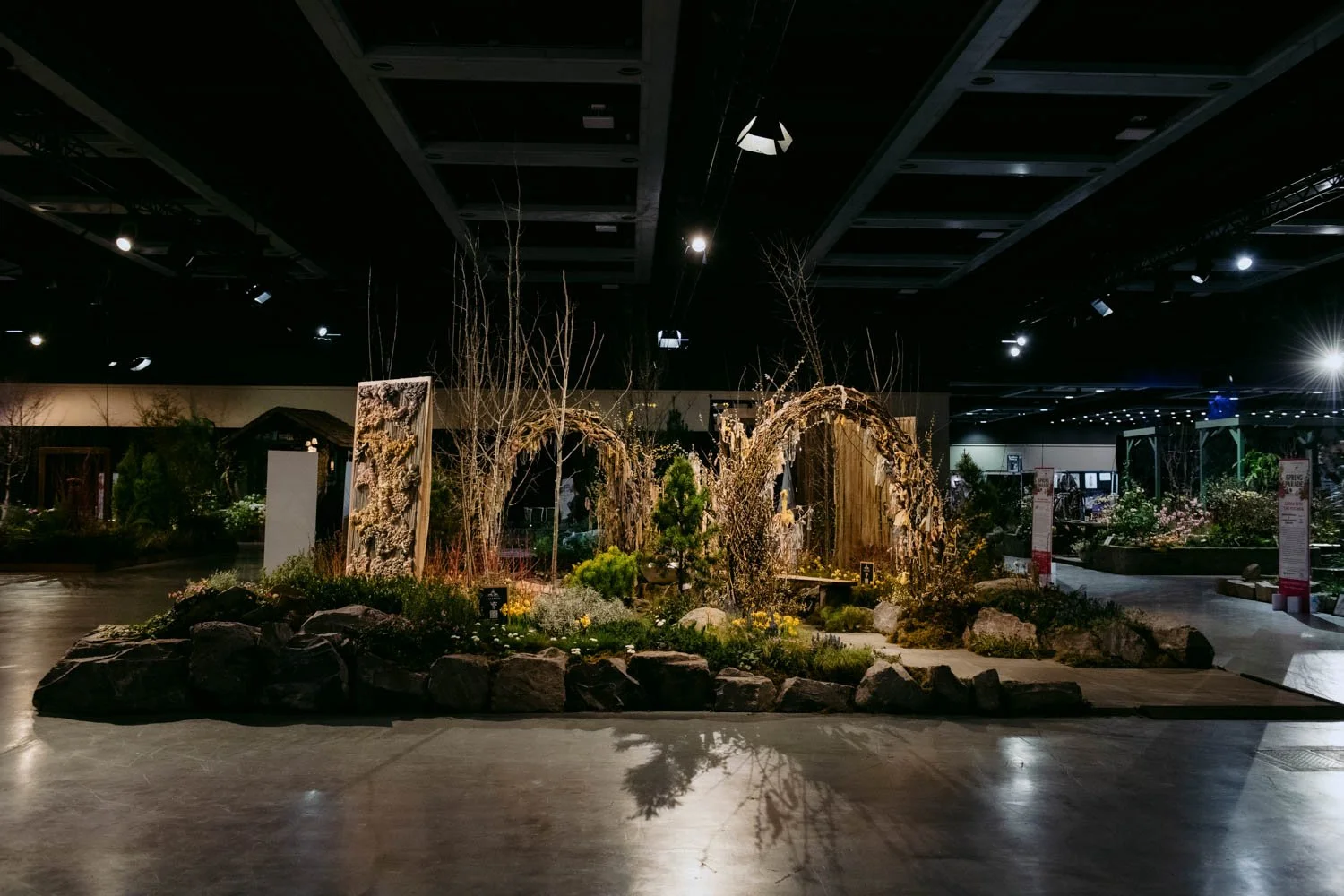
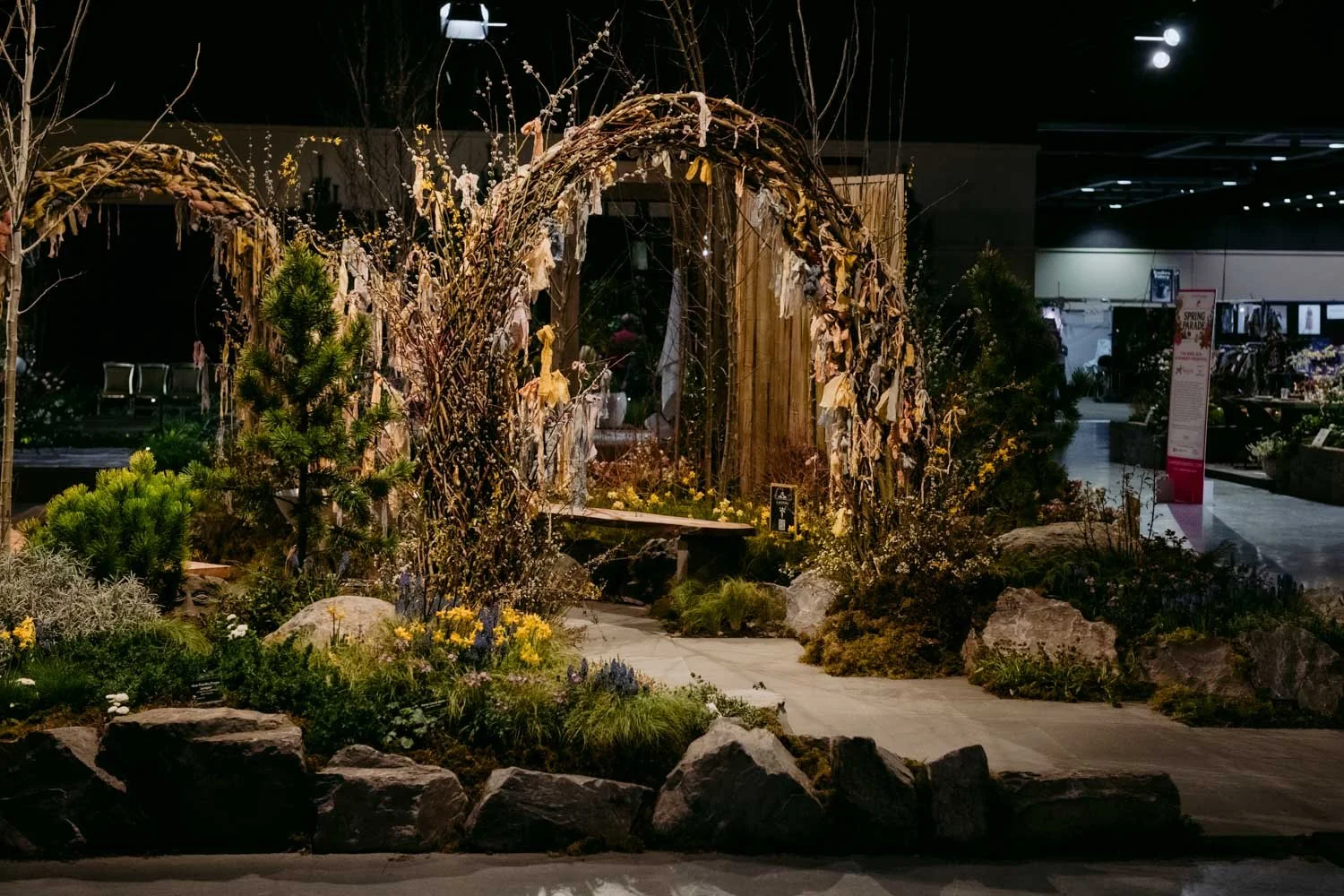
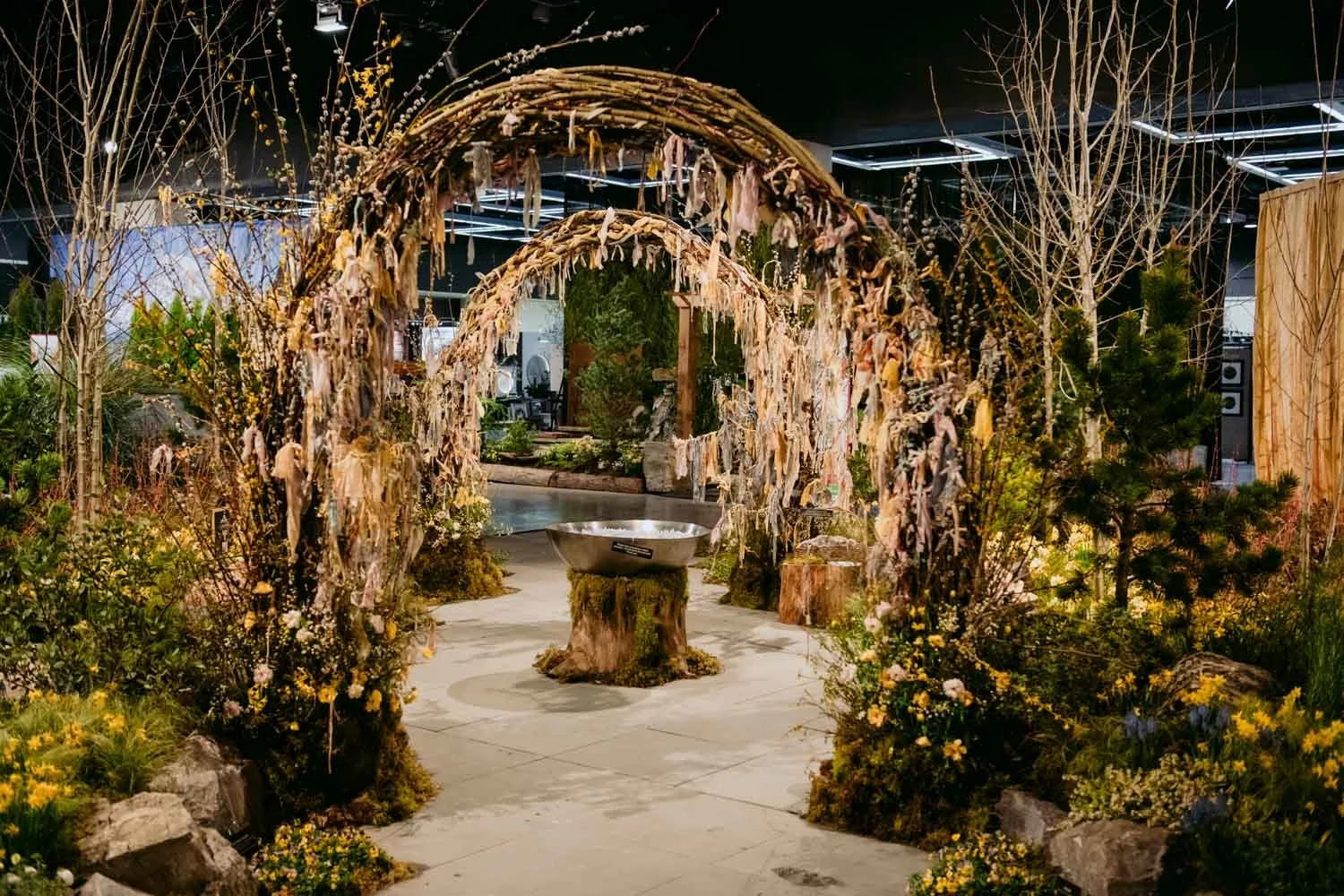
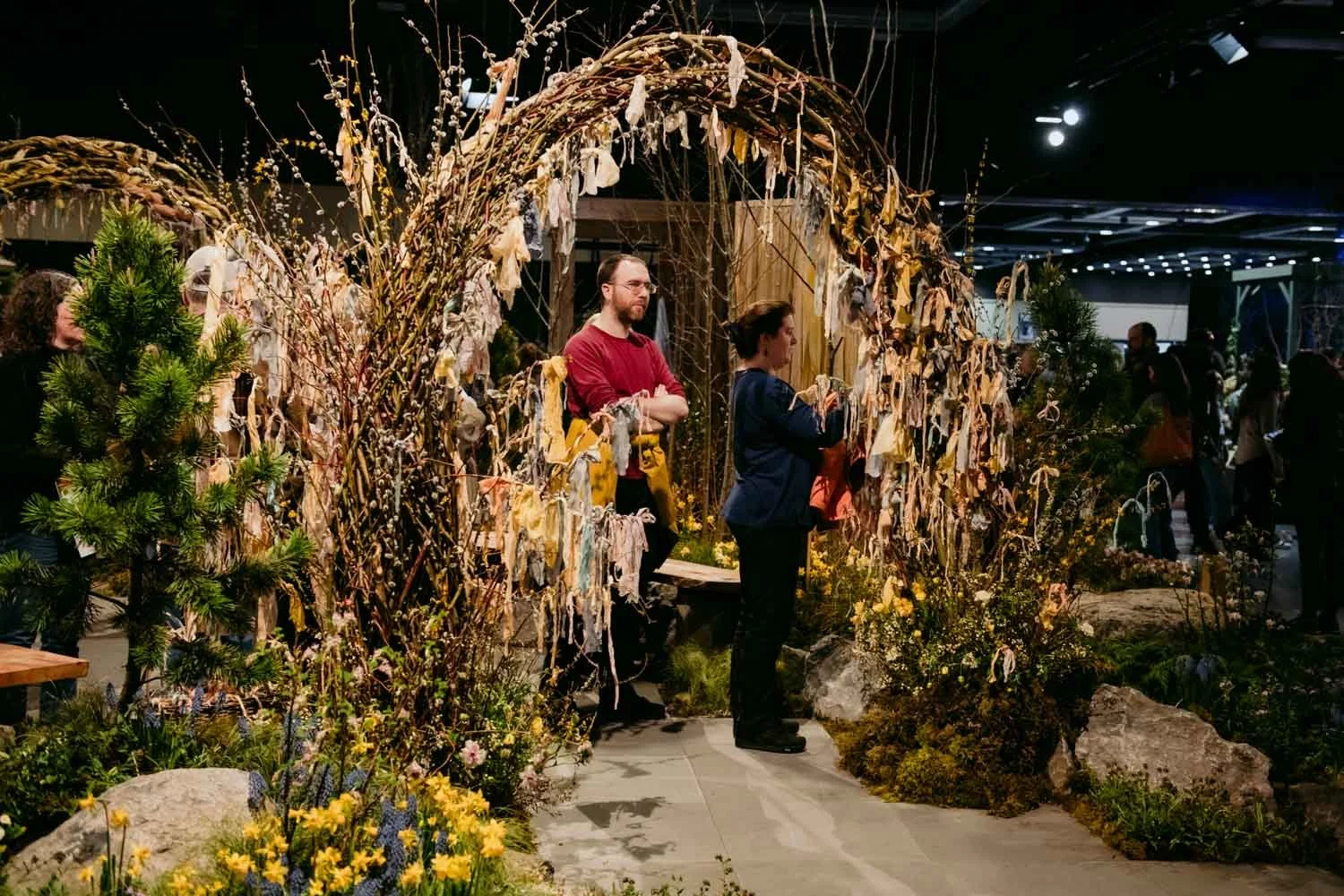
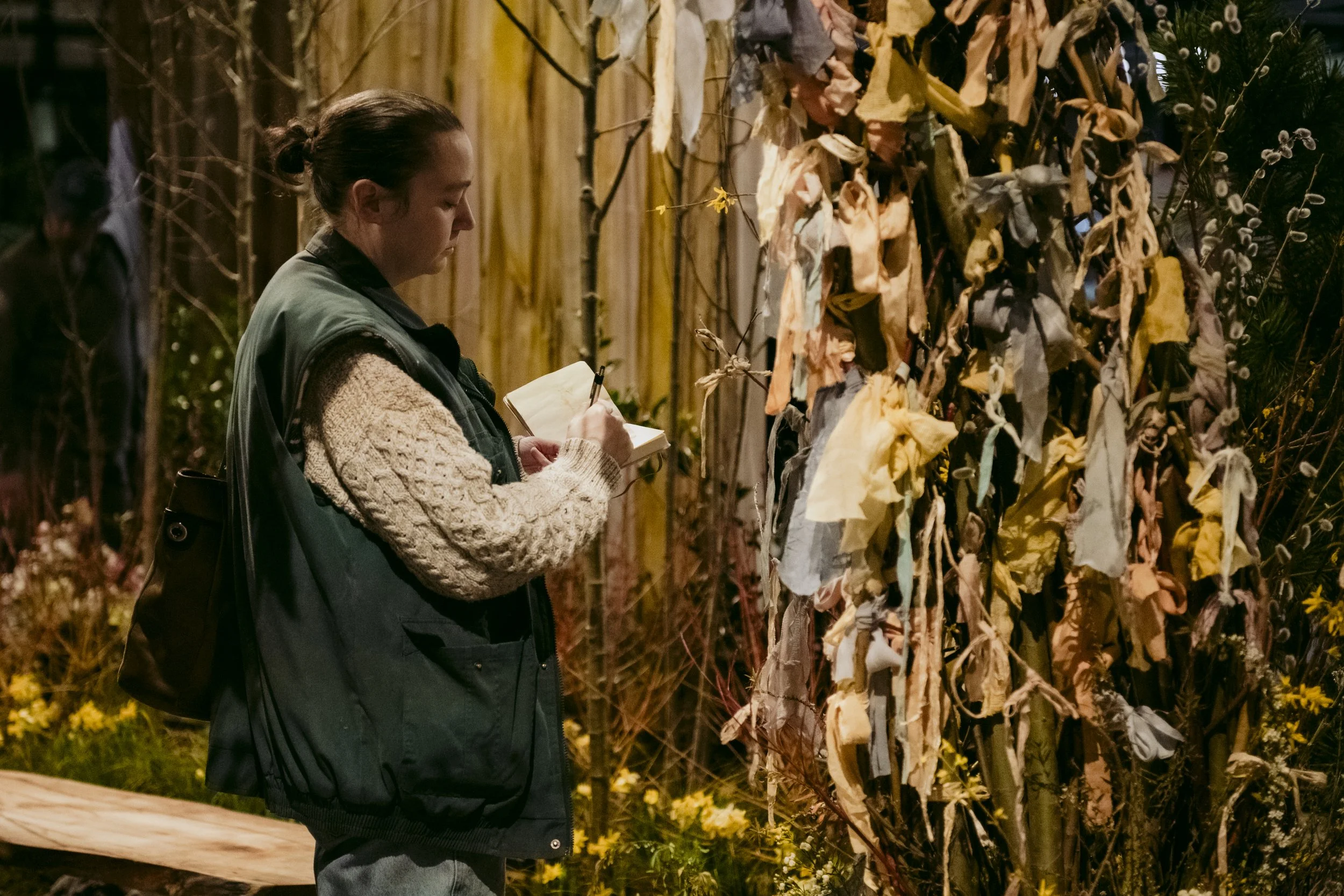
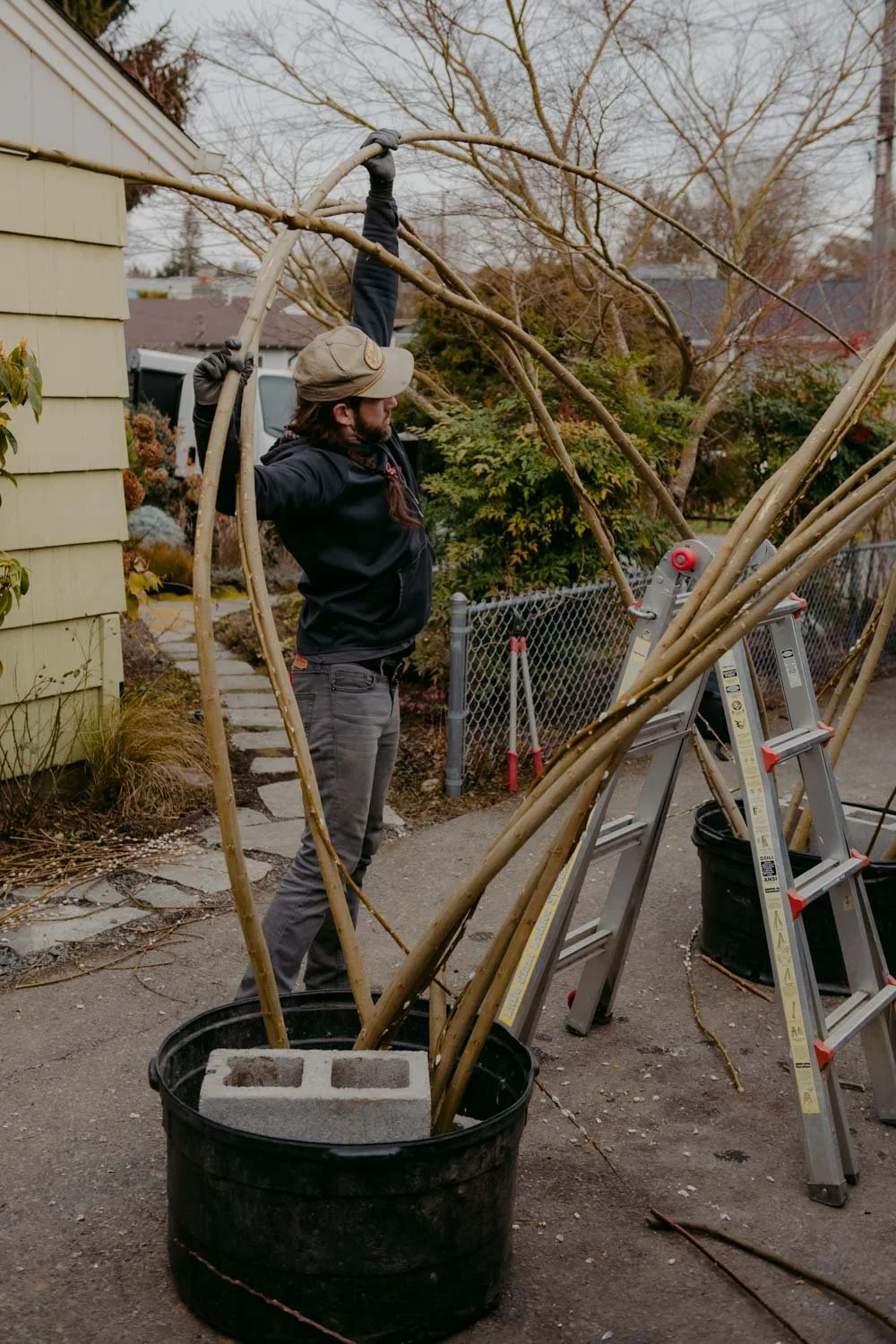
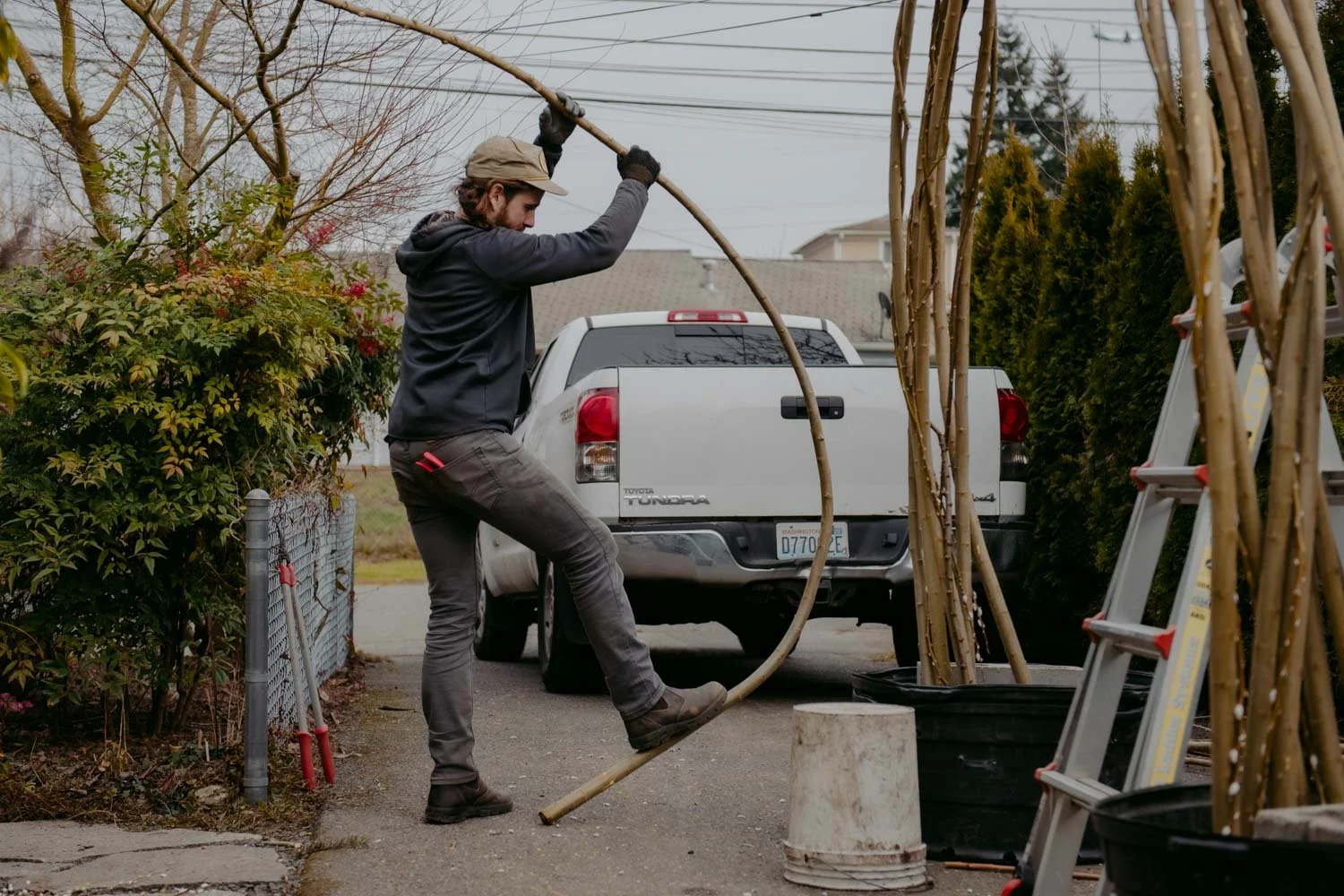
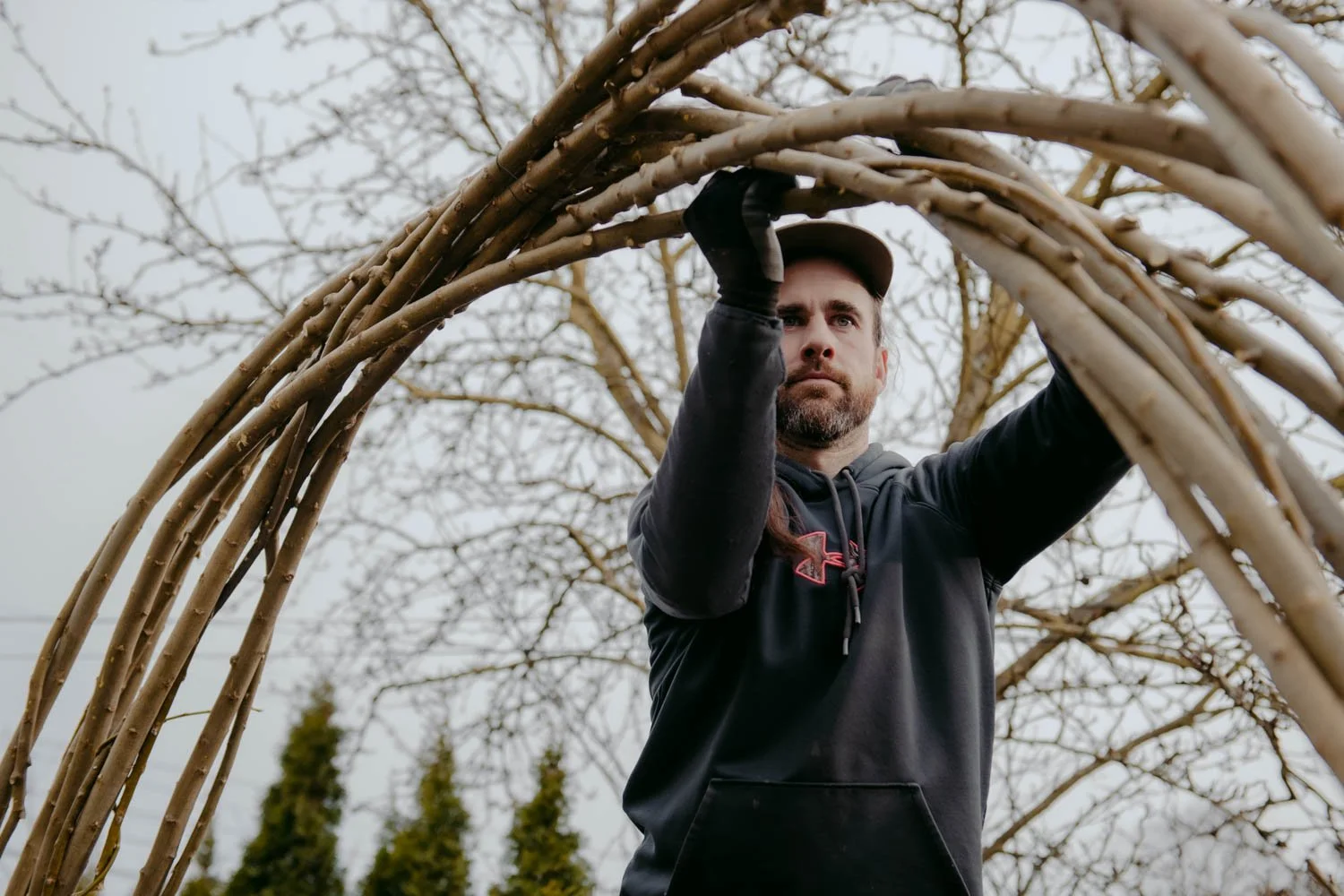
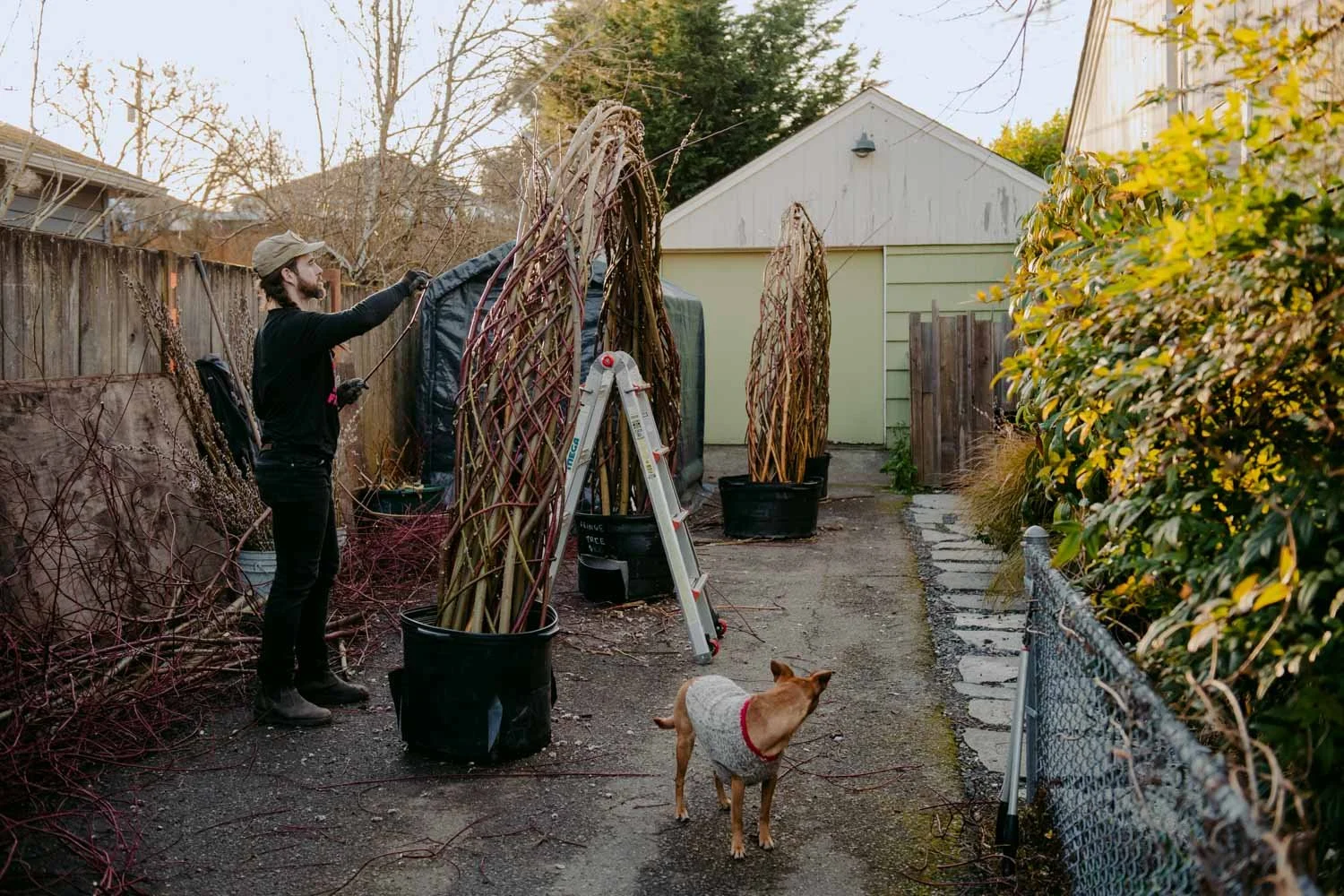
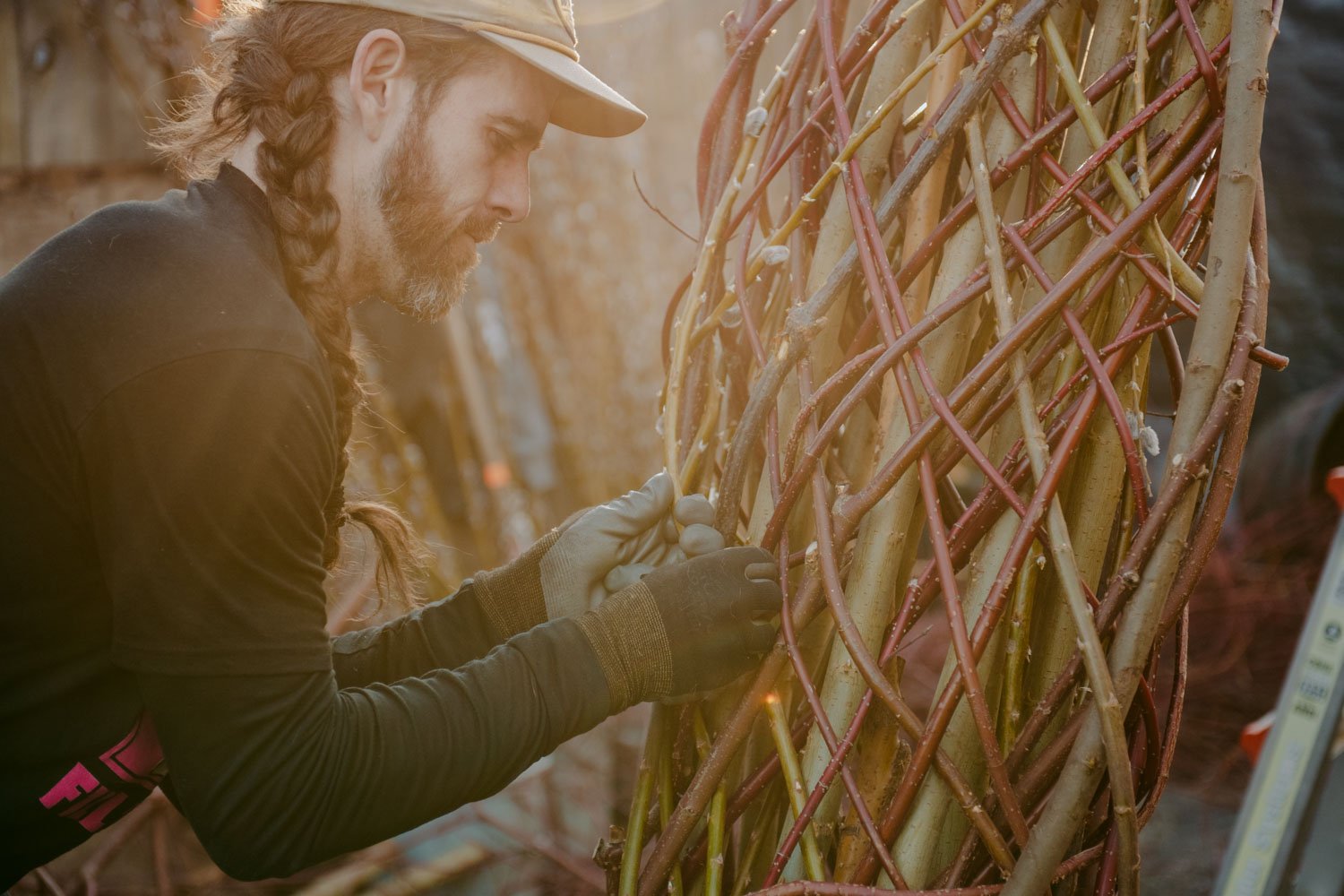
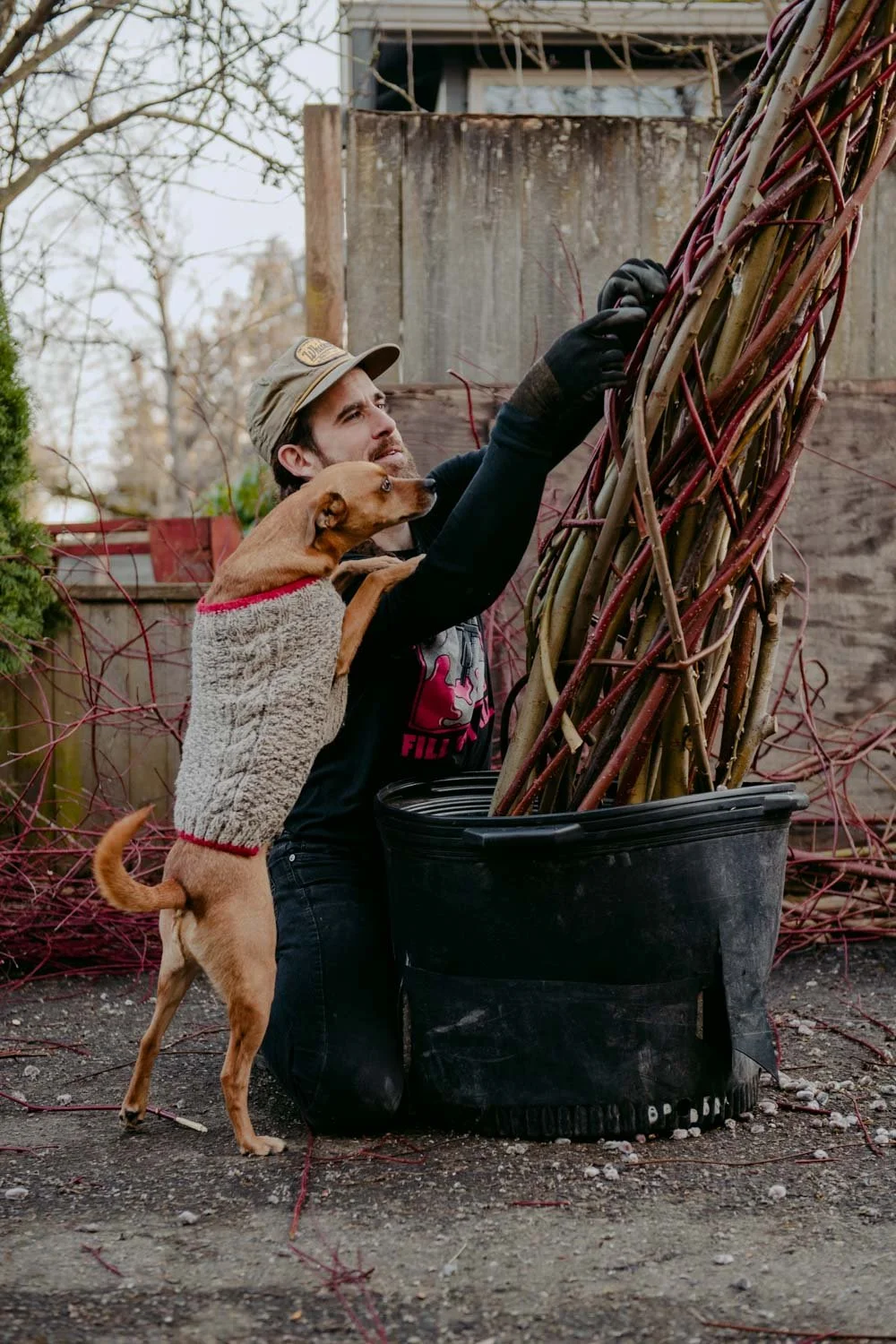
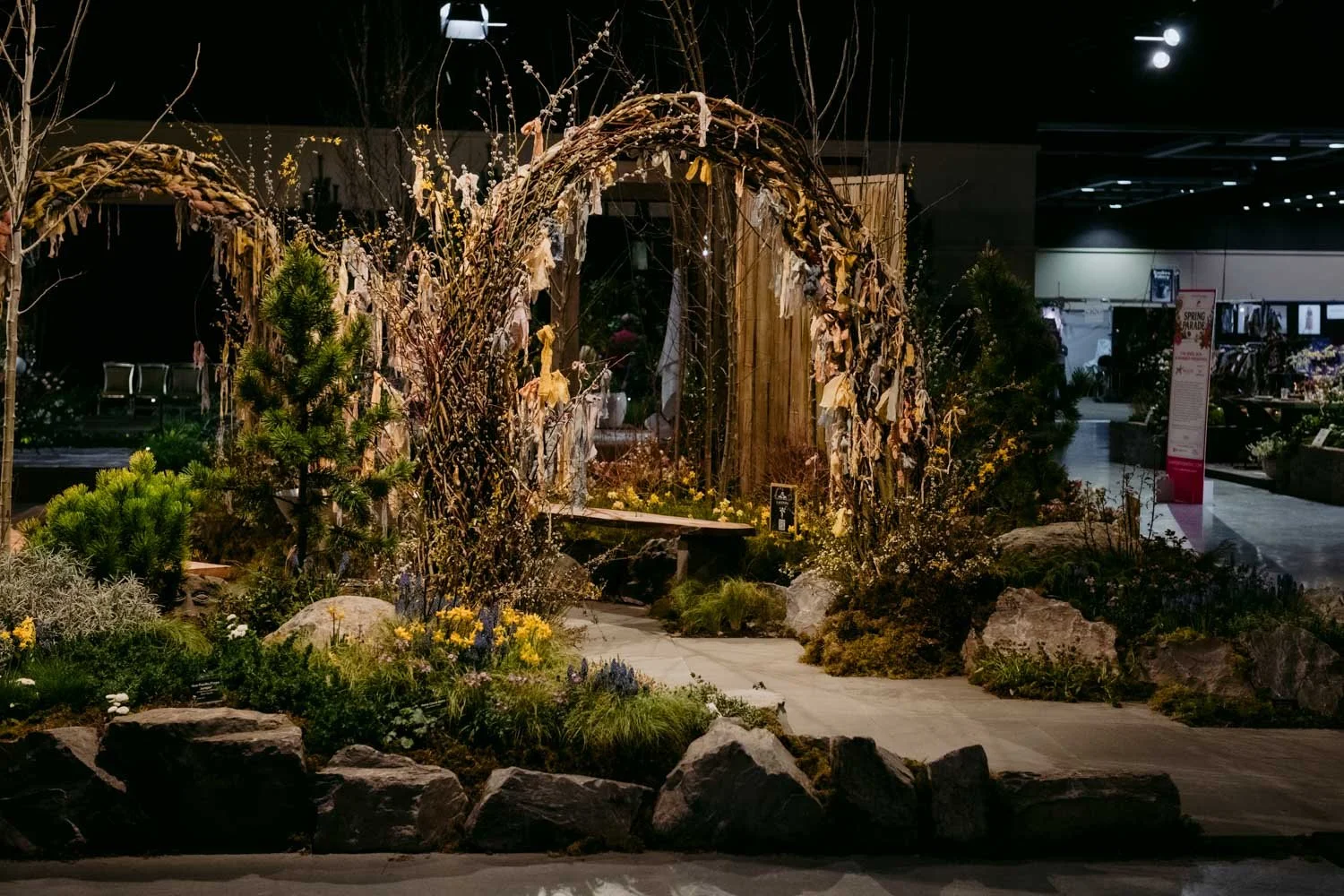
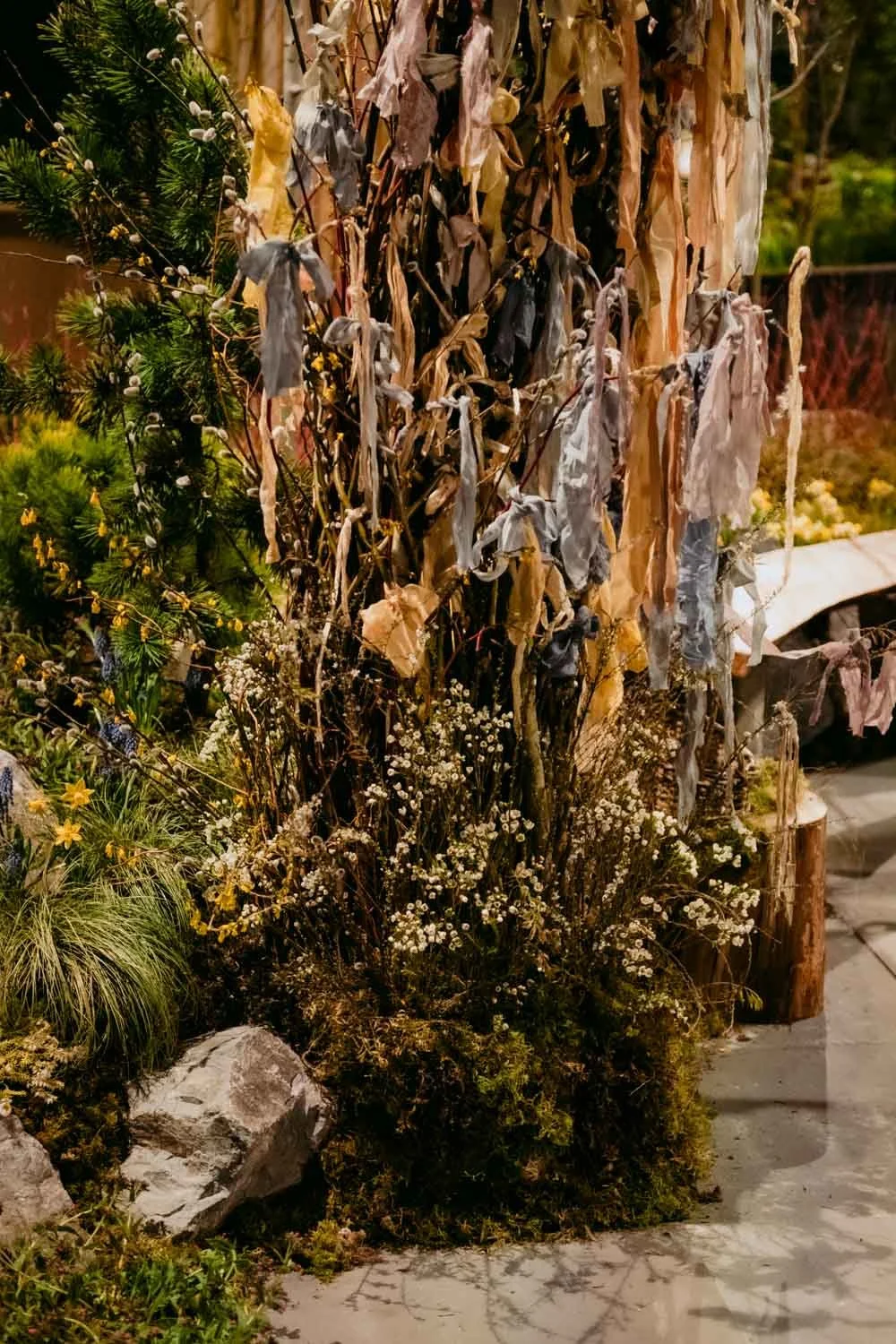
The whimsical natural arbors have been created by woven branches (a mix of willow and twig dogwood spp.) inspired by the ‘Shrub Witch’ featured in the Shrouded in Light and the visceral natural sculptures of Andy Goldworthy, and the natural building techniques dedicated to using renewable, fast growing plants to create low-impact, living garden structures.
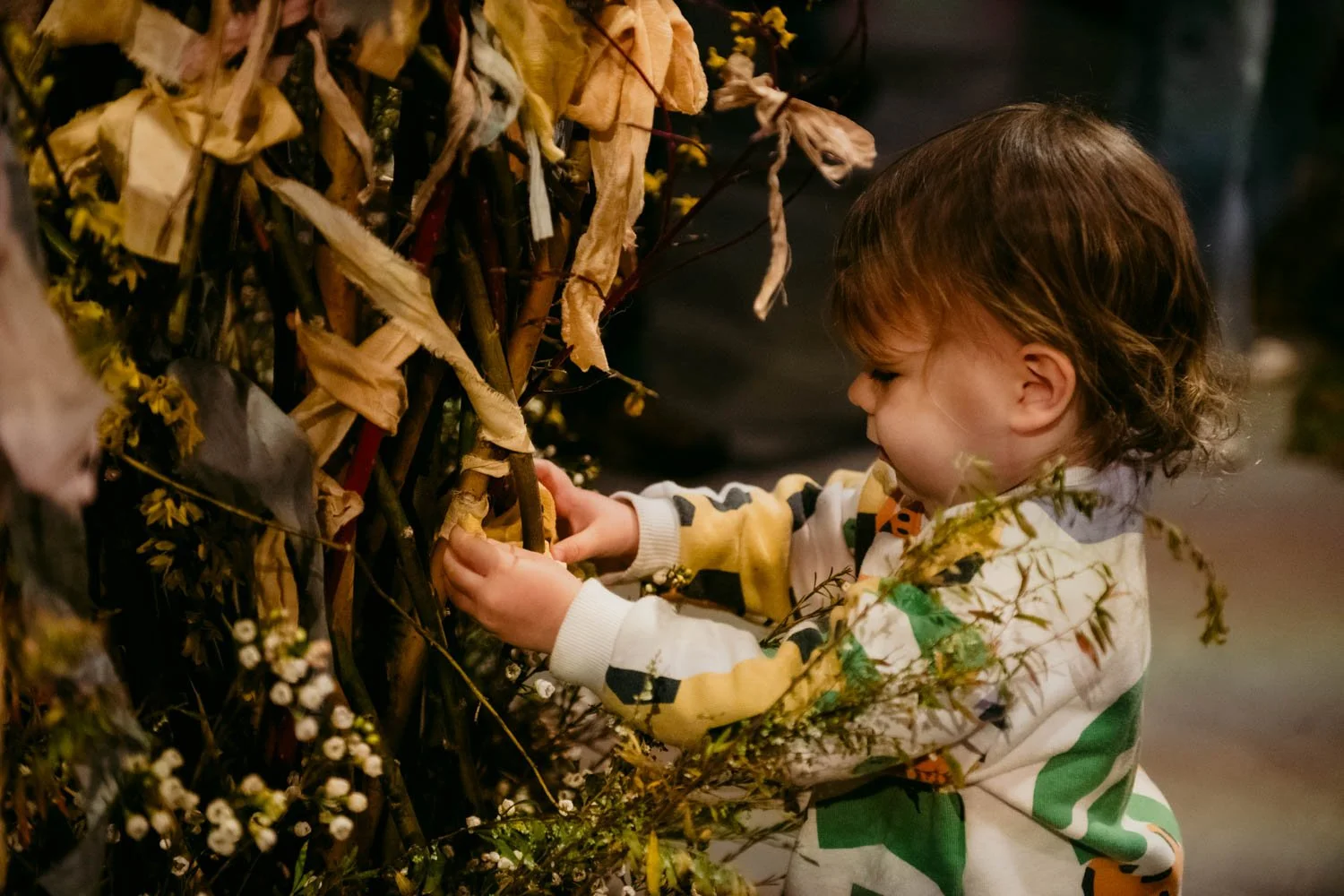
We encourage the public to choose a piece of dyed silk to weave into the arbor to honor a loved one, creating a dynamic memorial.
We are so grateful for the Seattle Growers Market, who seasonally offer locally grown cut flowers from throughout the region.
Thank you SO MUCH to our sponsors: T&L nursery and Lake Washington Tech Horticulture School for access to the beautiful willow varieties!
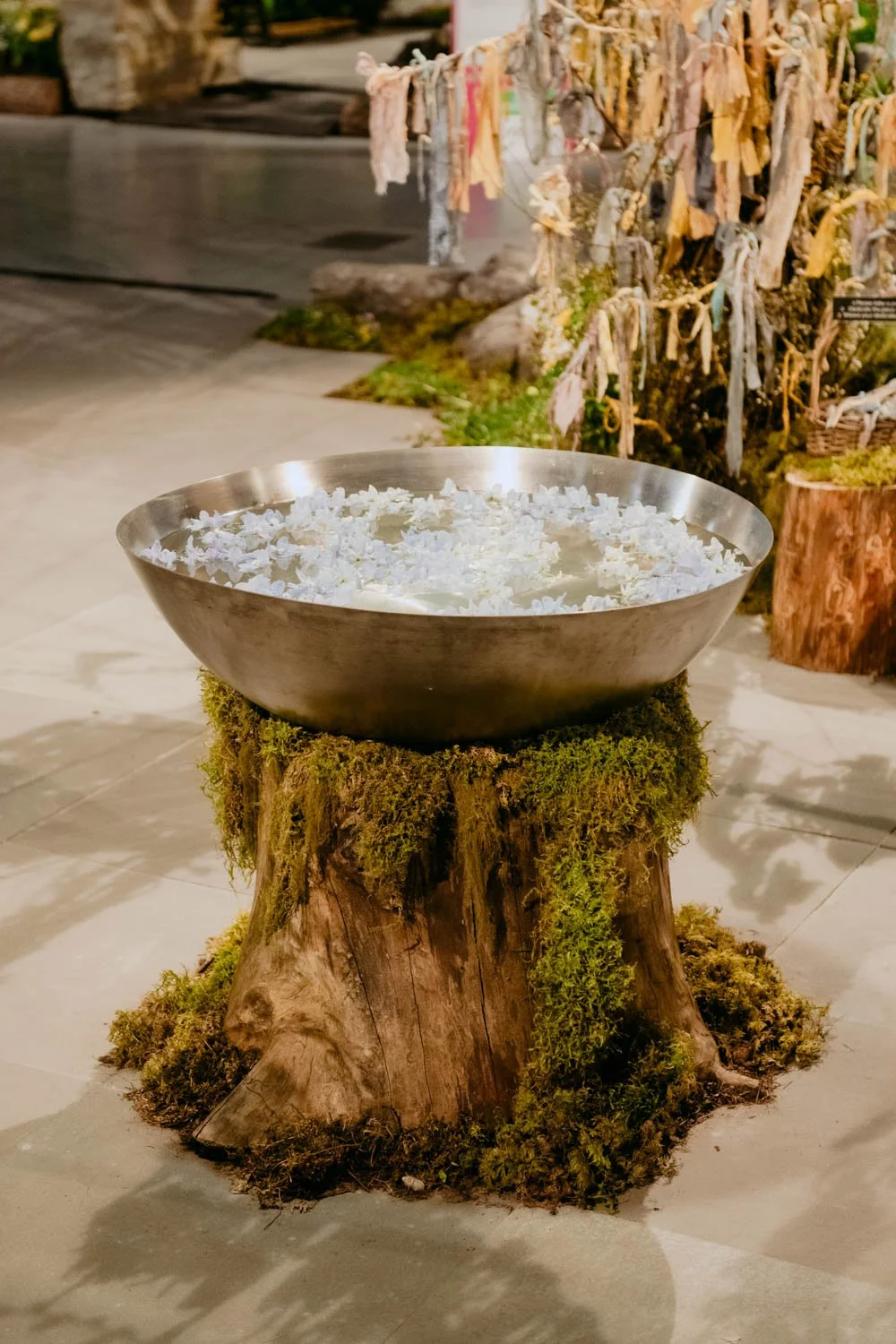
The Central Gathering Space with Live- Edge Benches and Dye BathThe central gathering space offers a moment of quiet reflection around a still water feature, symbolic of the dye bath used to create the natural dye process.
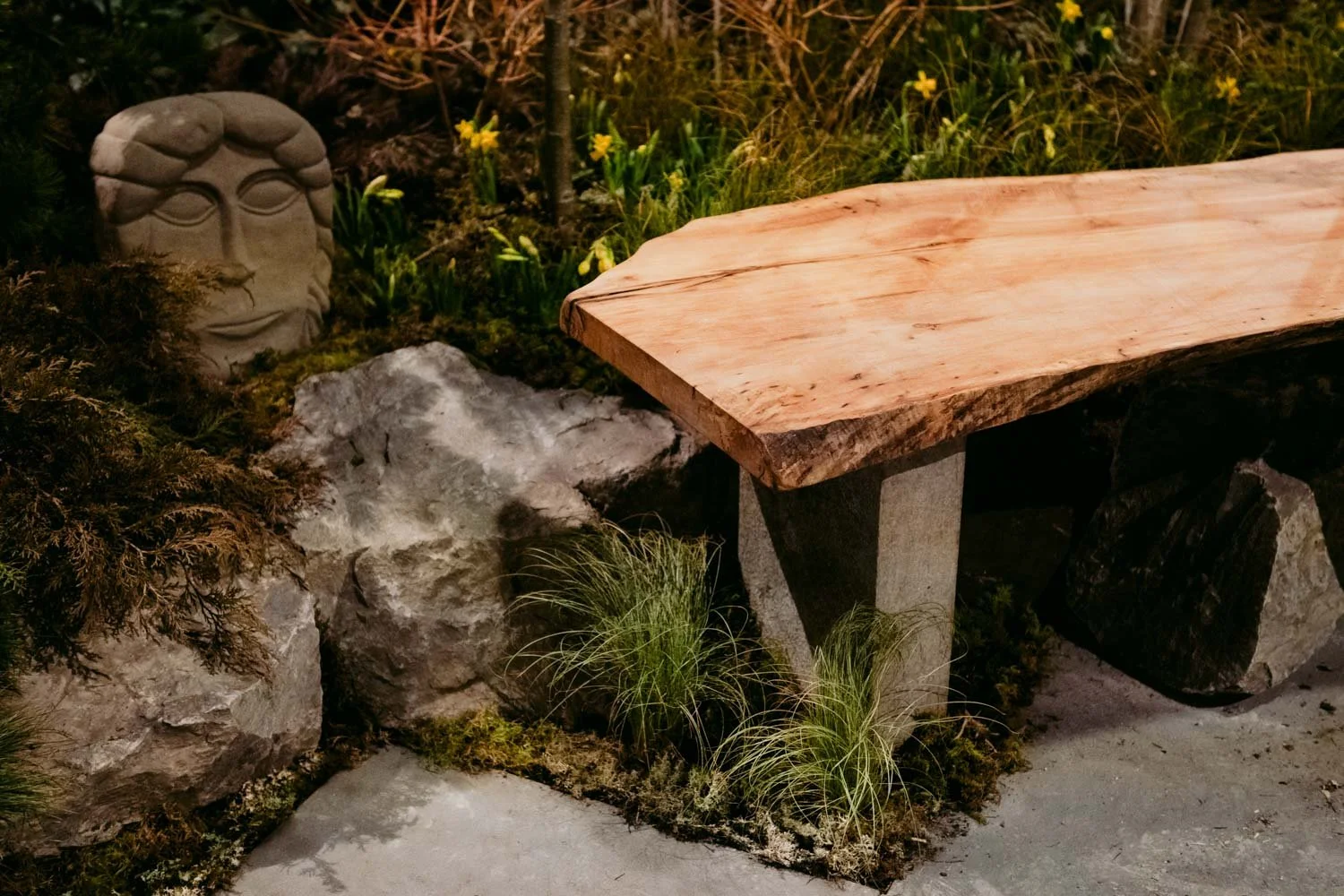
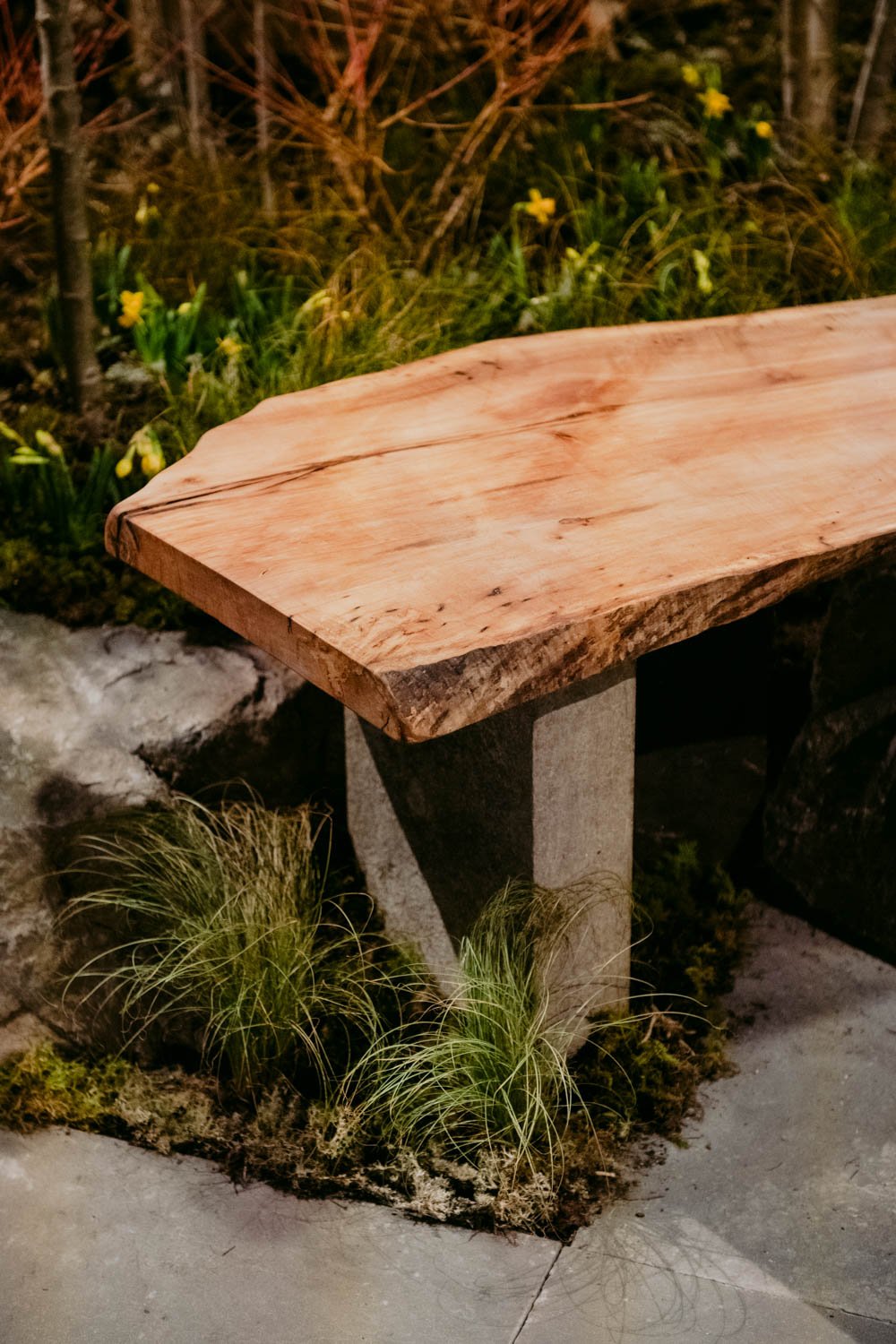
Live-Edge Big Leaf Maple Benches
The live-edge benches are the creation of internationally recognized stone sculptor, Alexandra Morosco. These custom pieces have been fashioned with 100% natural and local materials including: local maple slabs with a sturdy granite base preserved with all natural wood oils. Constructed on Whidbey Island.
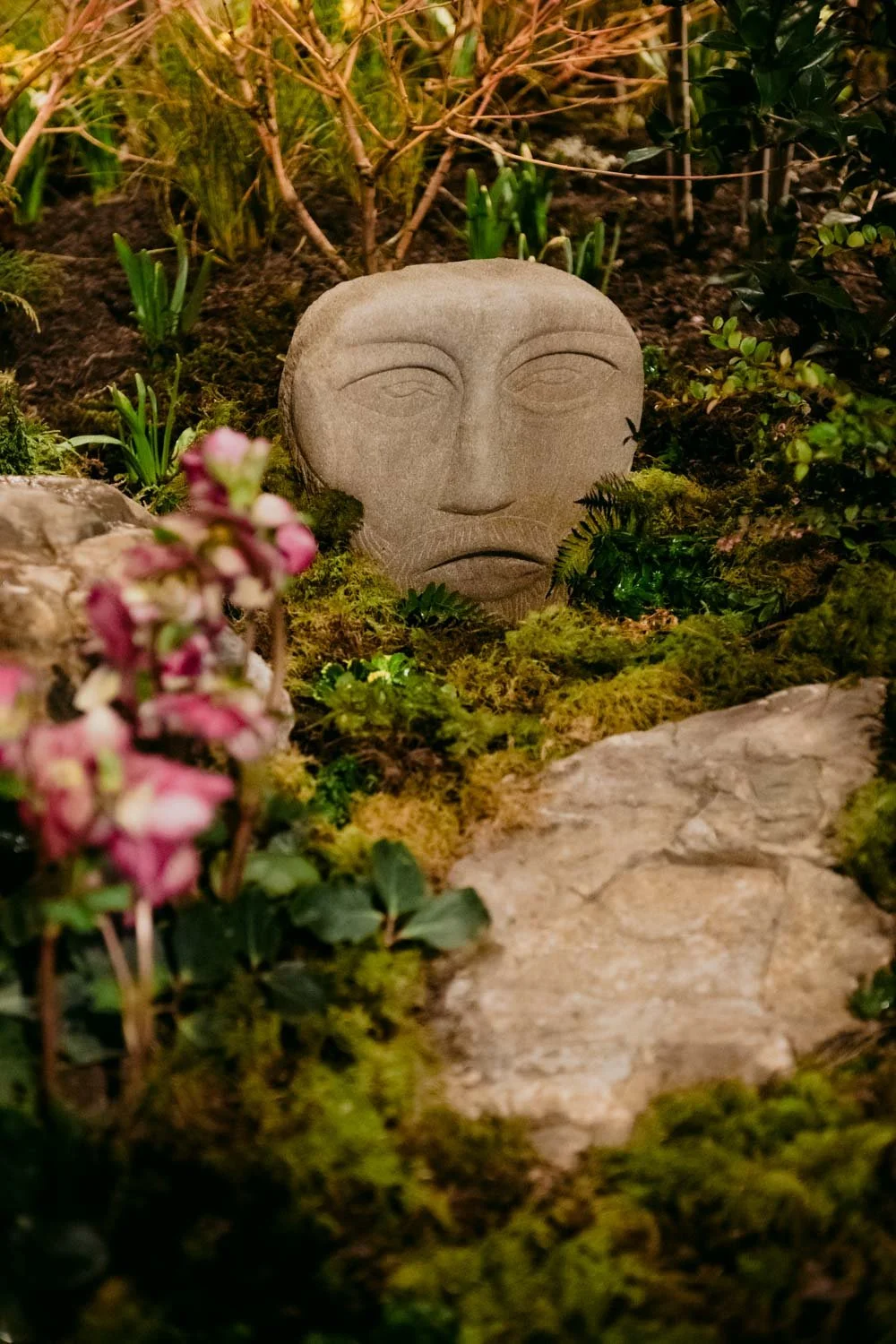
The Stone Carvings
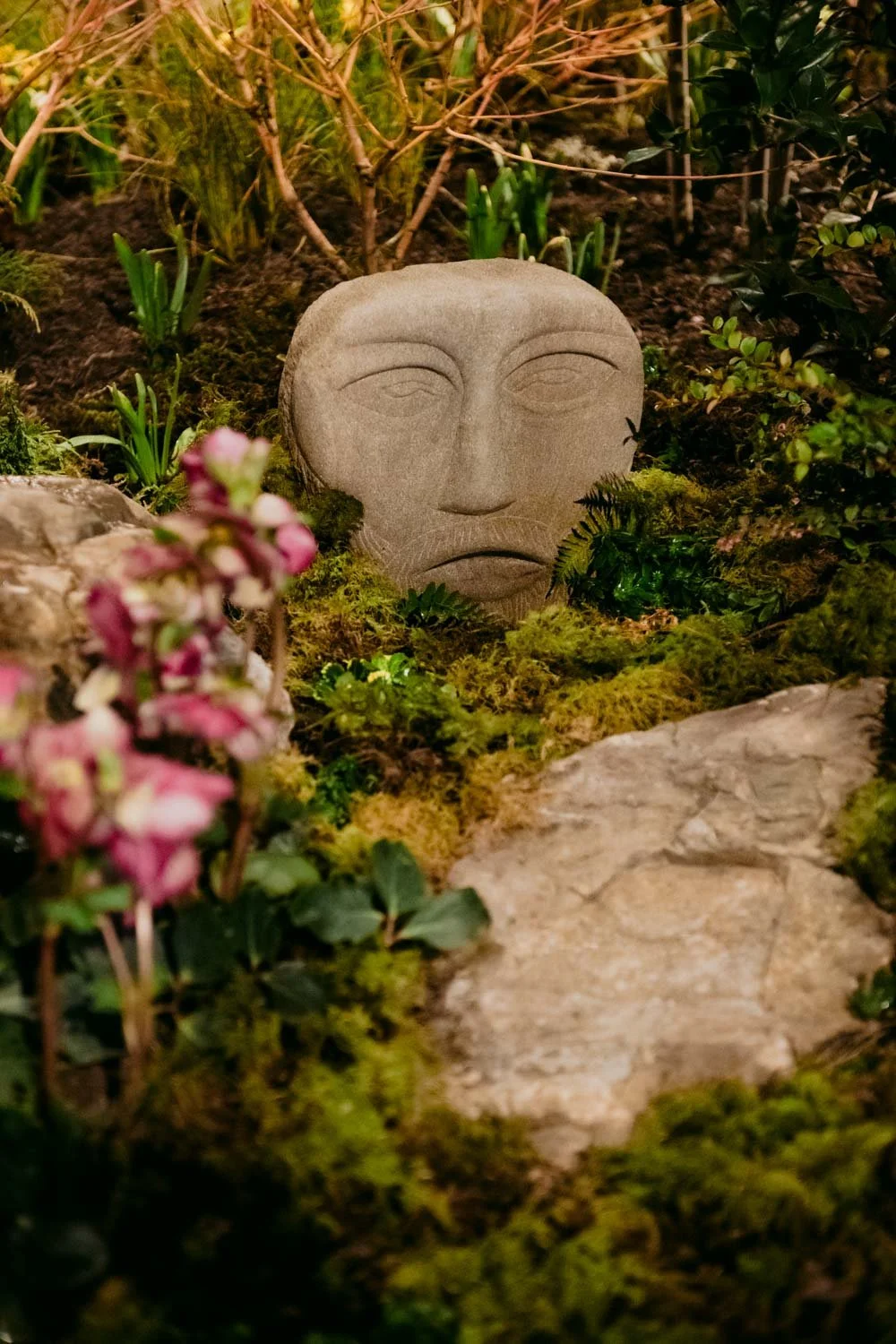
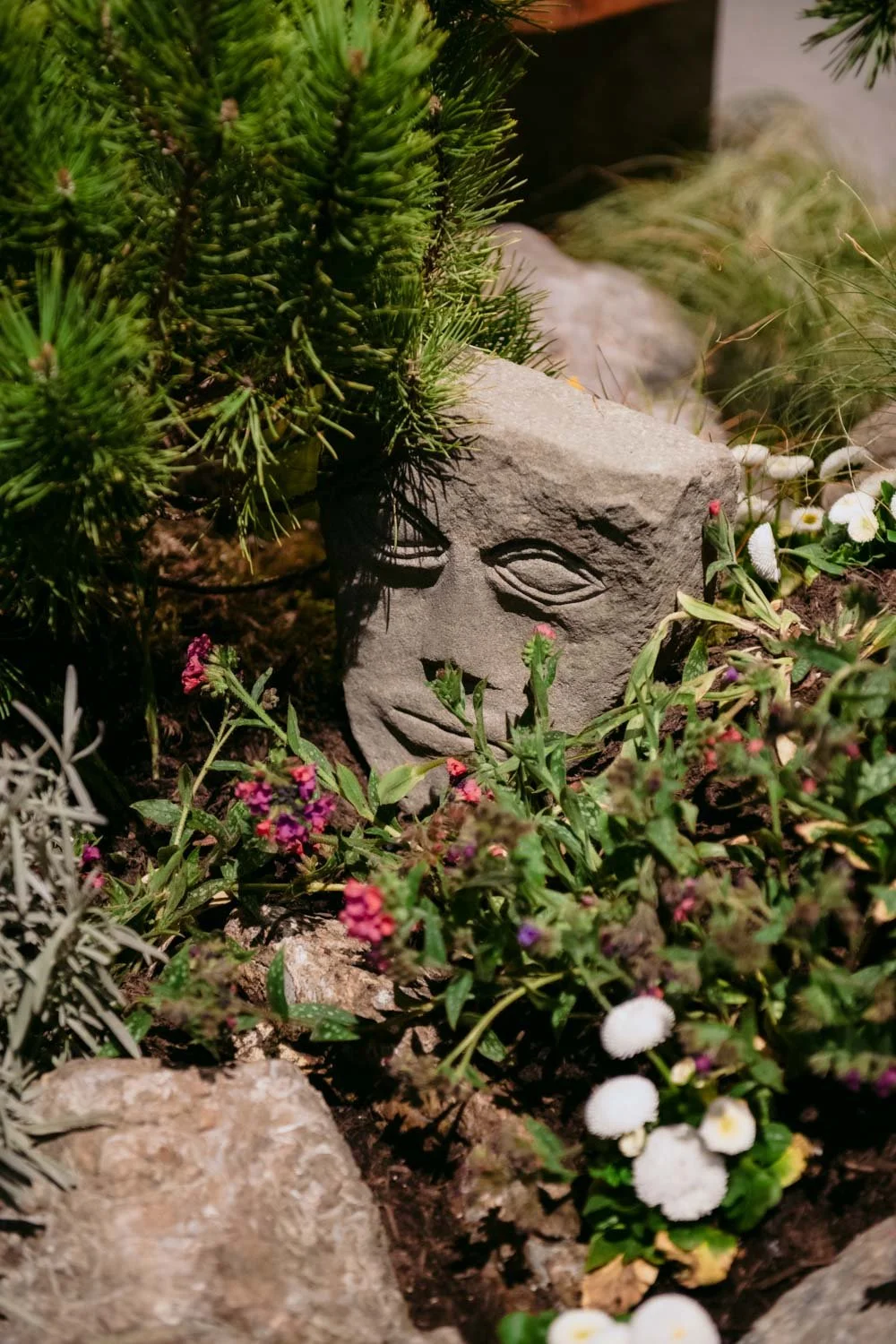
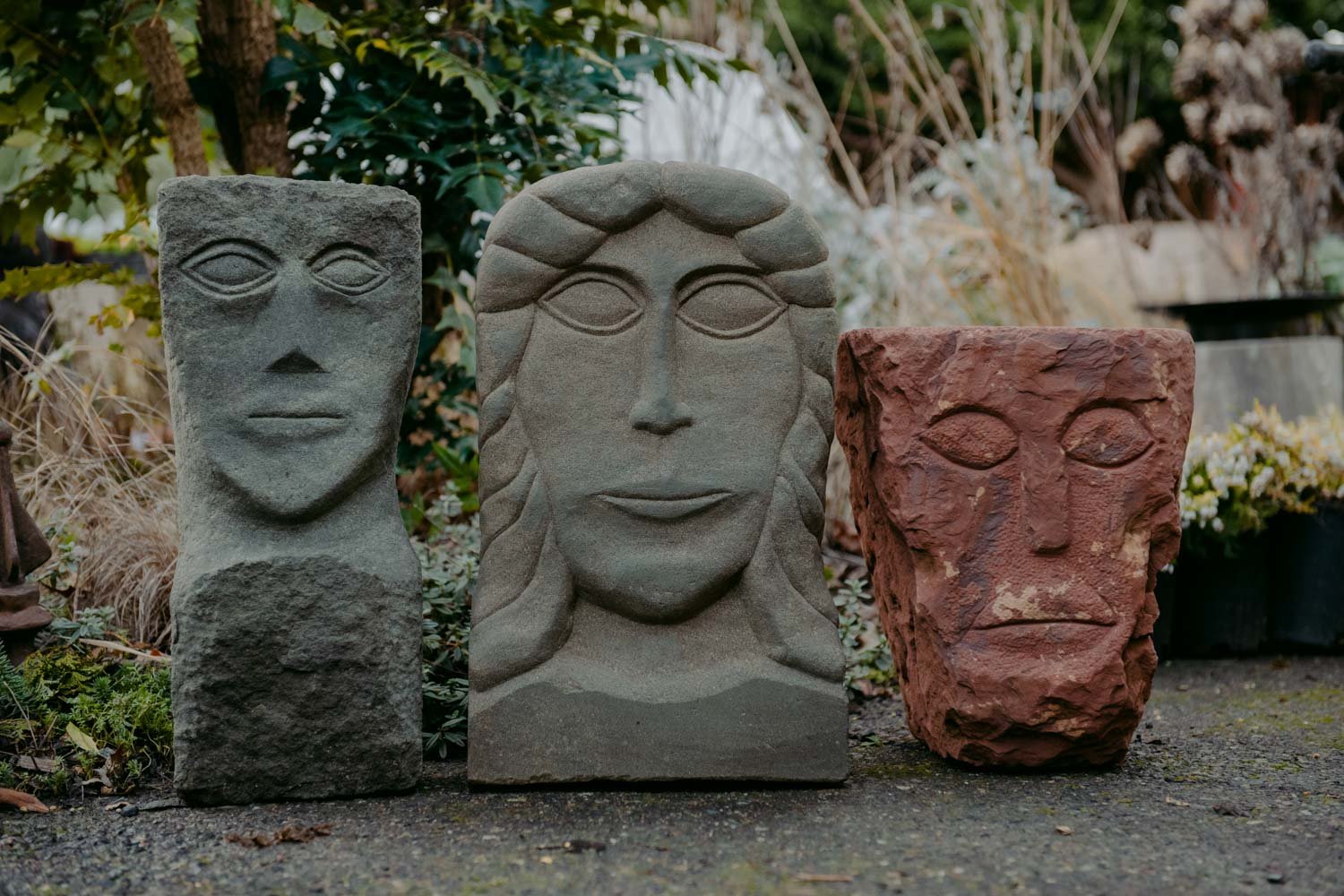
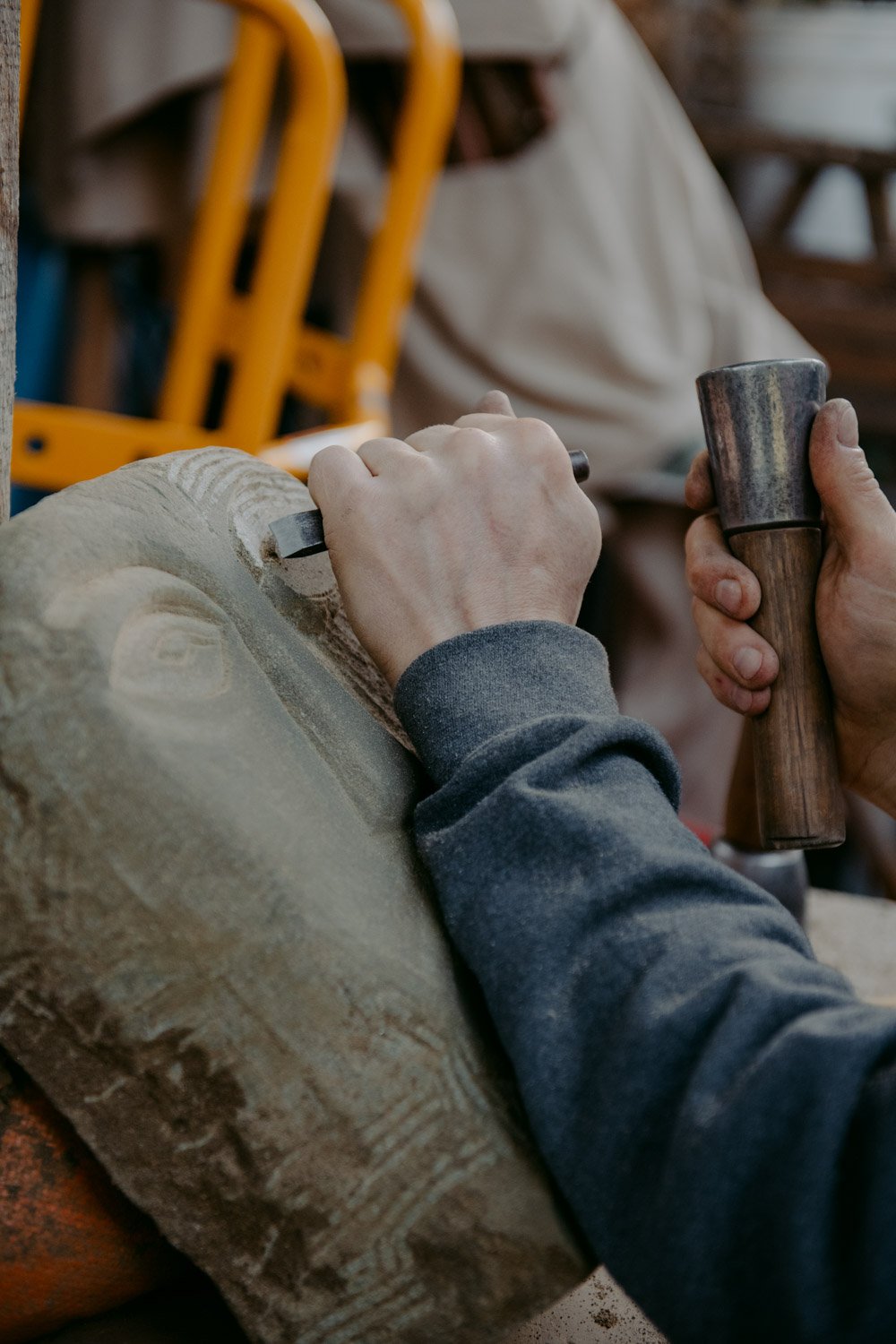
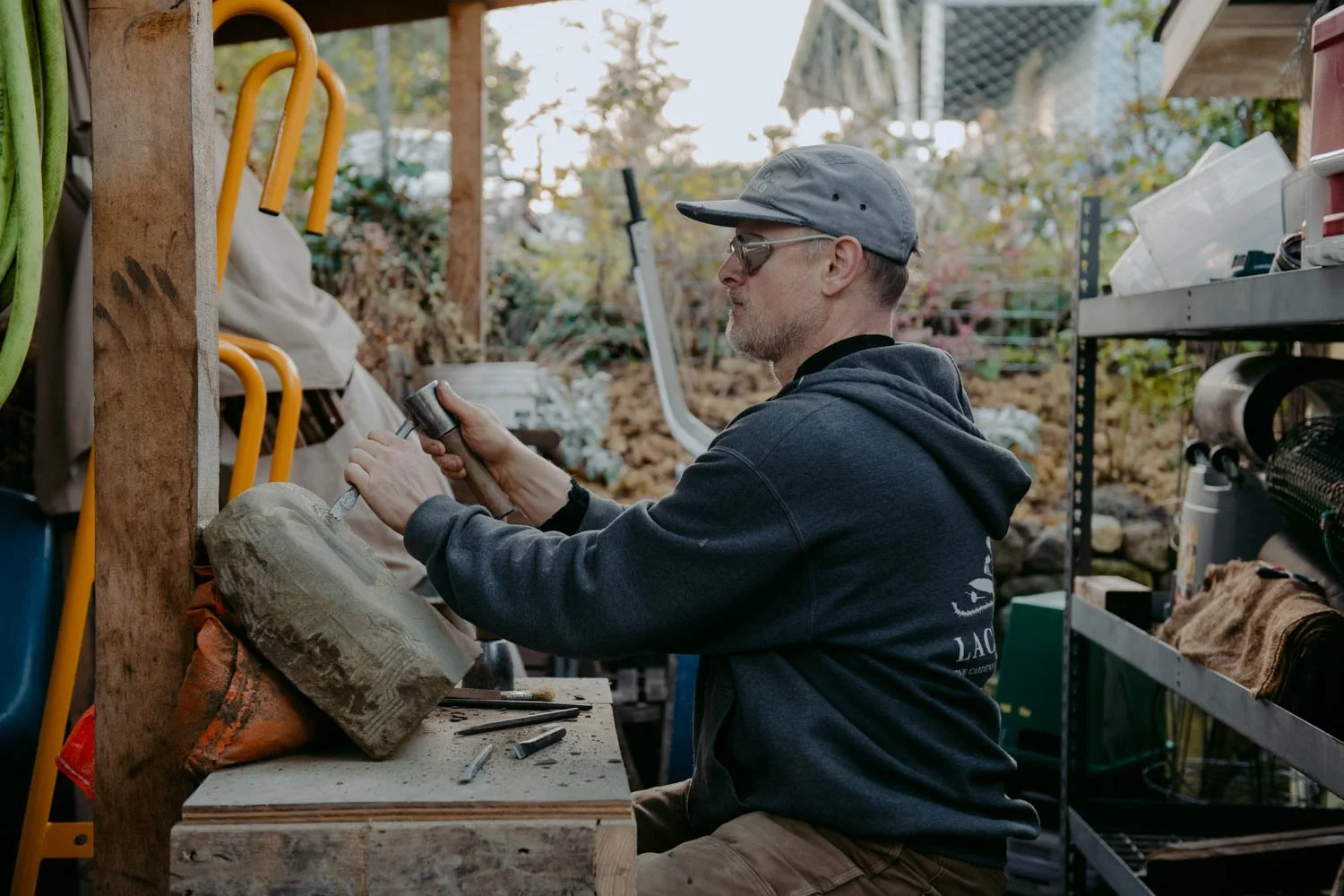
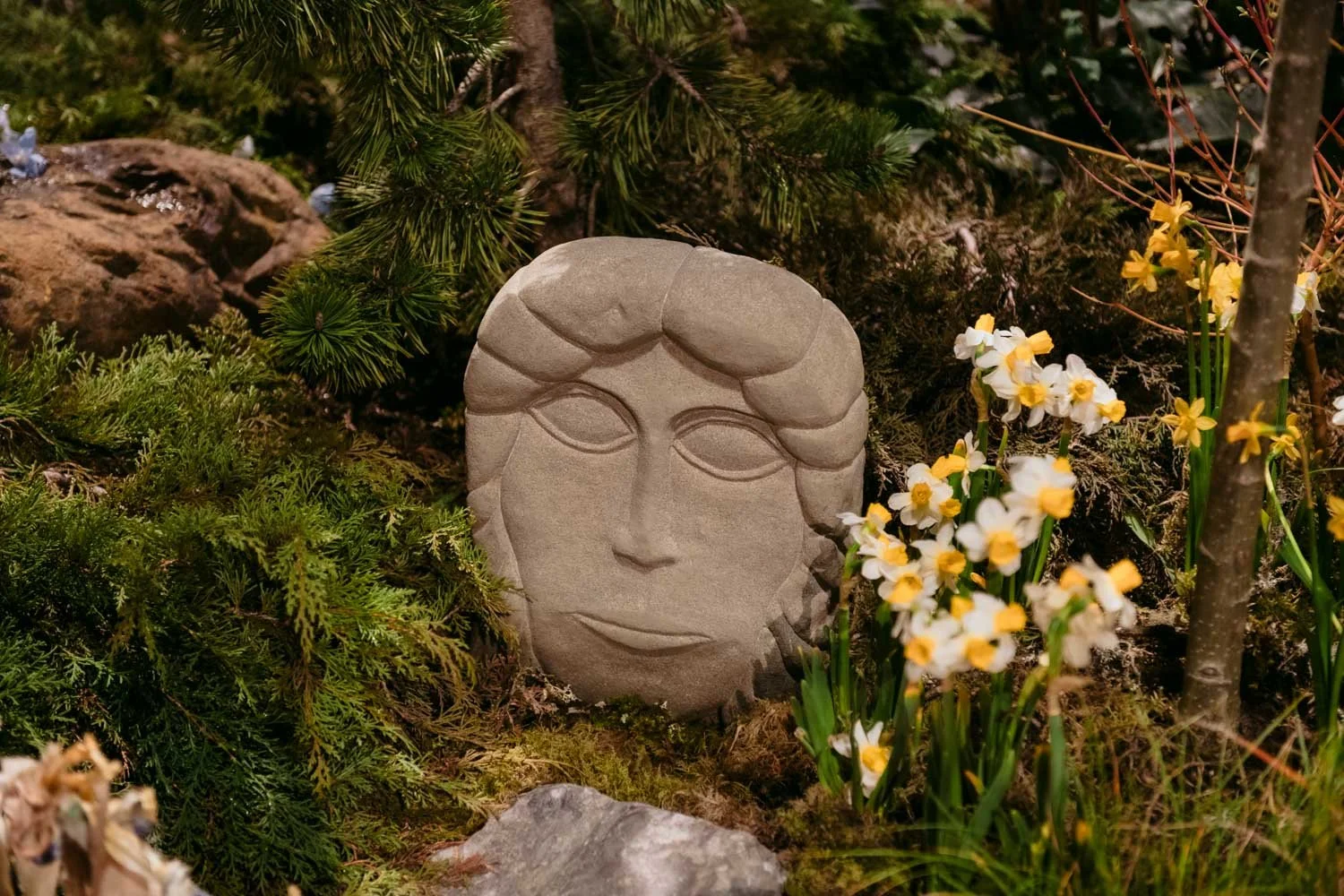
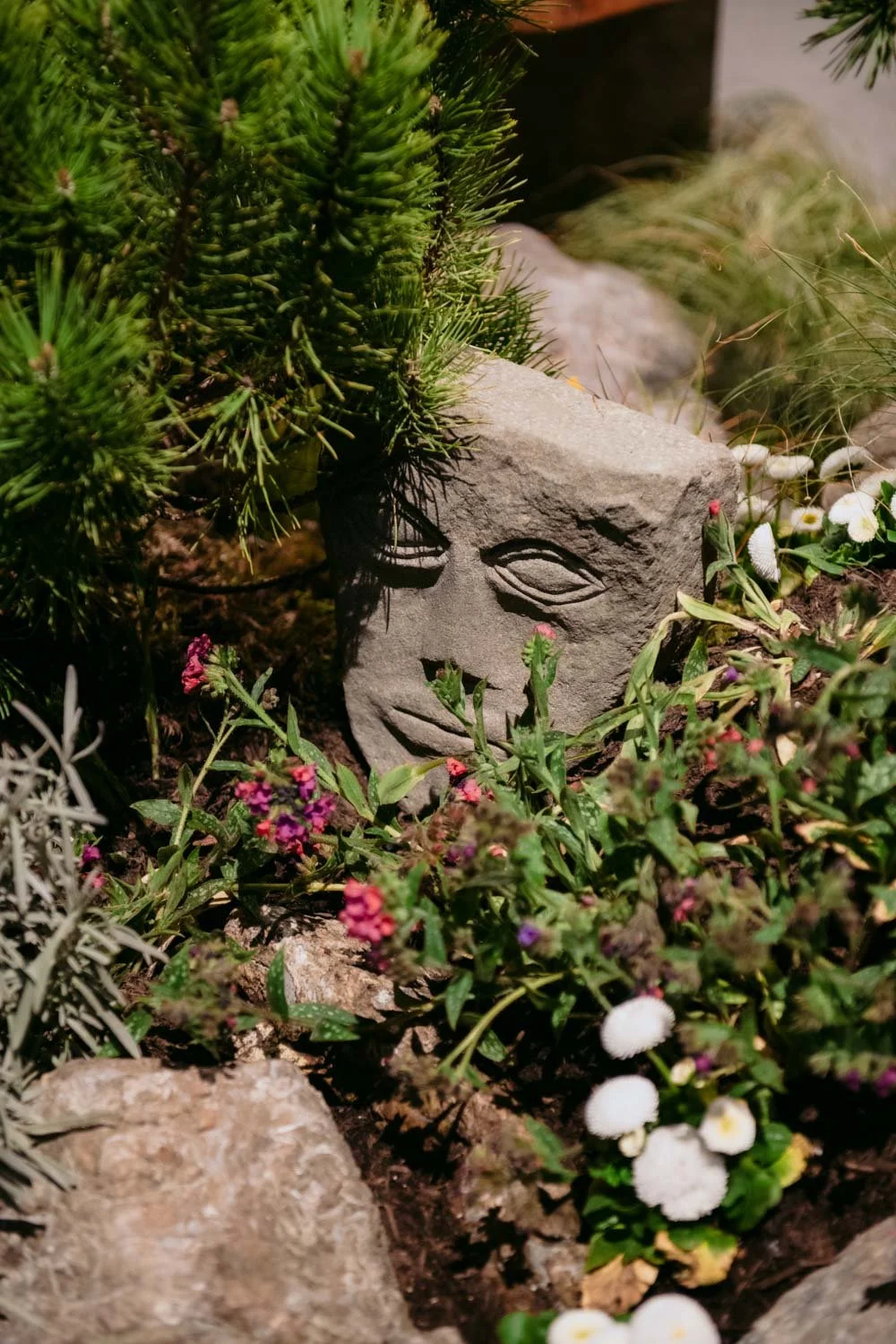
The stone carvings nestled throughout the garden are hand carved by Lacewing’s own Ben Schultz, a Dry Stone Conservancy-certified stone waller, and mentee to both Dry Stone mastercraftsman Nick Aitken and master stone sculptor Alexandra Morosco. Using sandstone locally quarried in Tenino, Washington, these pieces have been inspired by ancient stone renderings discovered in the Beltany Stone Circle in Donegal, Ireland. The Beltany stone faces were believed to offer protection from evil and possibly a portal between the living and spirit worlds. Beltany is often associated with Beltane, the Celtic celebration of spring.
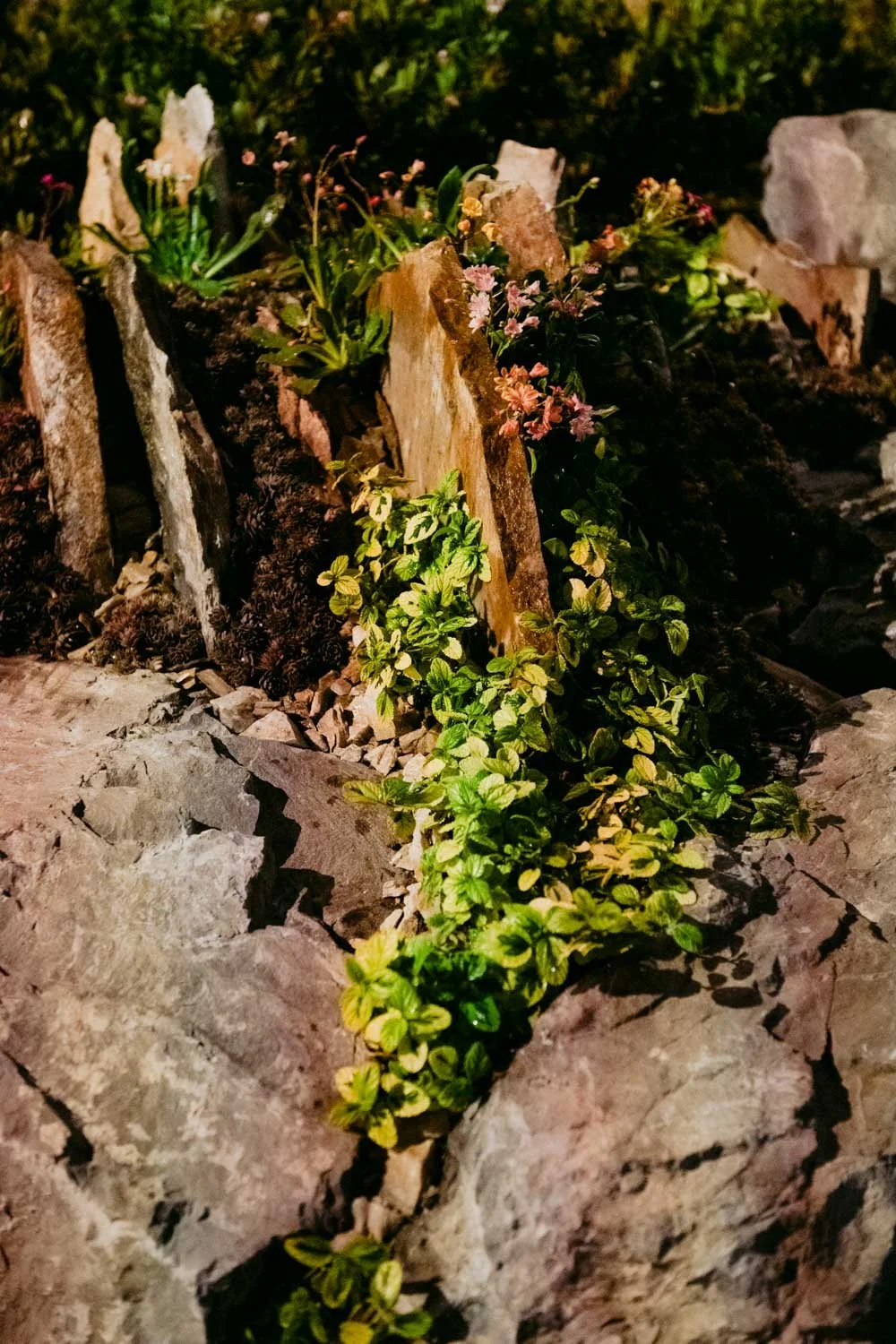
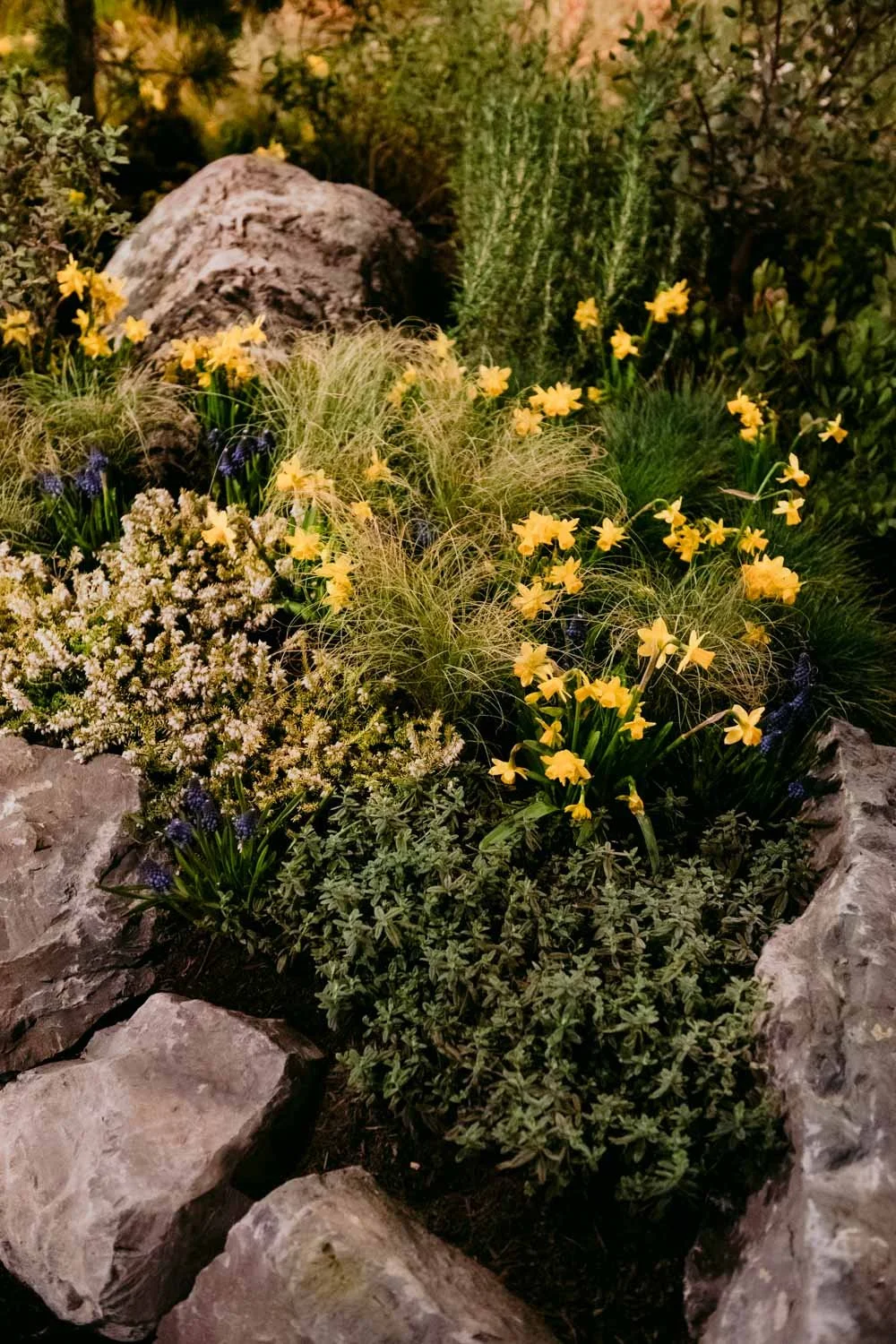
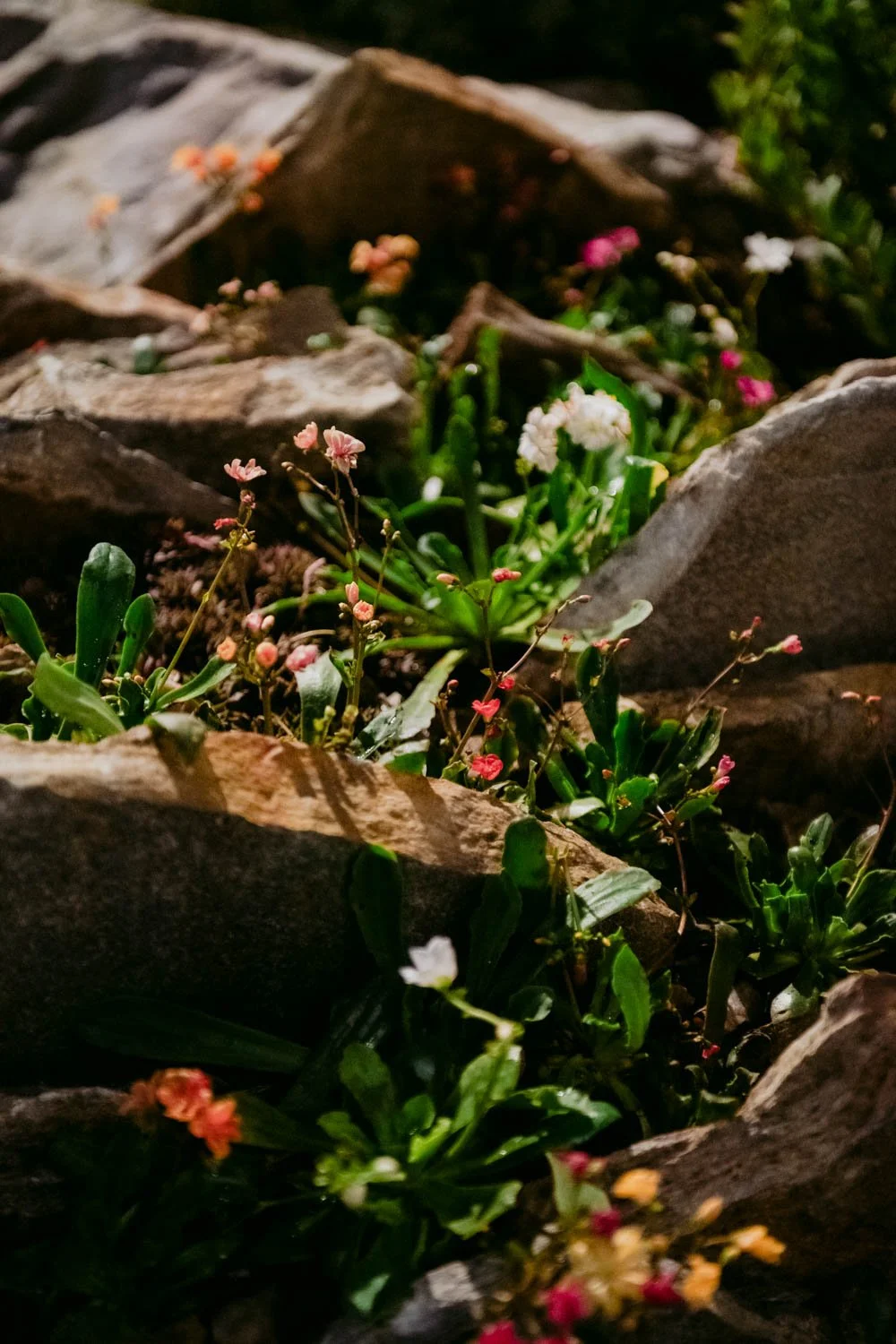
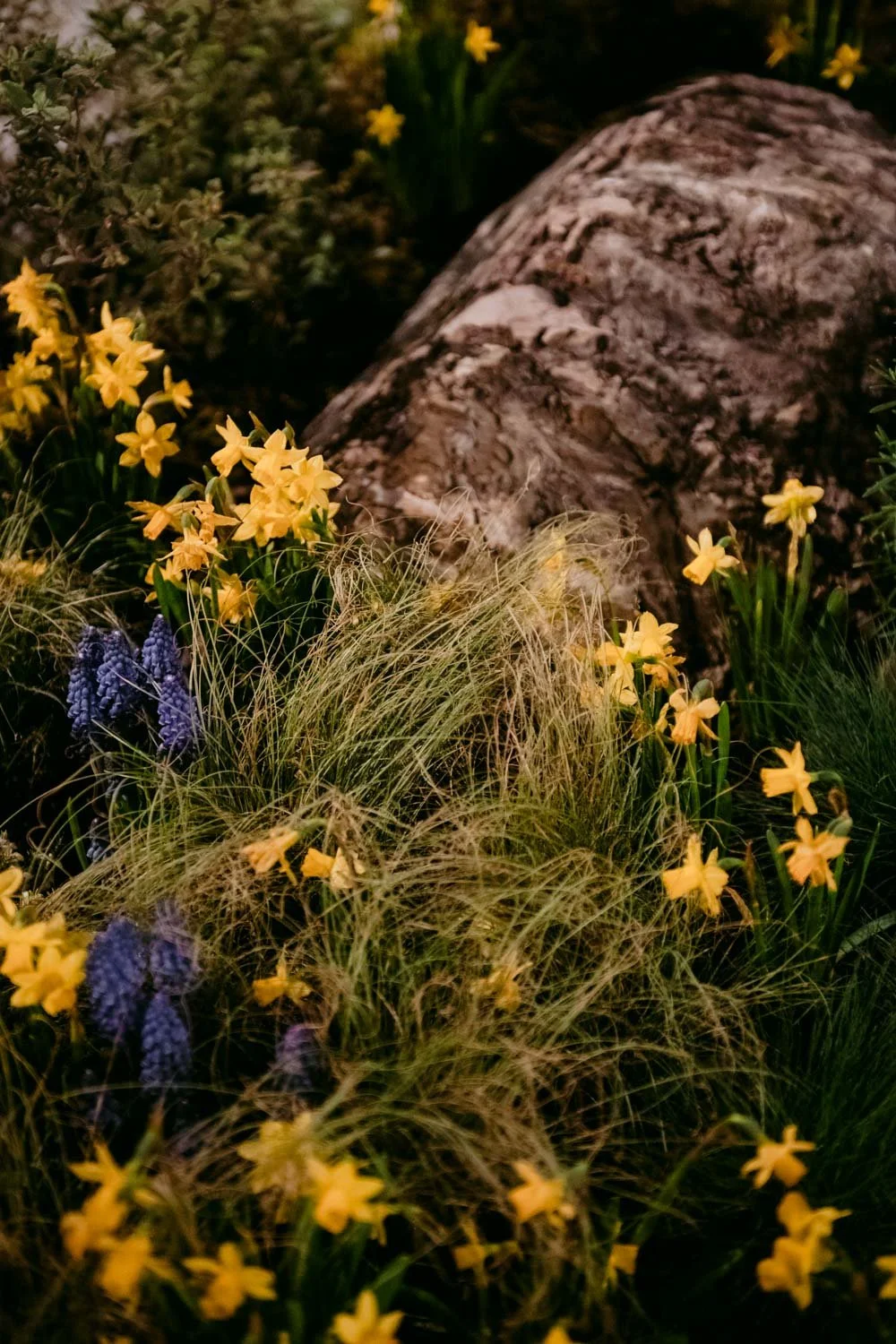
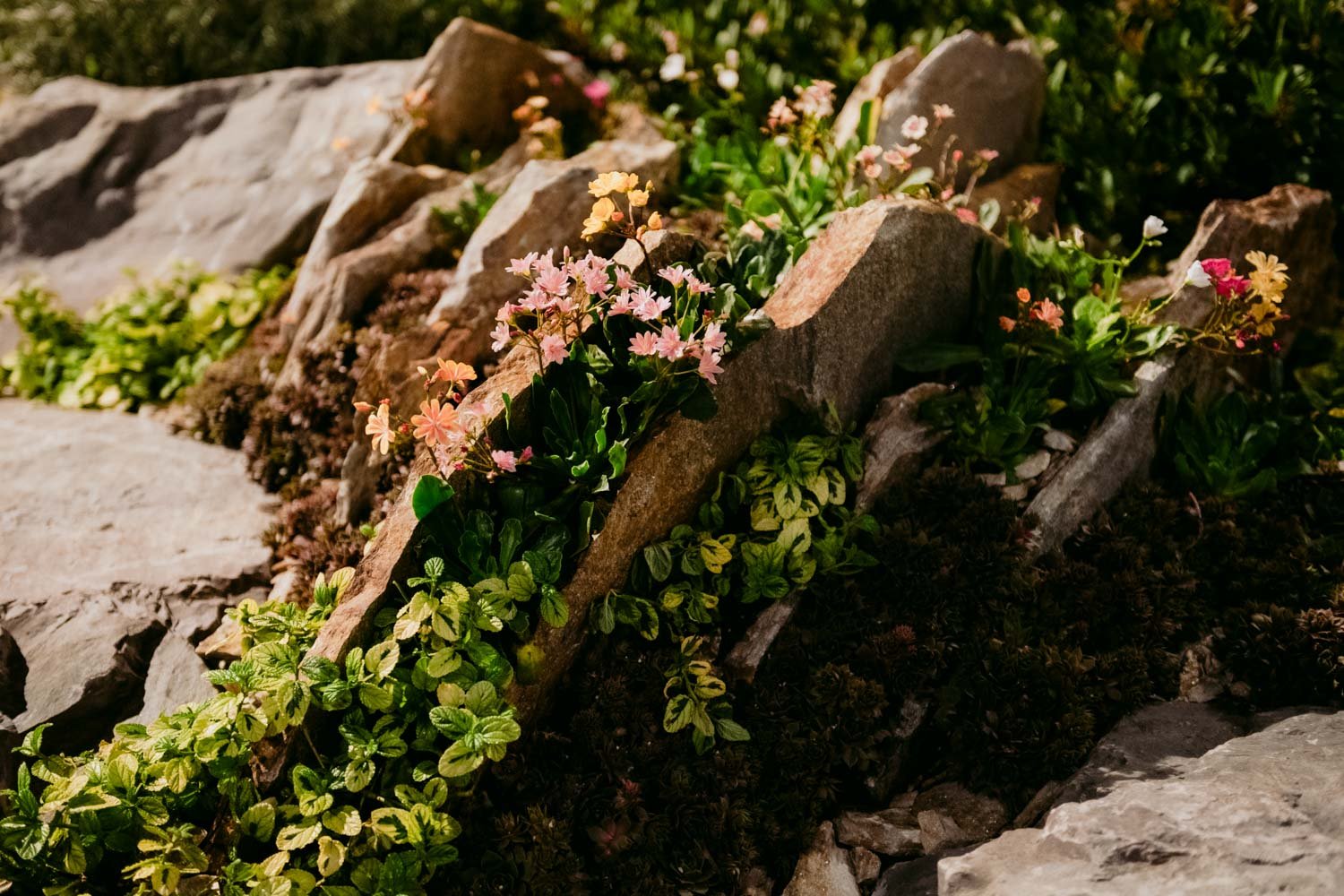
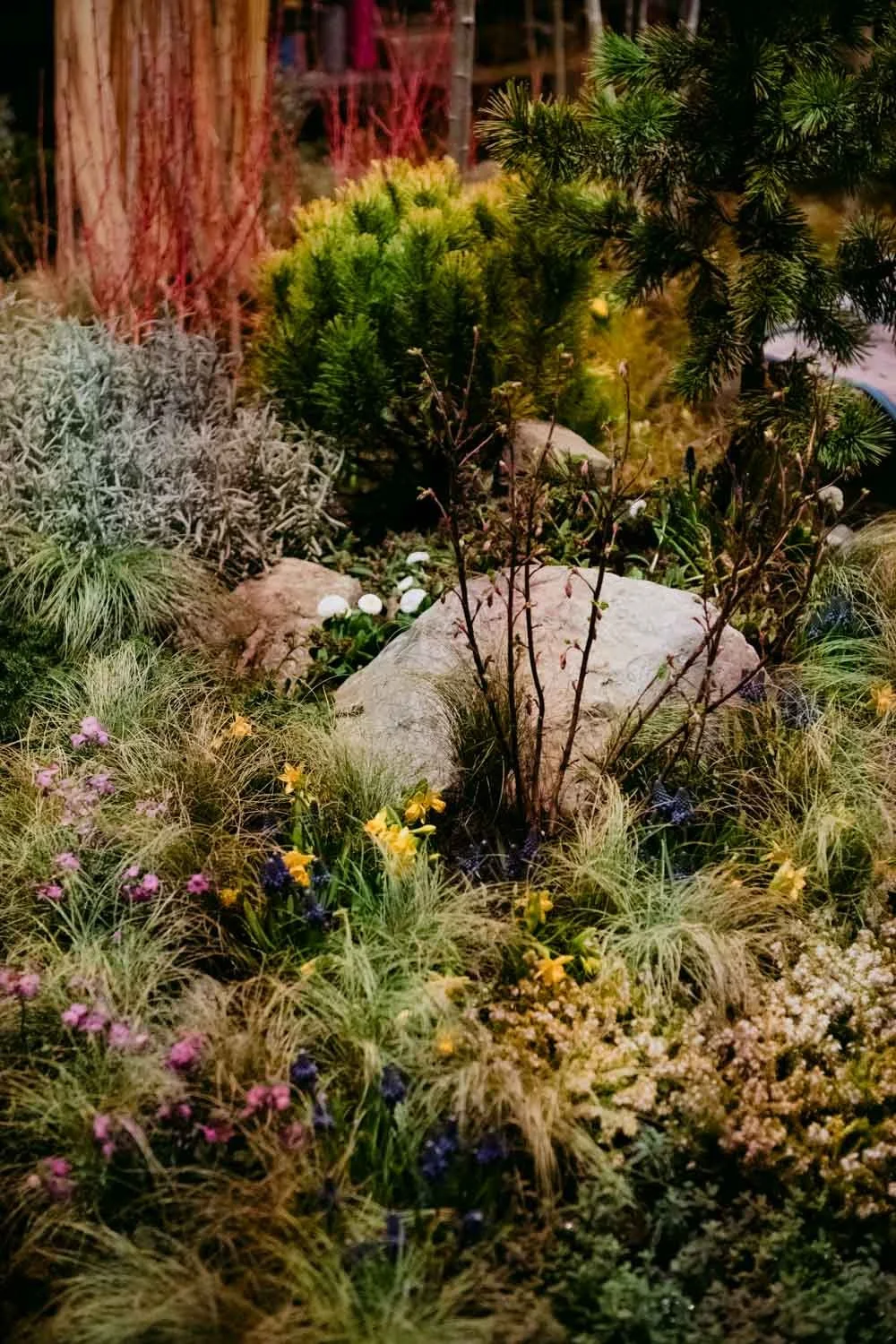
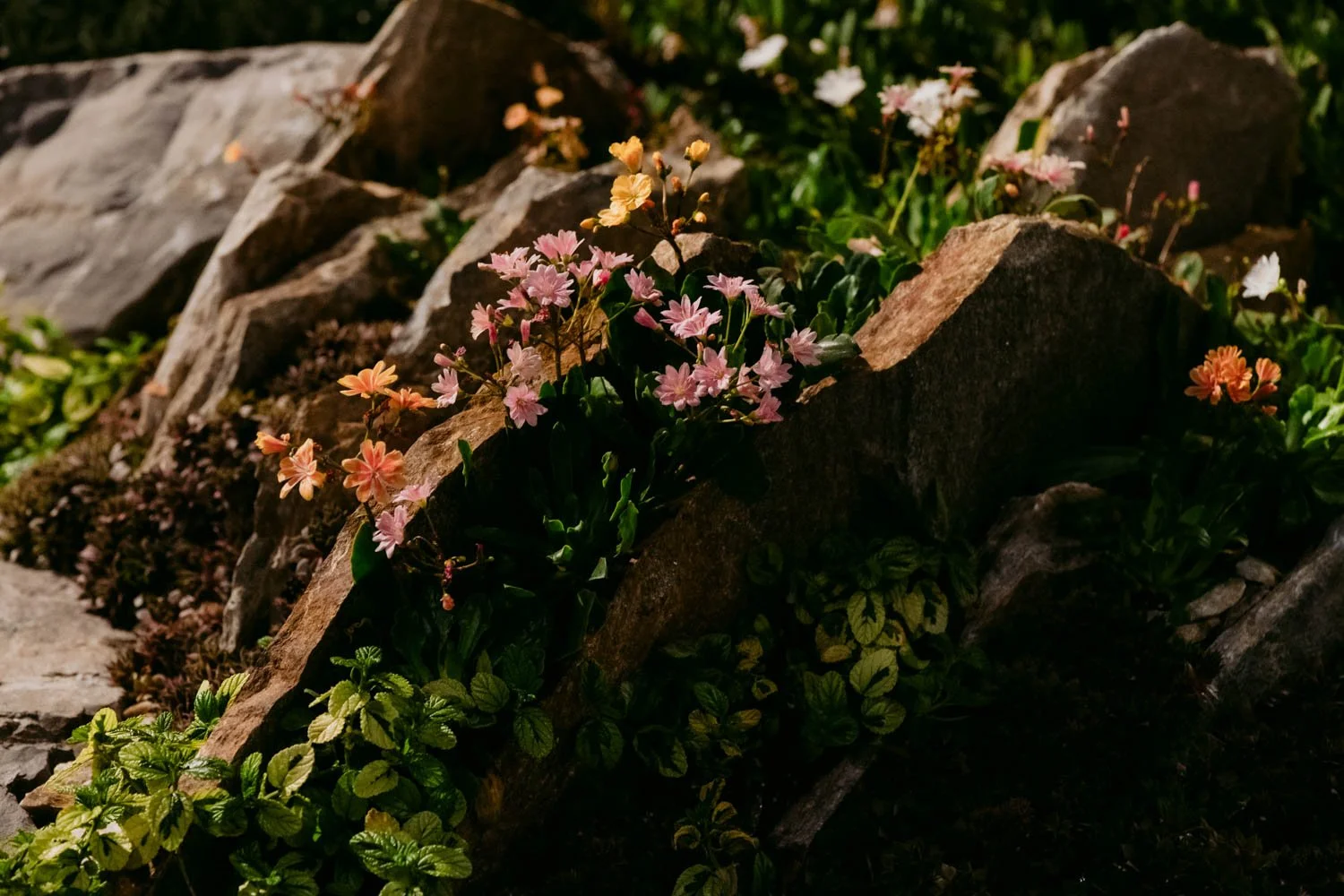
Crevice Garden, Alpine Style Boulder ArrangementsThe alpine style crevice garden offers a distinctive form of stone retention that emulates the stone arrangements found in wild spaces while also offering homeowners a unique, drought tolerant planting inspiration. The vertical arrangement offers a unique and attractive method for low water garden design.
Thank you to our sponsor, Rock Mountain, for the stone features! -
-
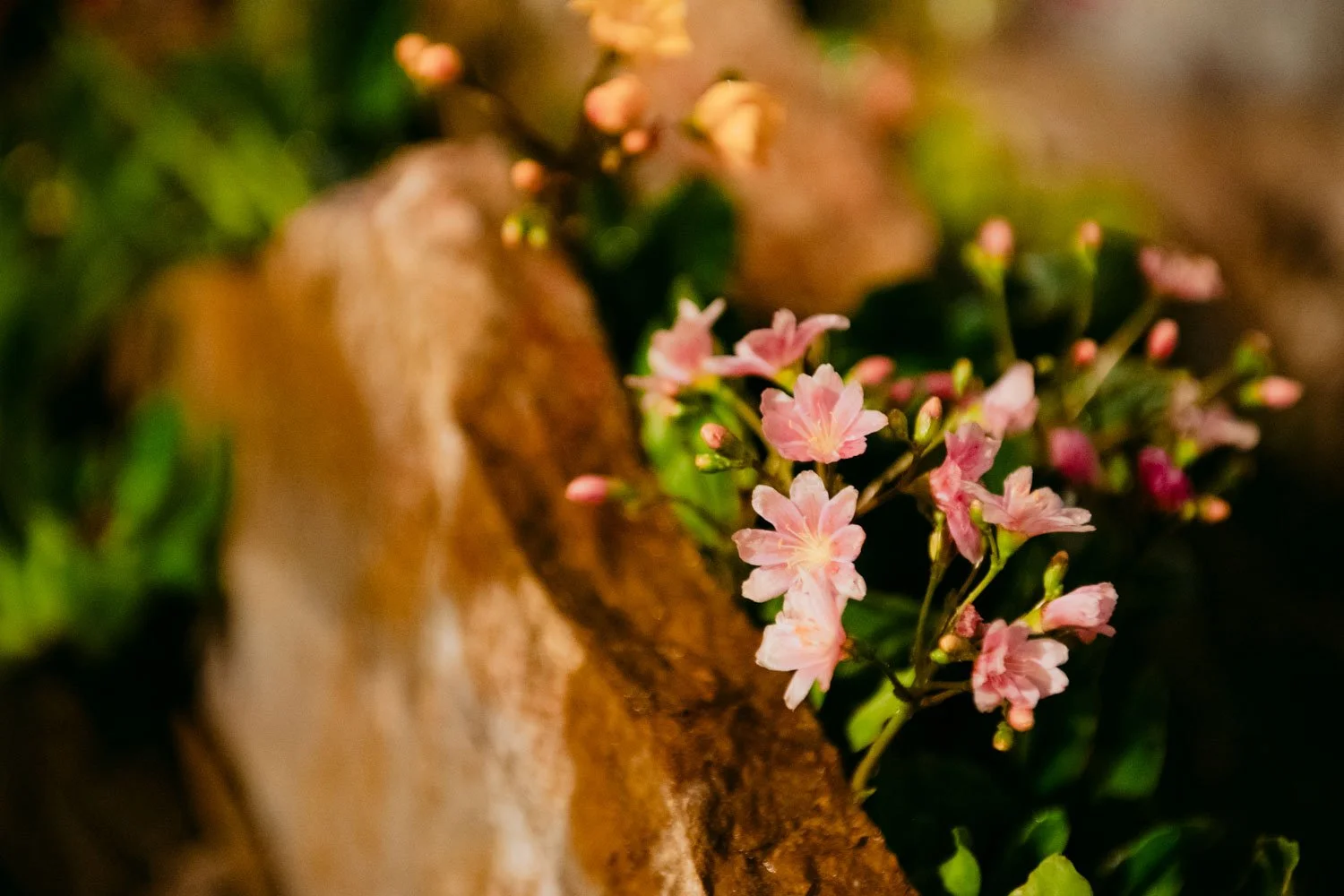
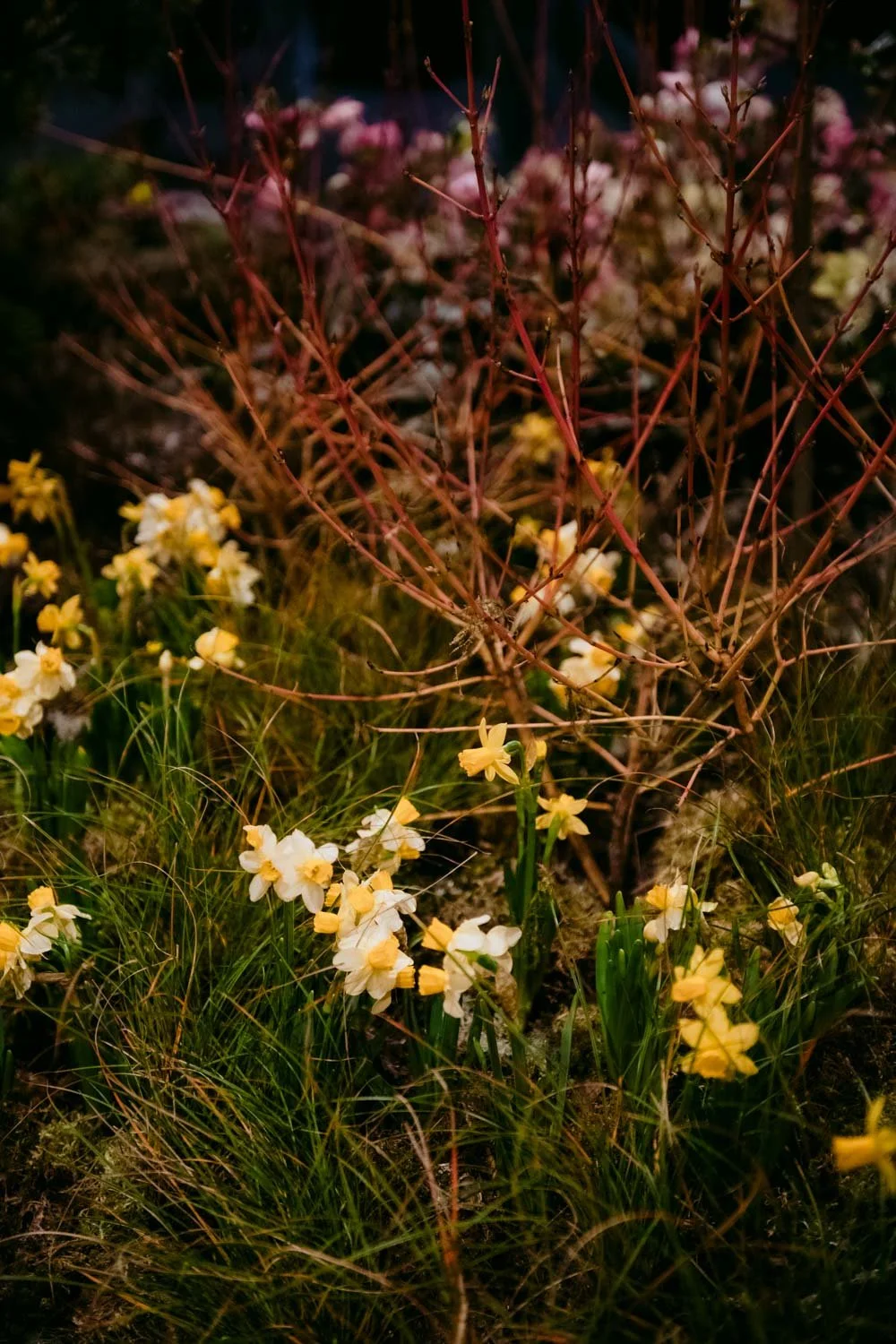
The plantings of the Dye Garden offer multi-faceted intentions for planning the naturalistic garden with creative intention. Our inspiration for this garden has been further heartened in learning that so many of the plants we already love are ALSO valued for their dye qualities.
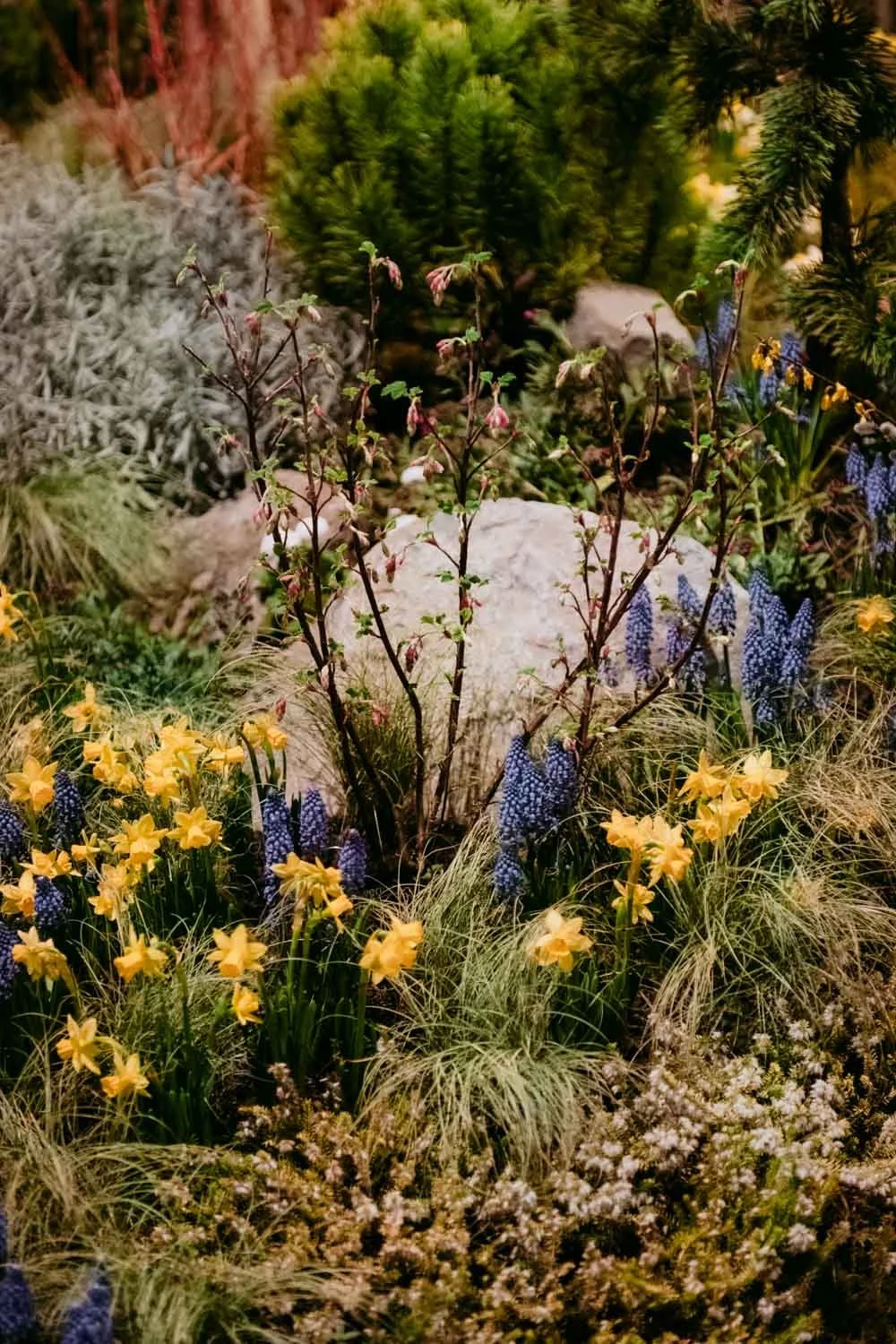
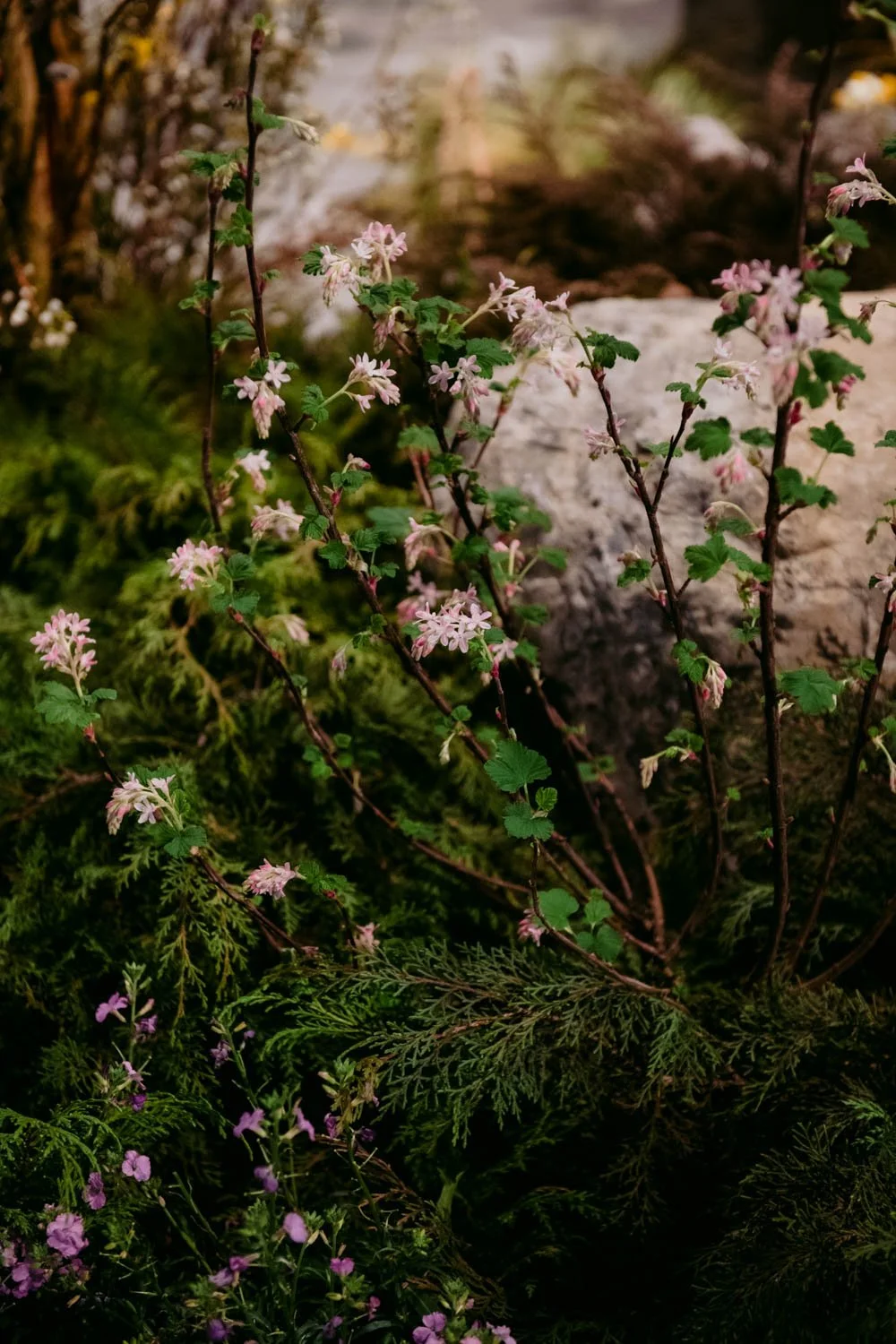
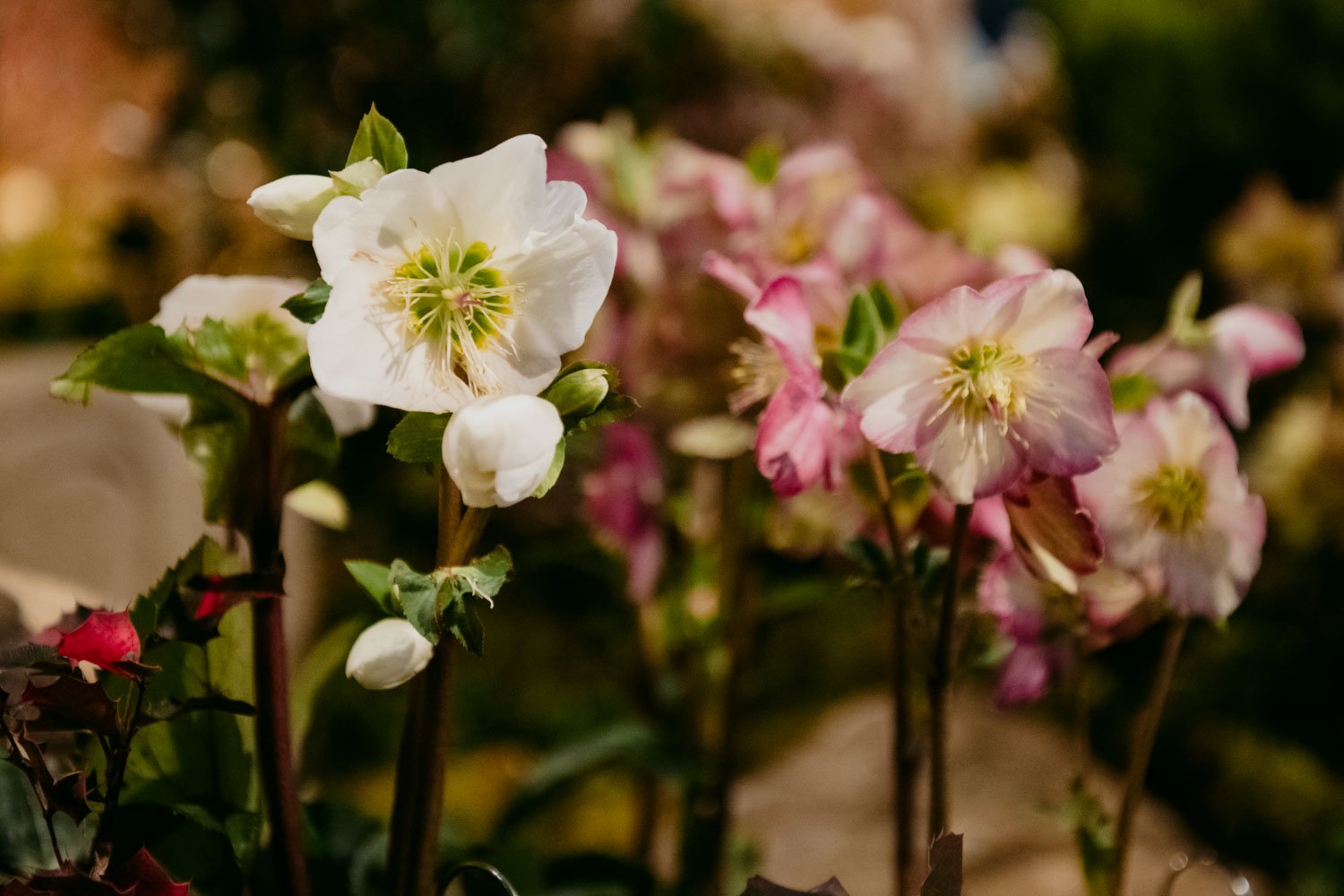
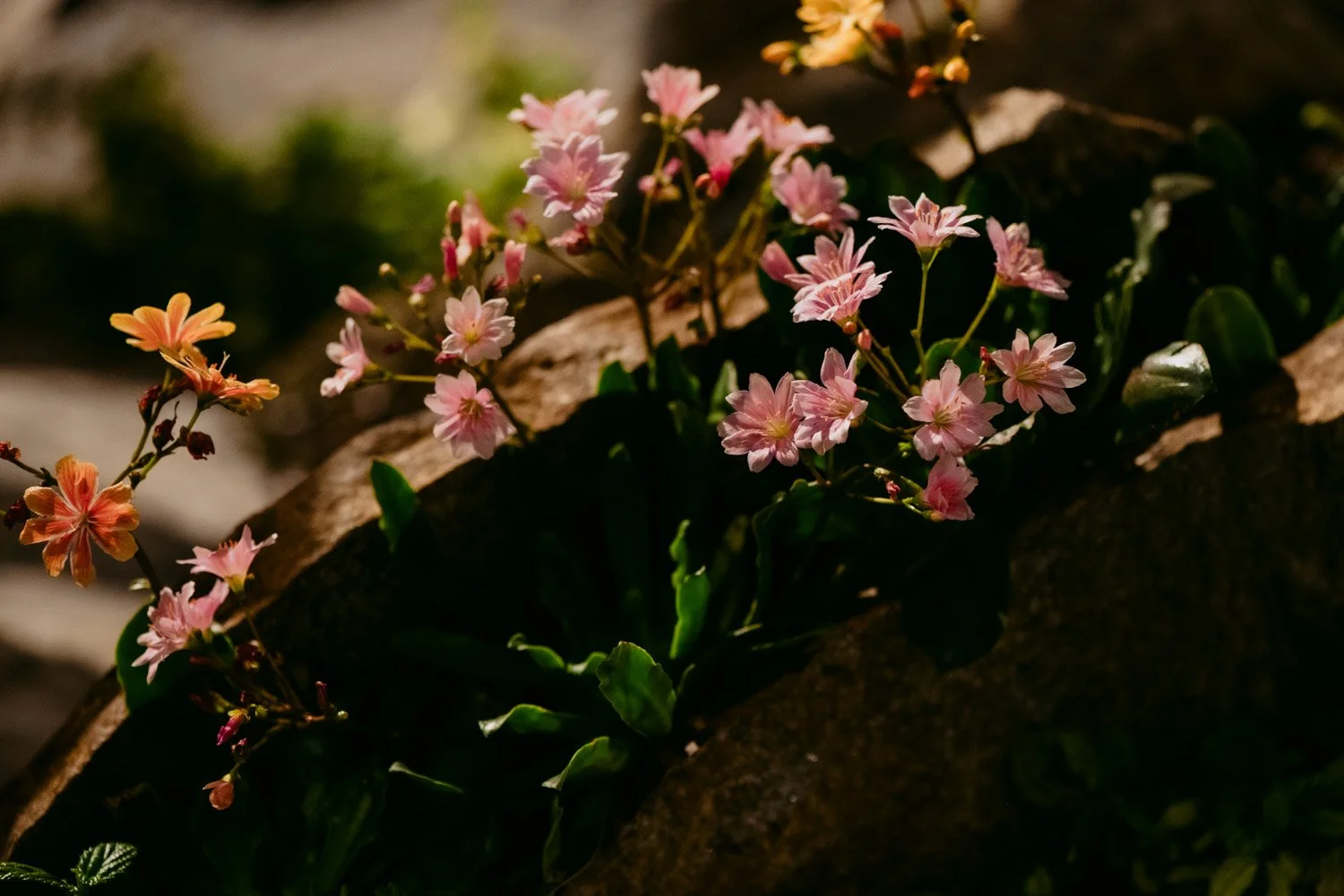
To create this space, the plantings will feature summer dry plantings for sun and shade gardens in the PNW that are inspired by wild spaces of the Mountain West, many of which are also dye plants. Please visit our Plant List to learn more about the featured plants and their dye qualities.
It is our hope that the public embrace the intentions of The Dye Garden as whimsical inspiration for home garden design by also prioritizing natural materials, building with ancient techniques and committing to climate-adapted design principles, a powerful set of principles that provide hope for the adaptation and future of our industry.
The plantings of The Dye Garden offer multi-faceted intentions for planning a naturally designed garden inspired by the power of natural spaces while also offering opportunity for further creativity, reflection and transformation. The power of plants and building with natural materials continue to astound us and we feel that this knowledge is a gift to share with the world. We are thrilled to be able to share our intentions for the second year at the NWFGS.
-
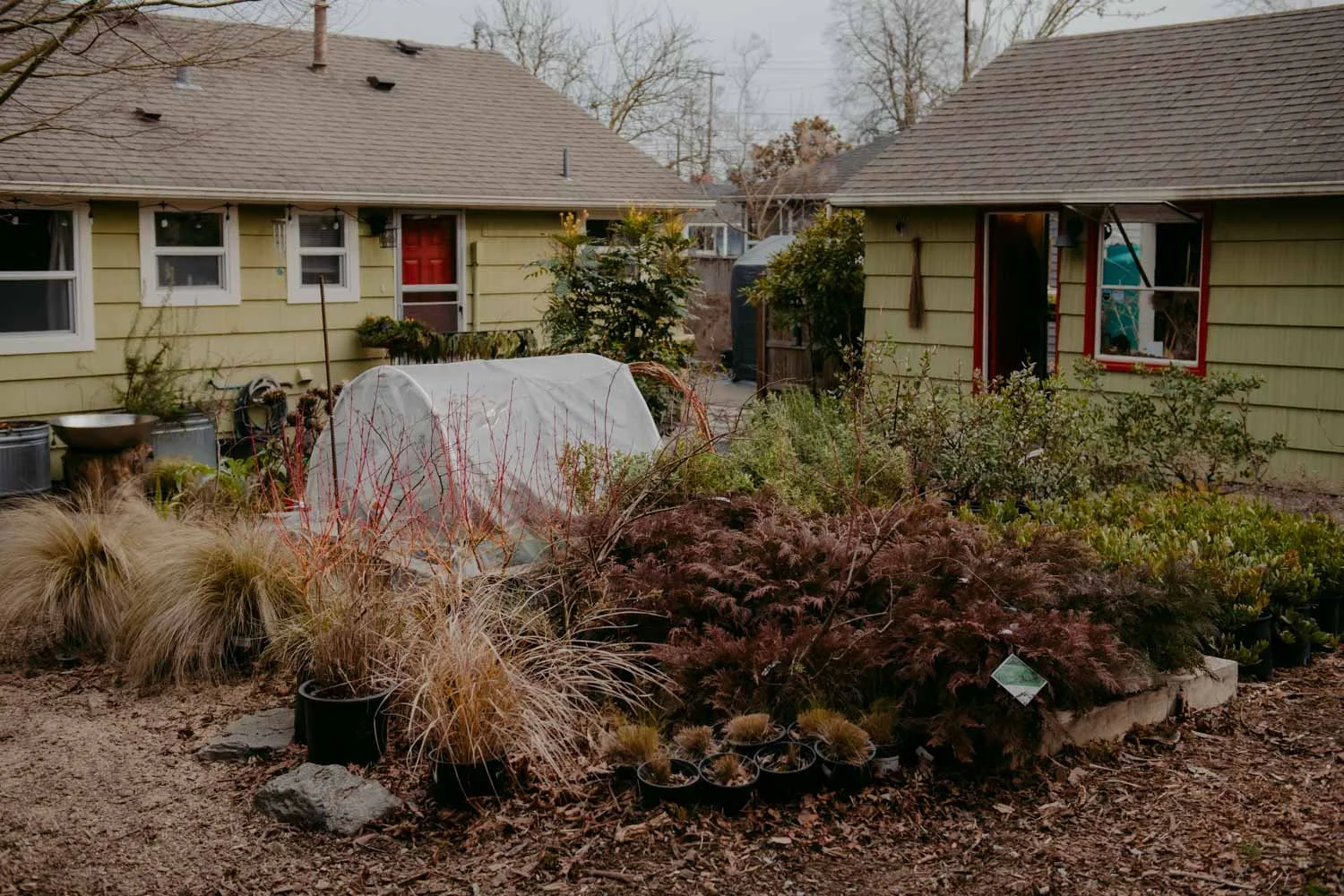
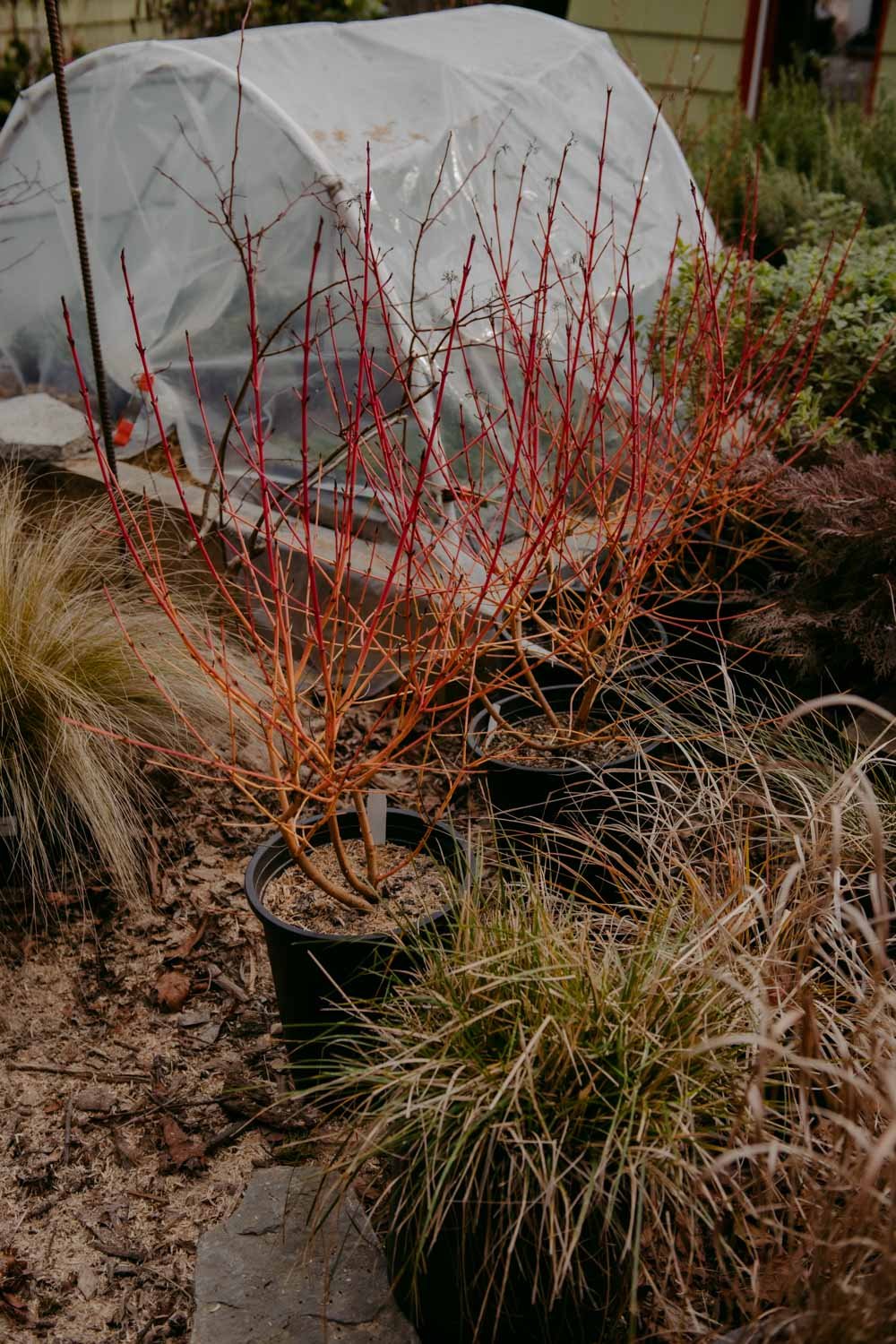
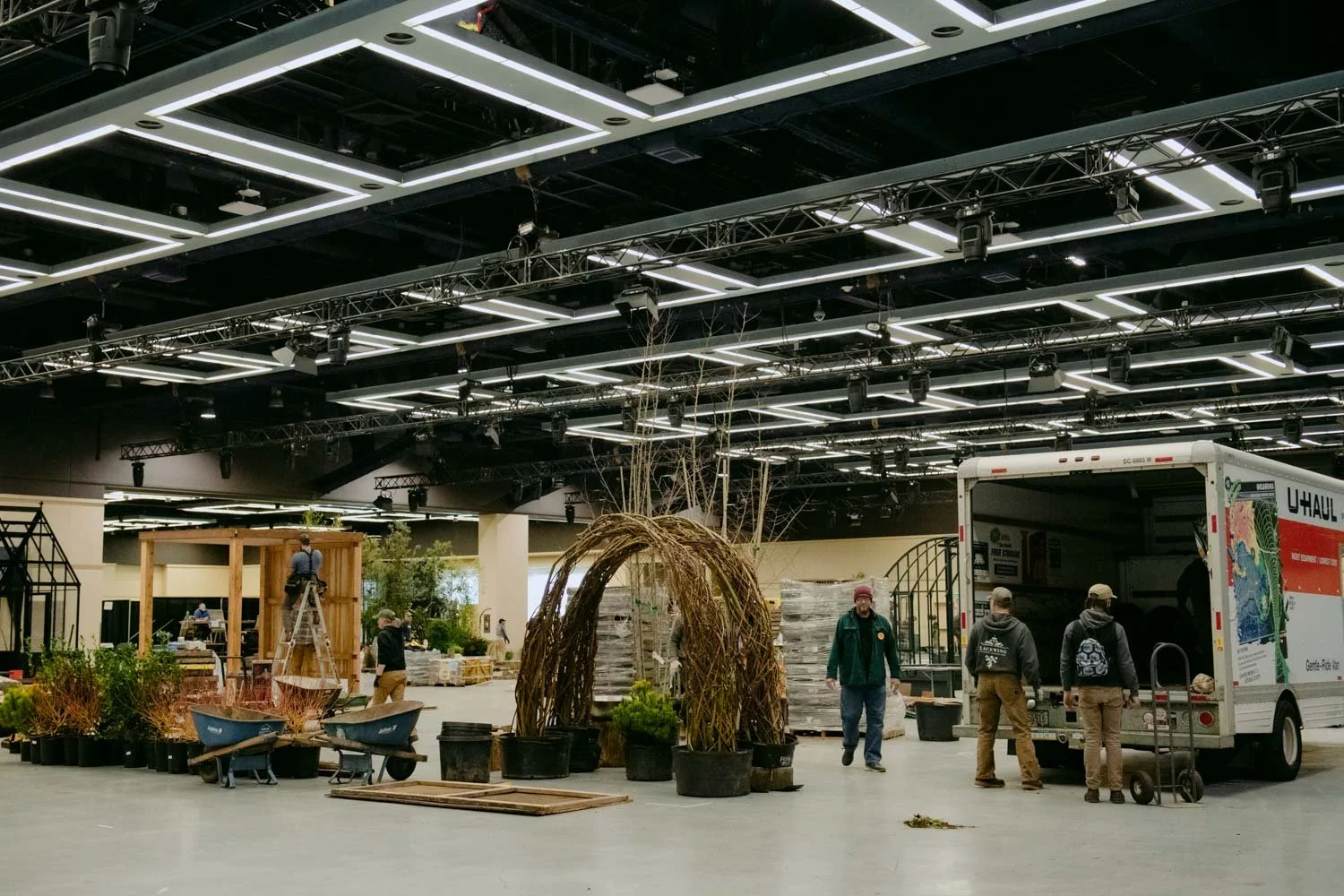
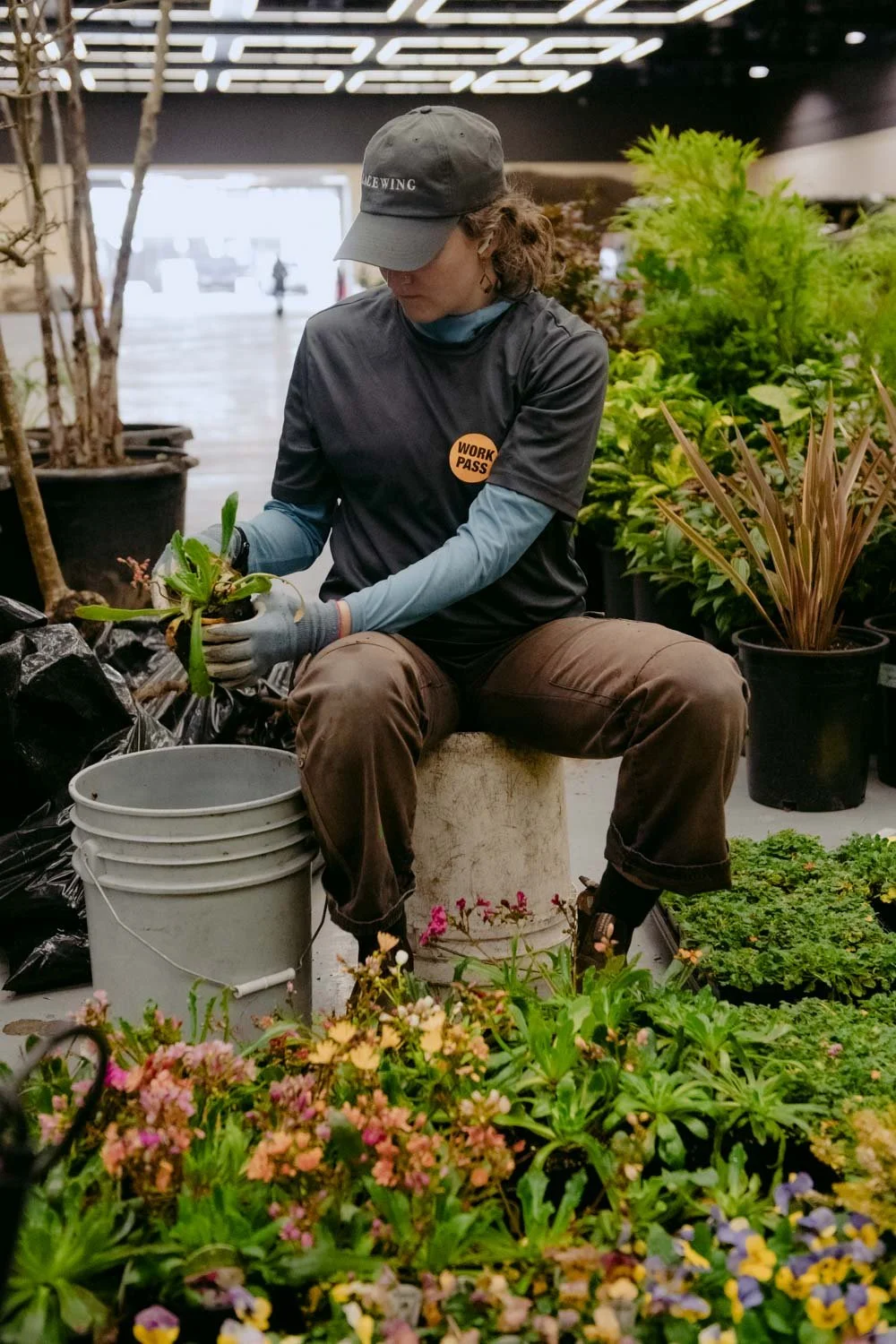
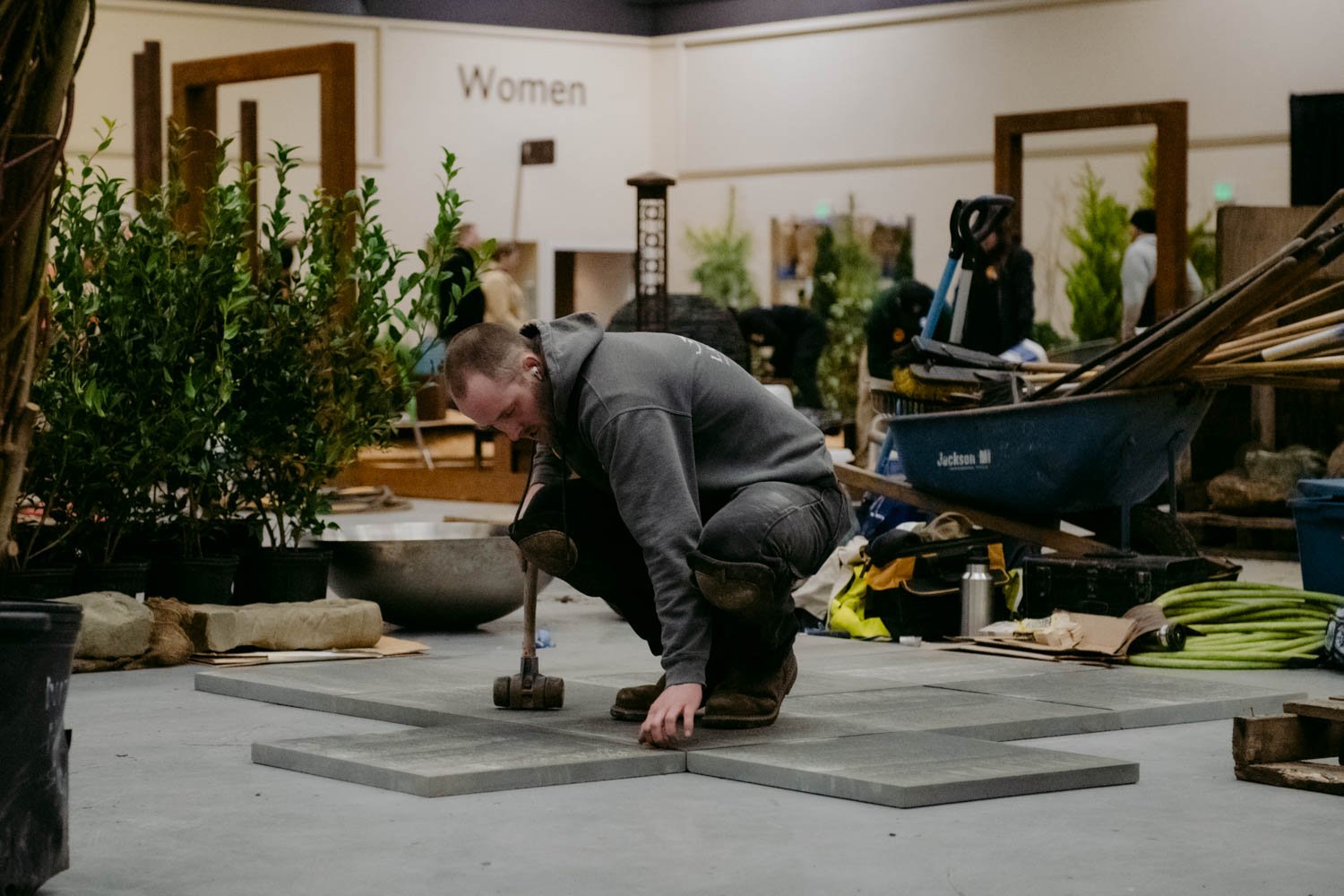
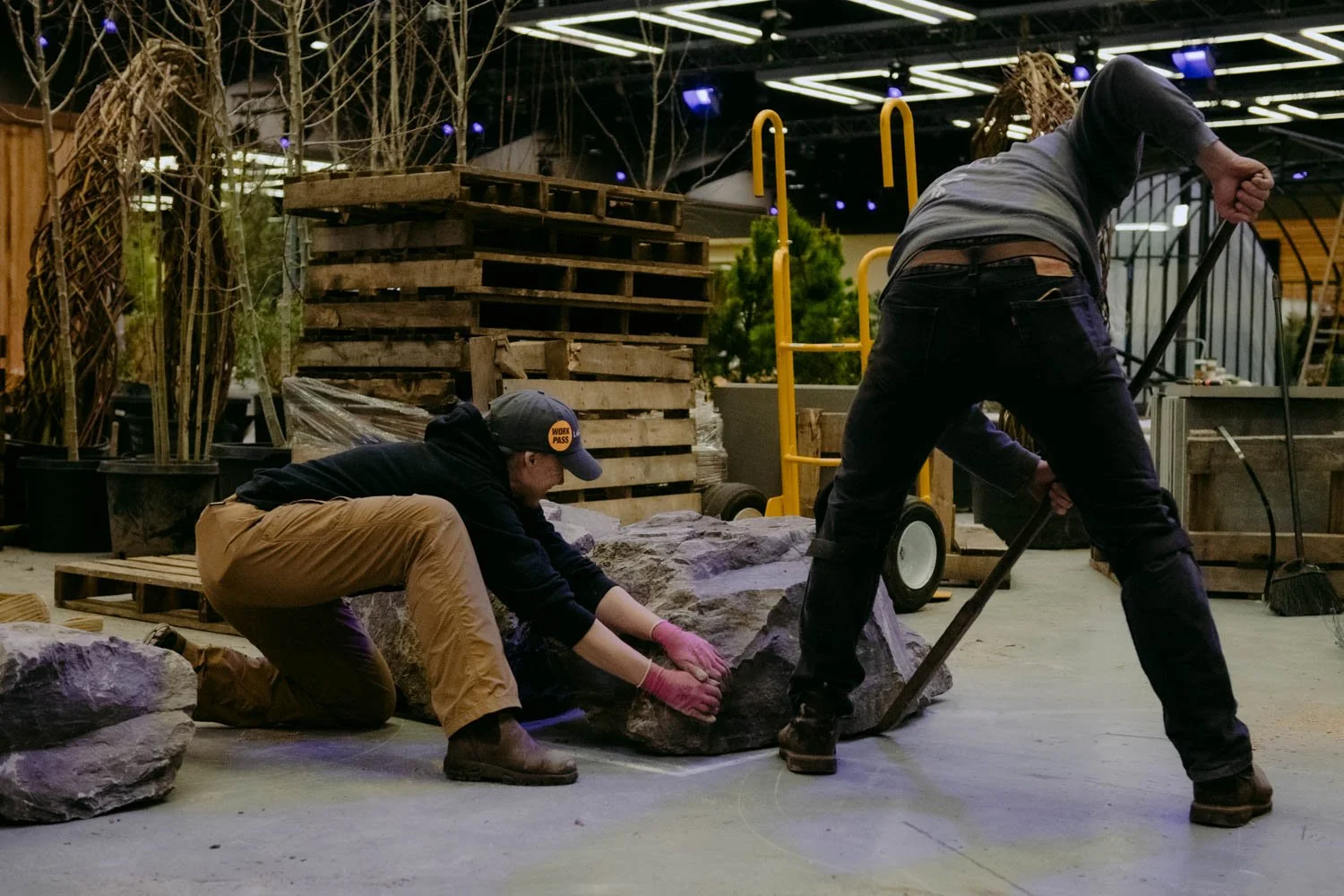
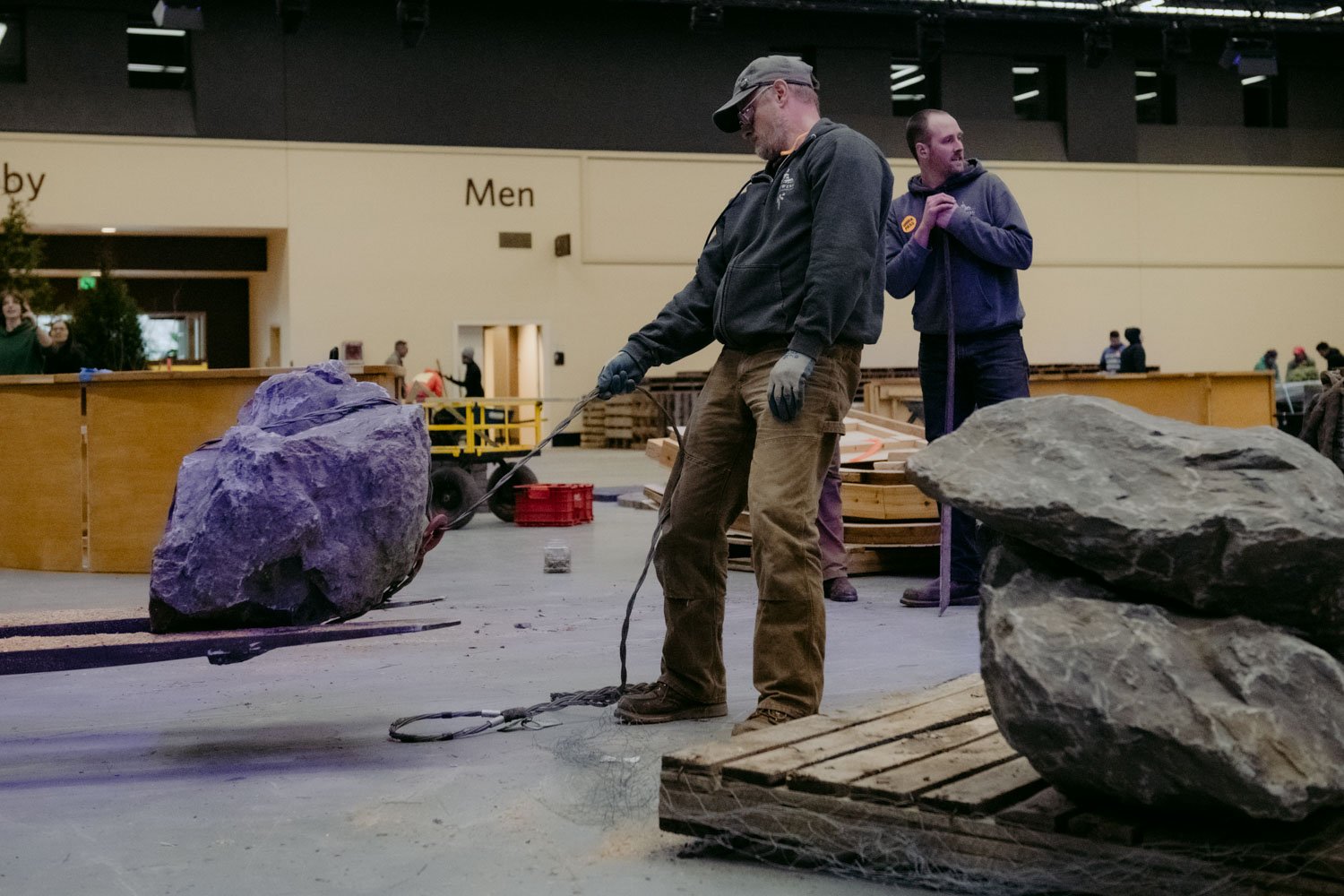
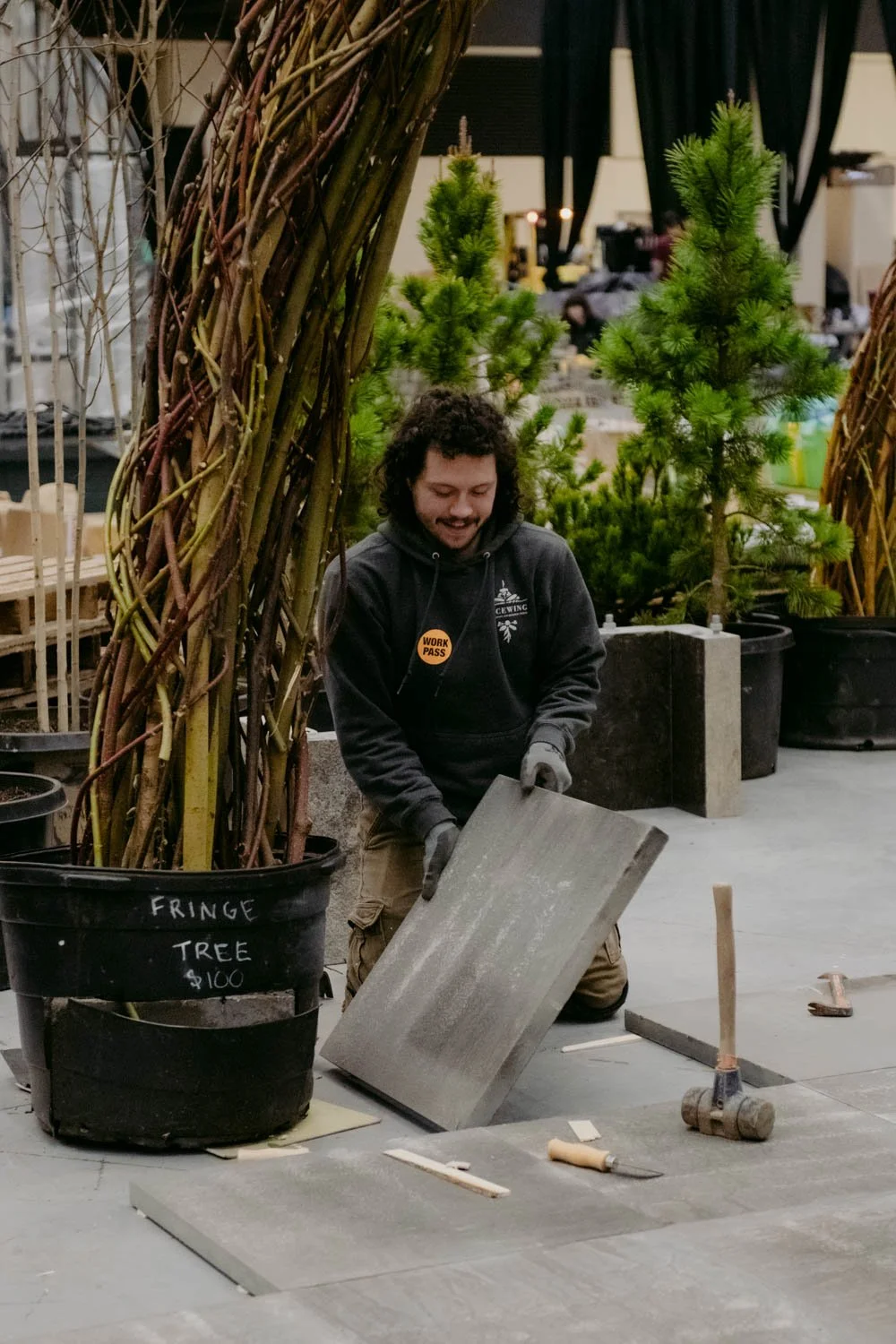
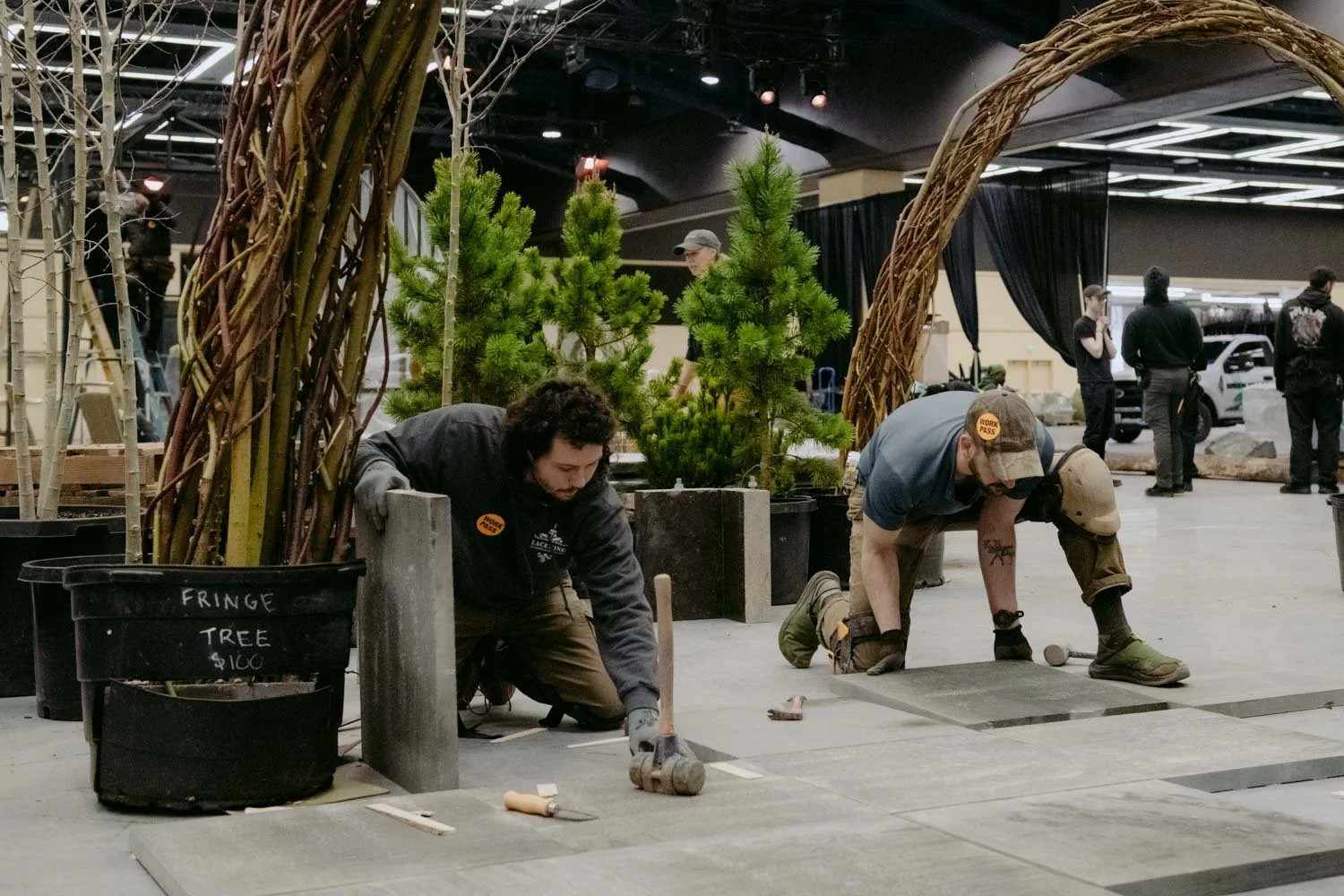
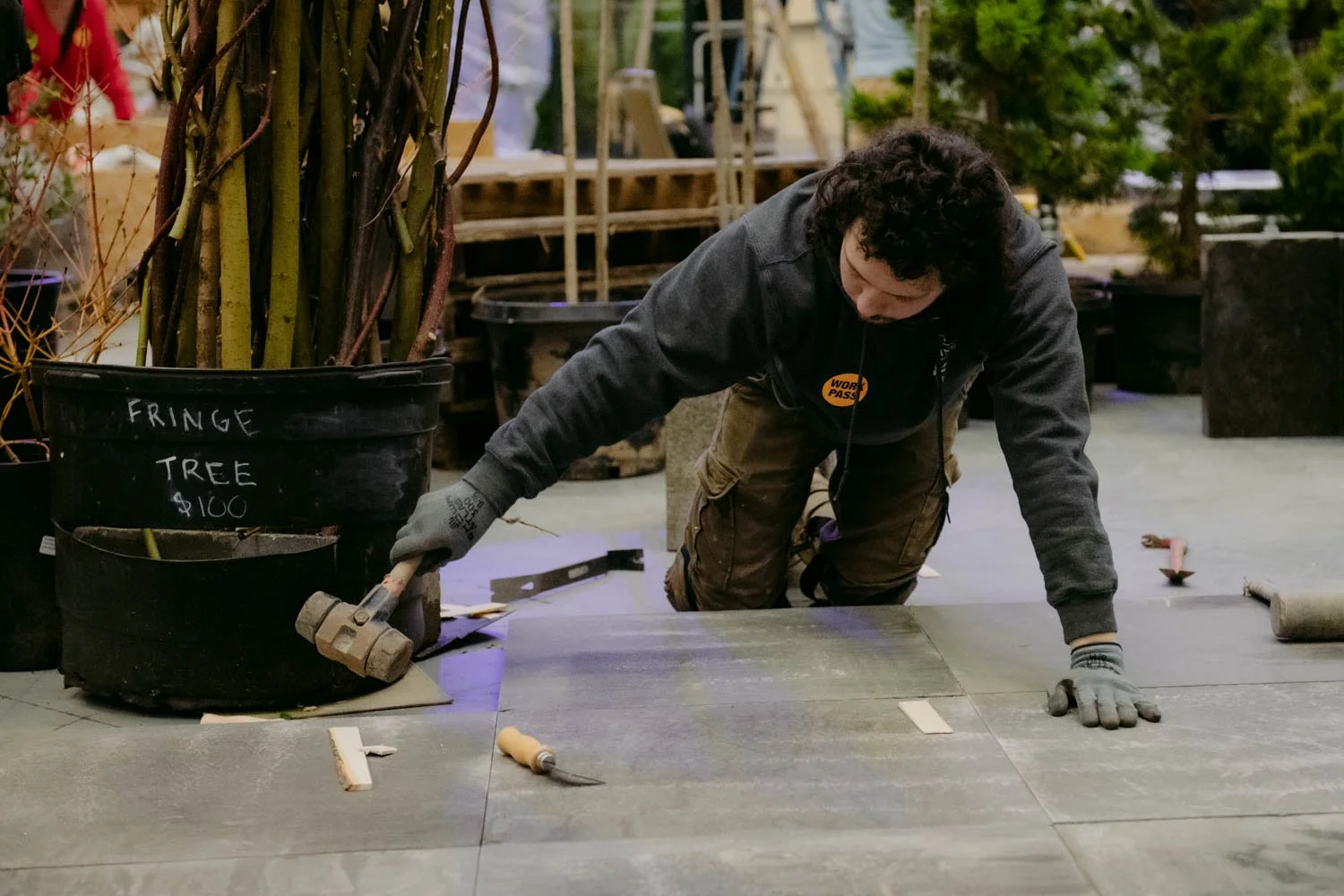
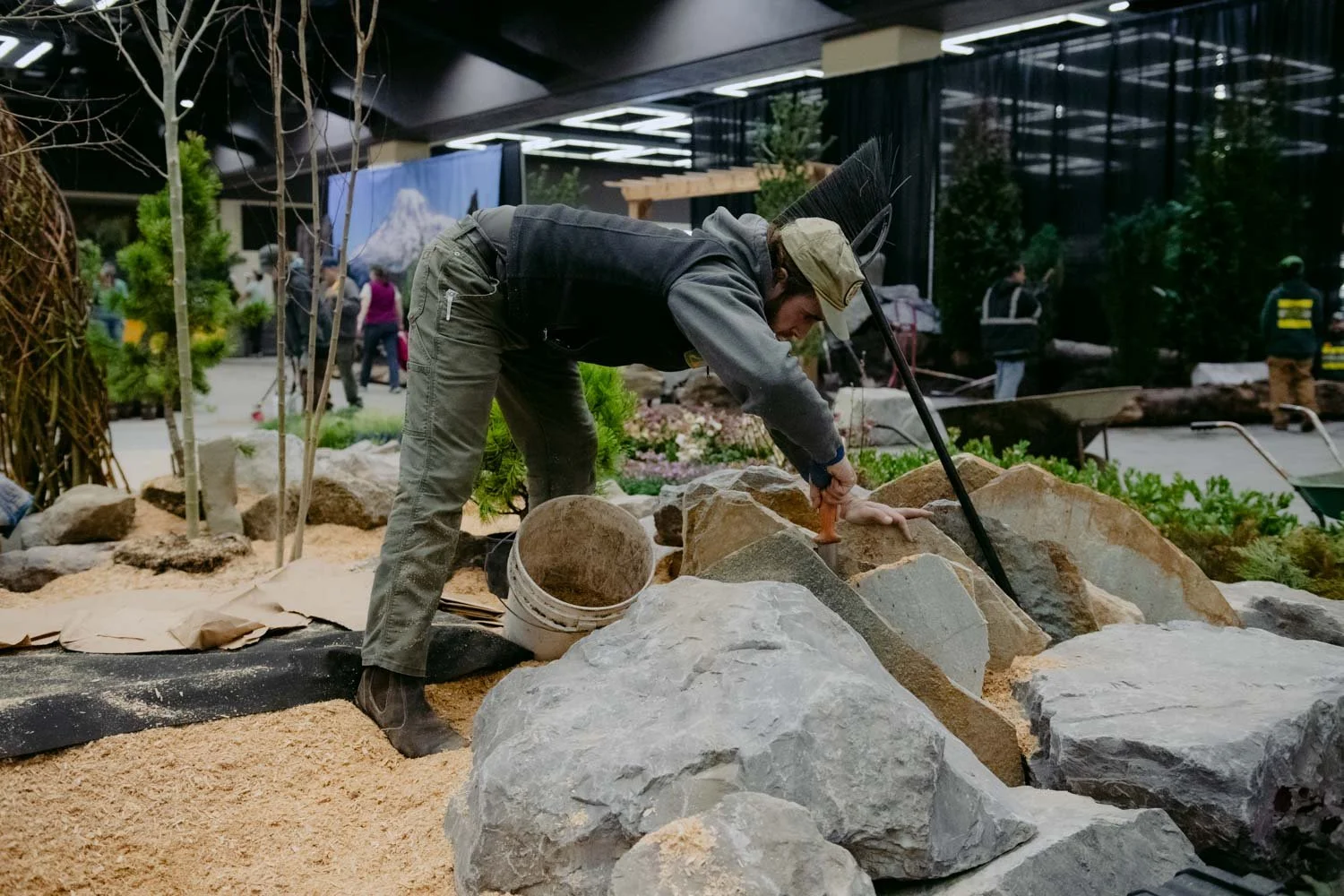
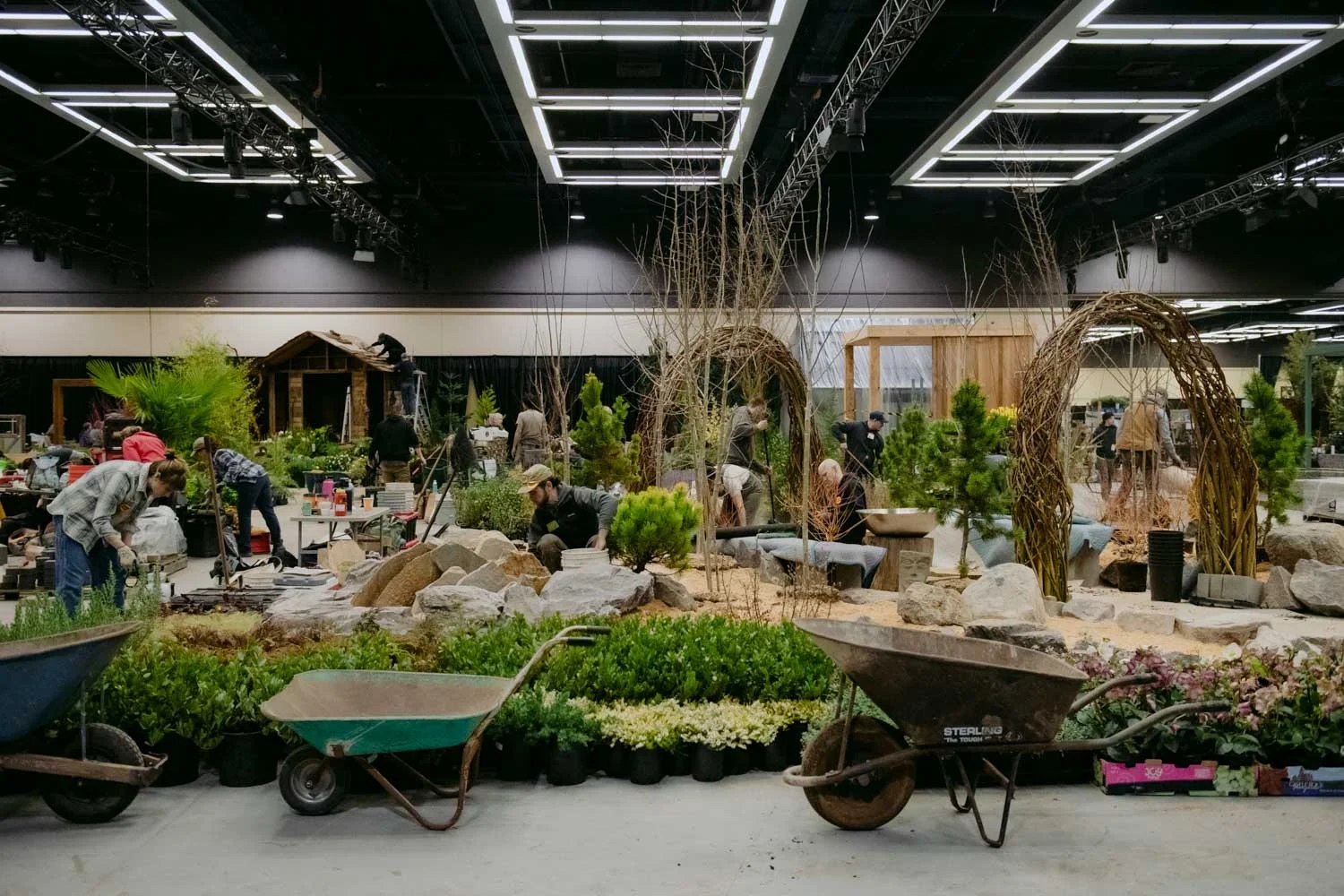
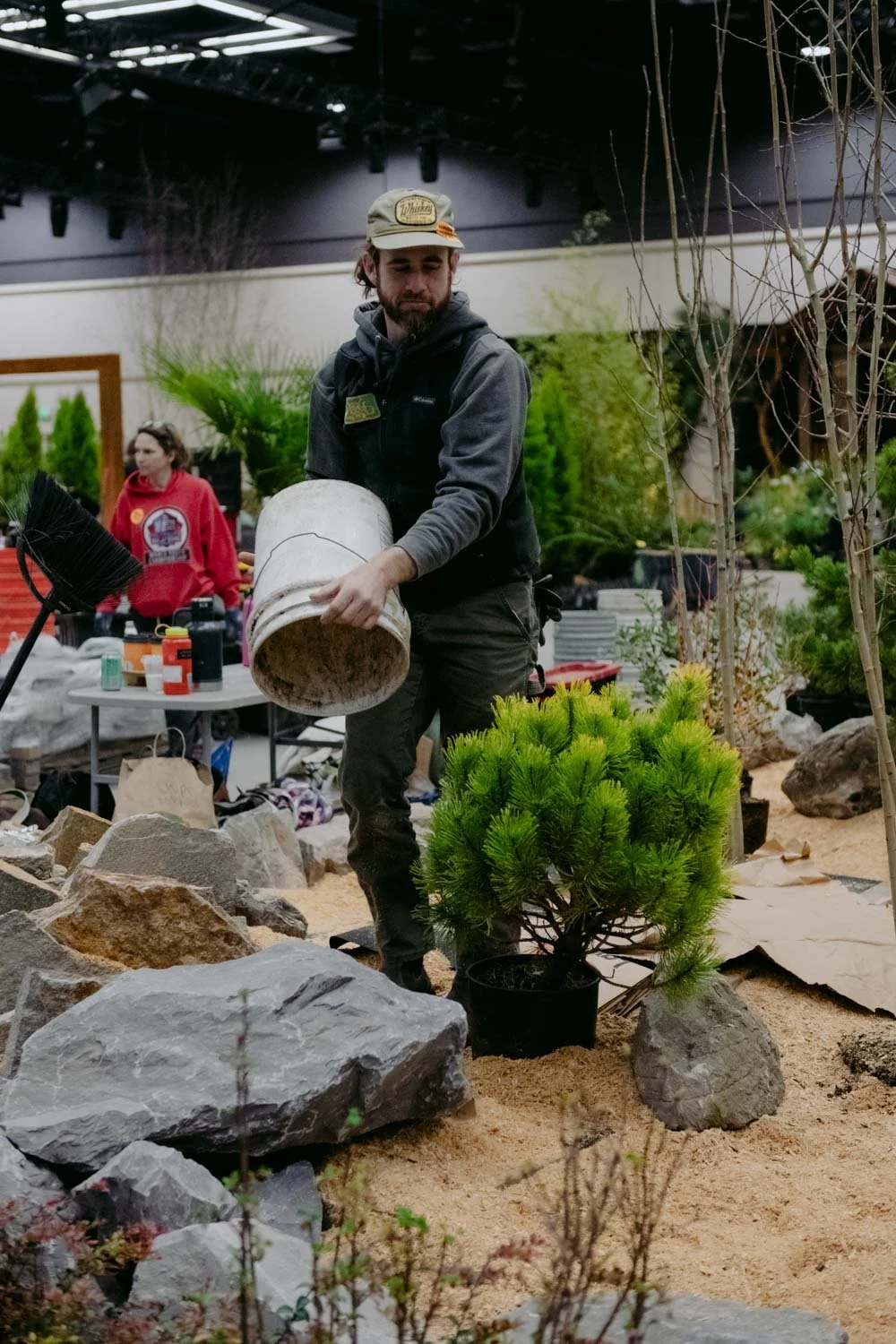
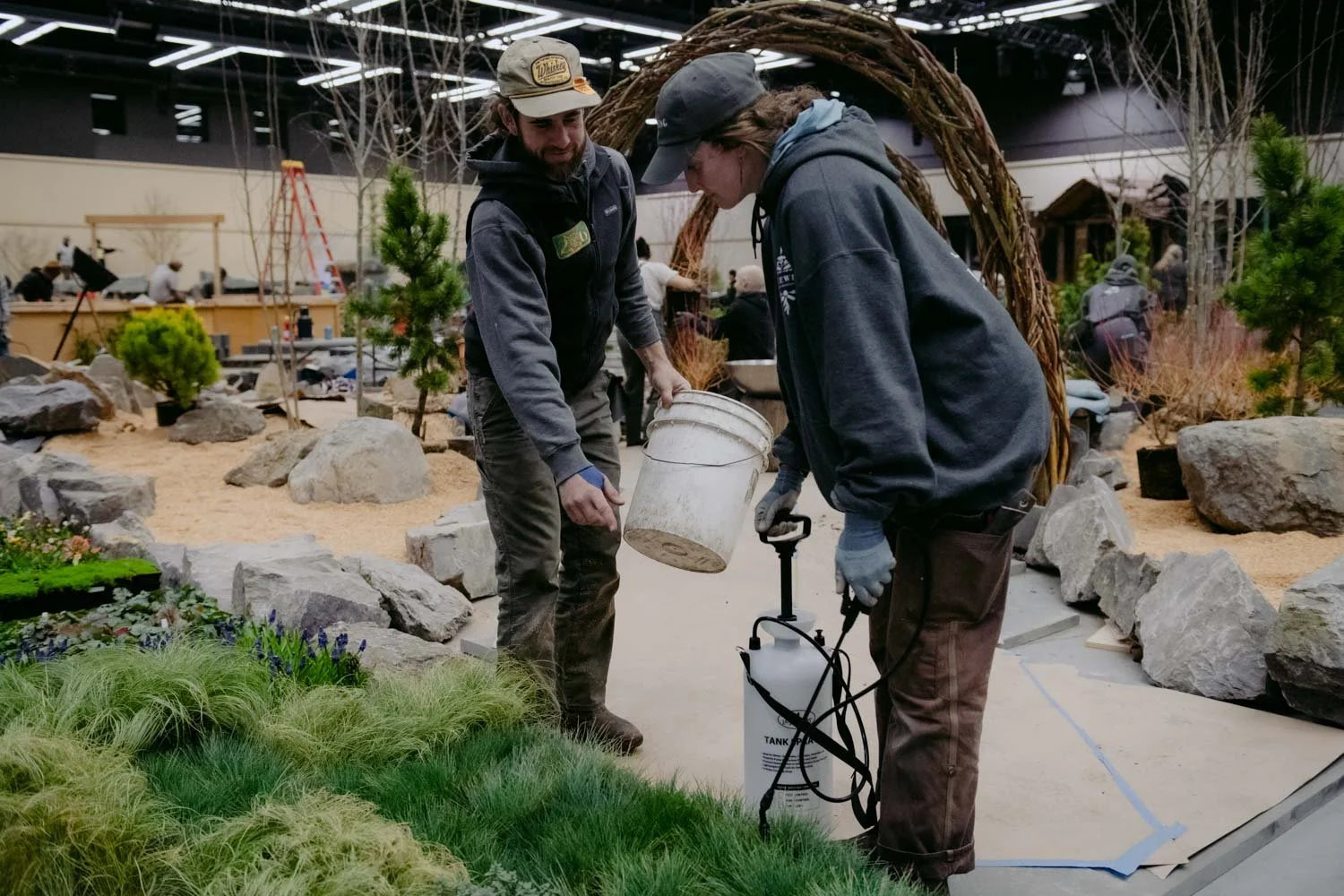
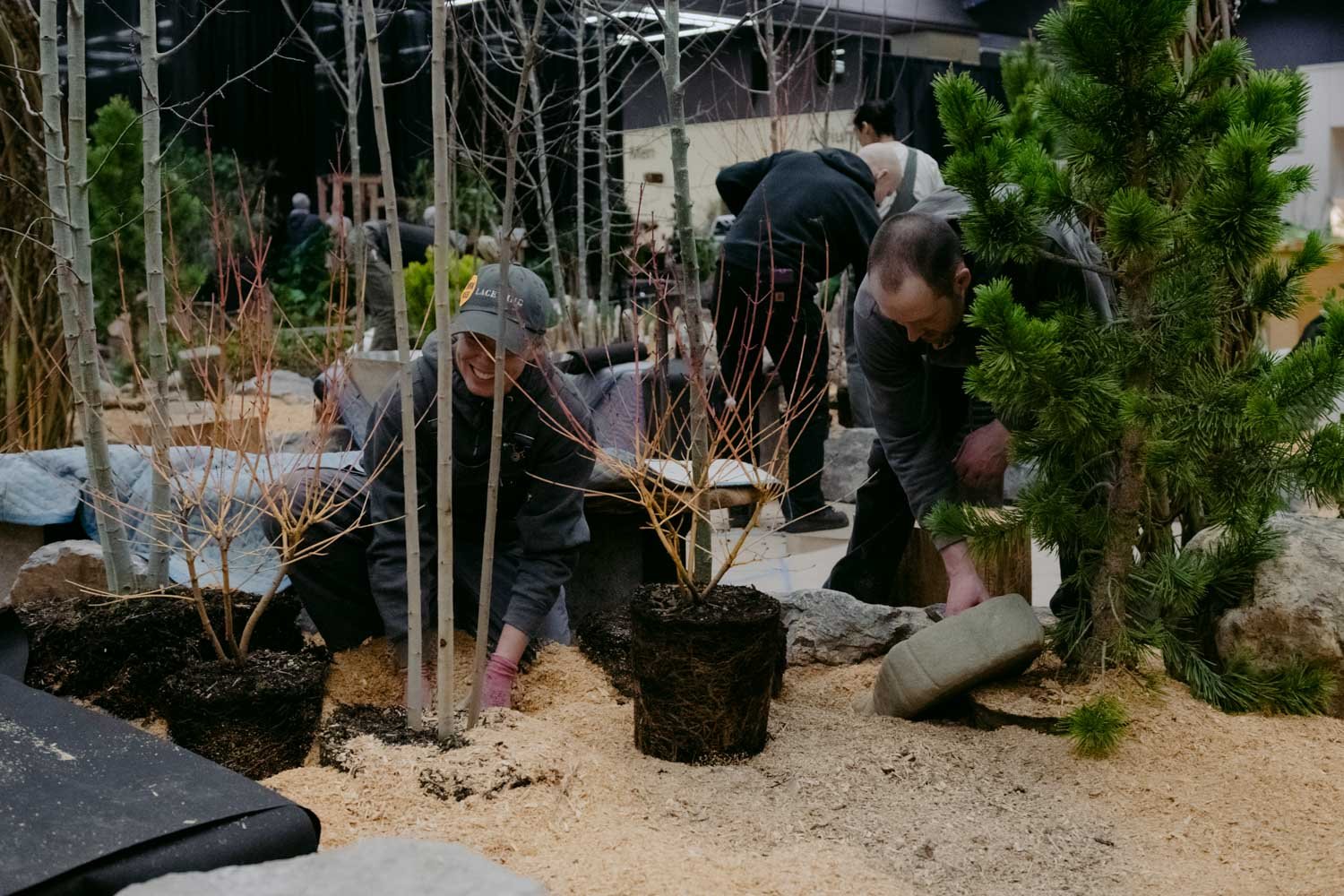
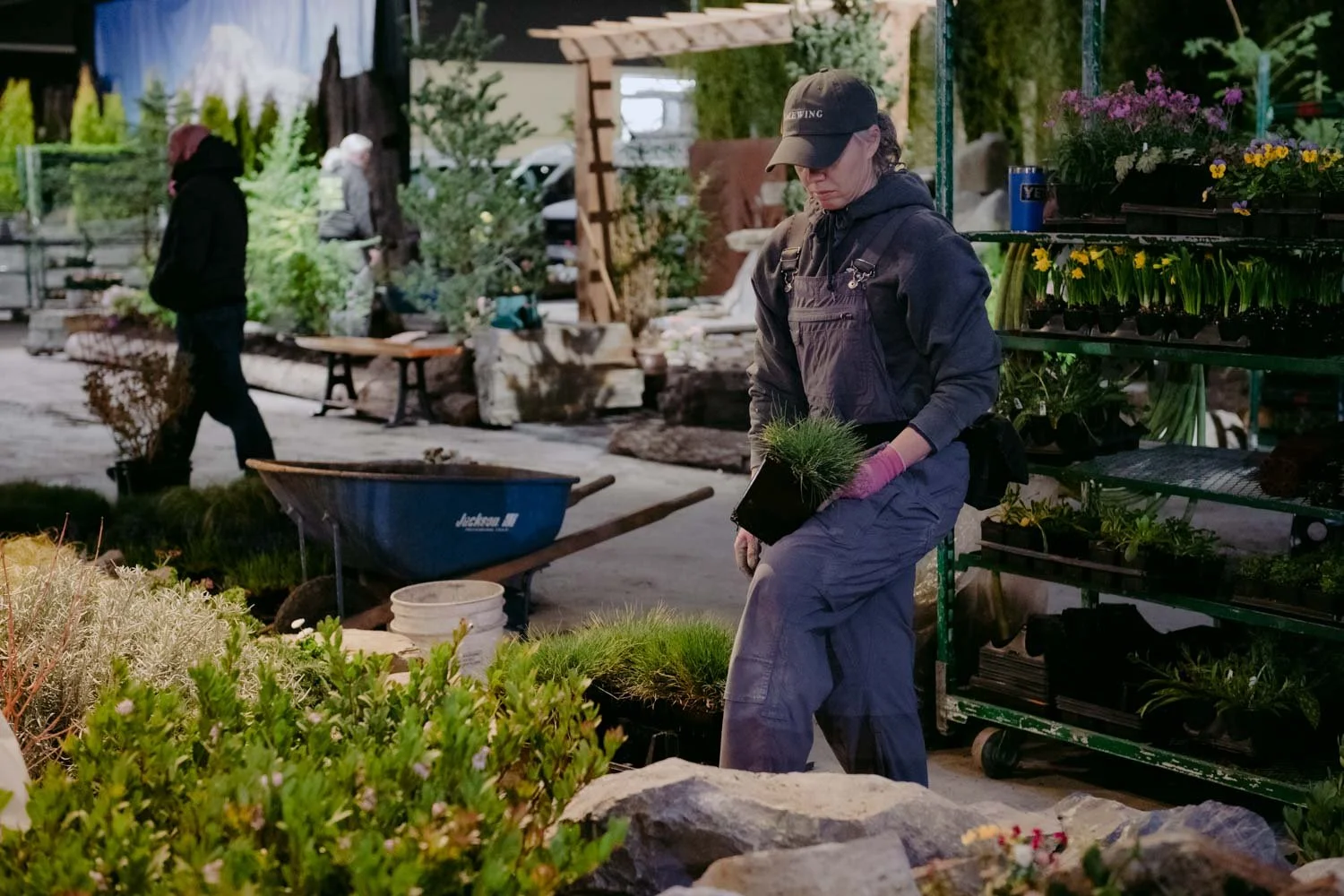
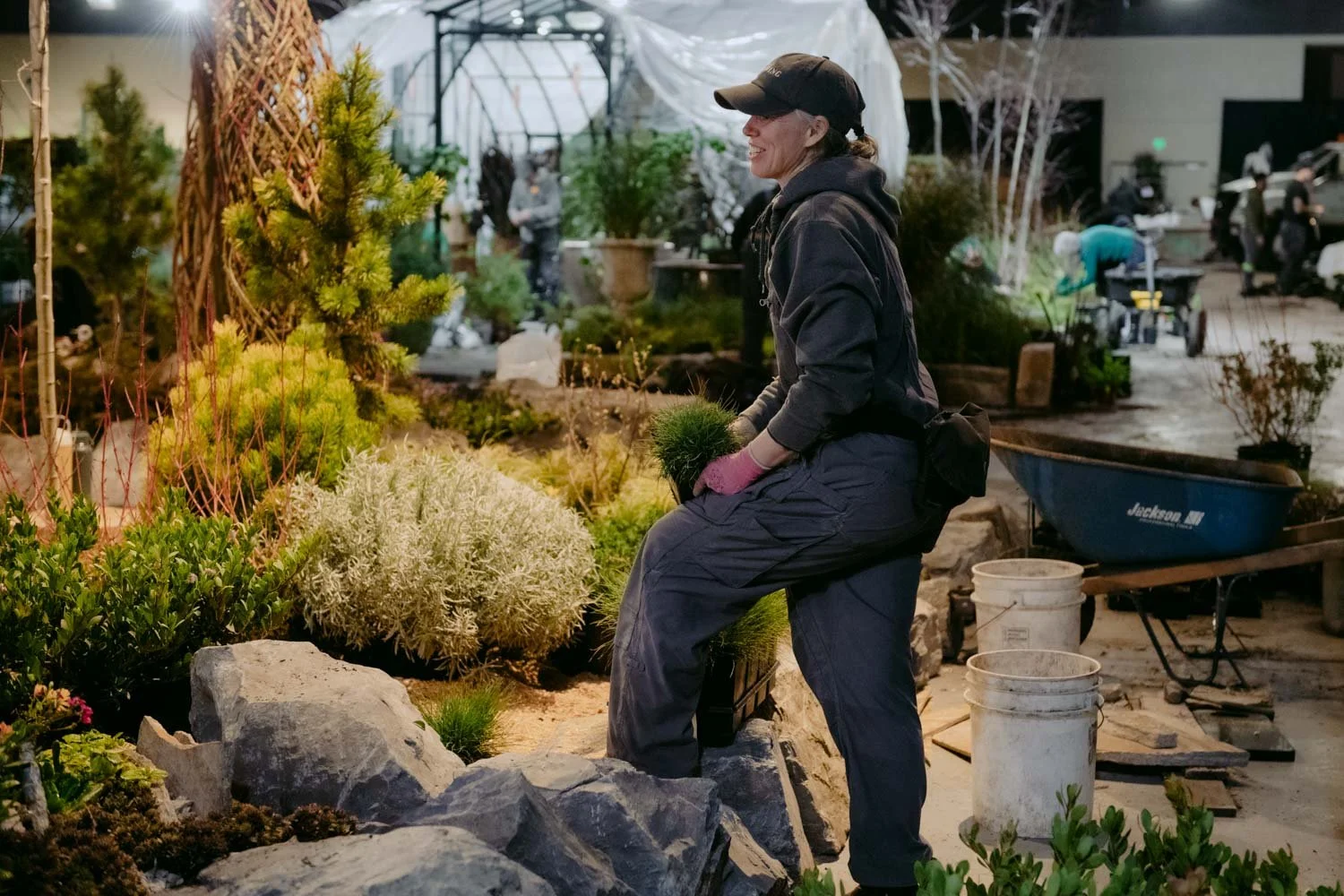
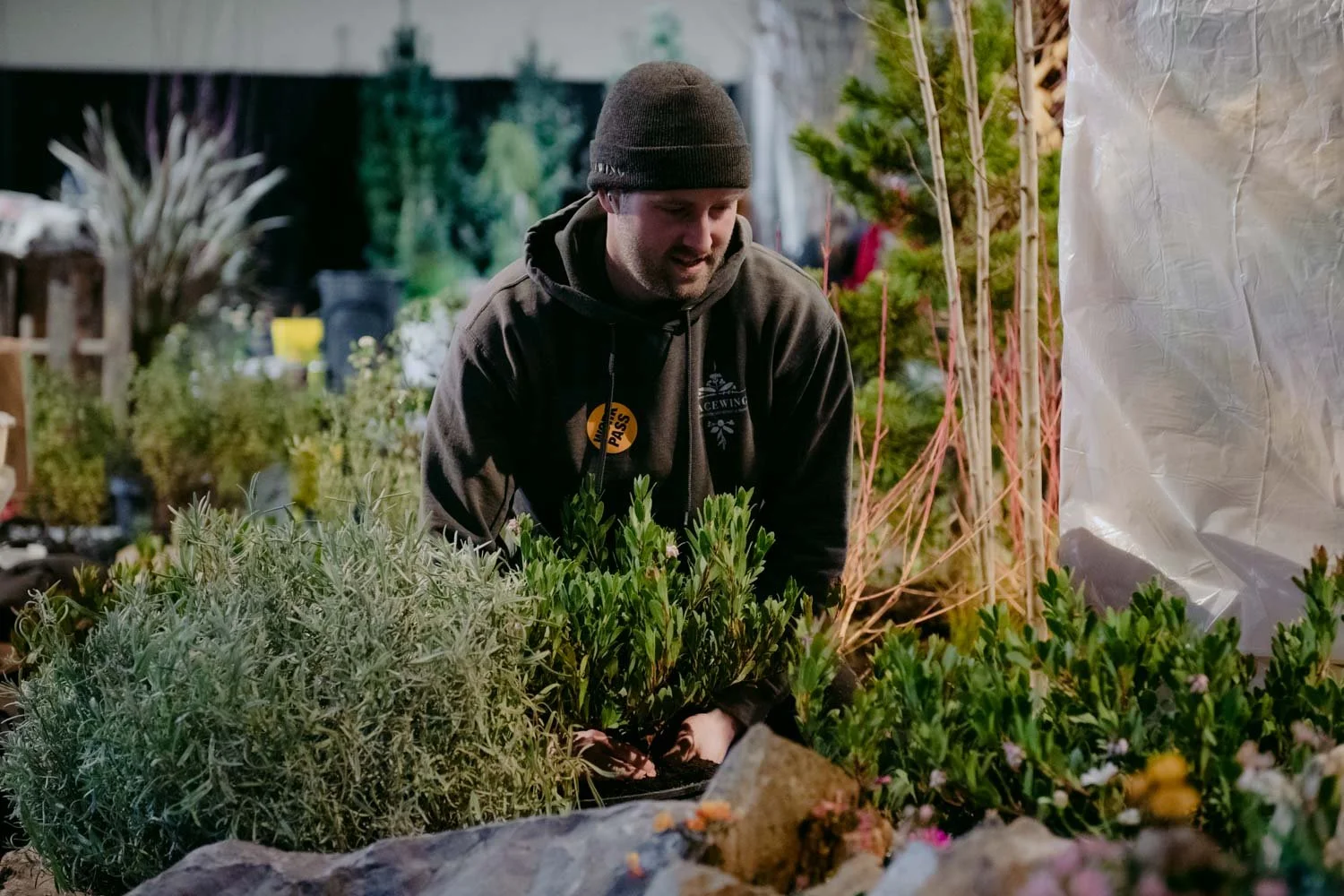
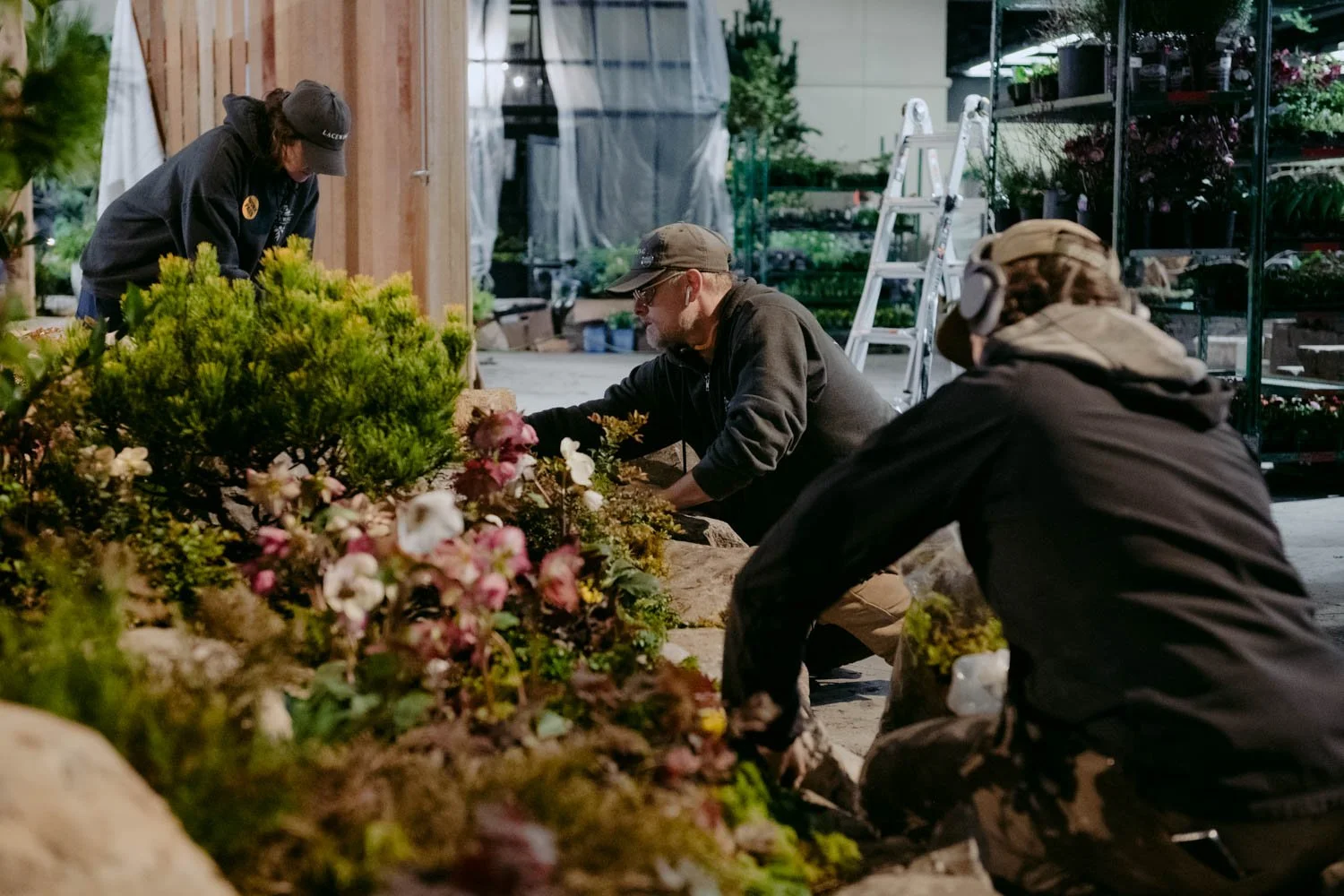
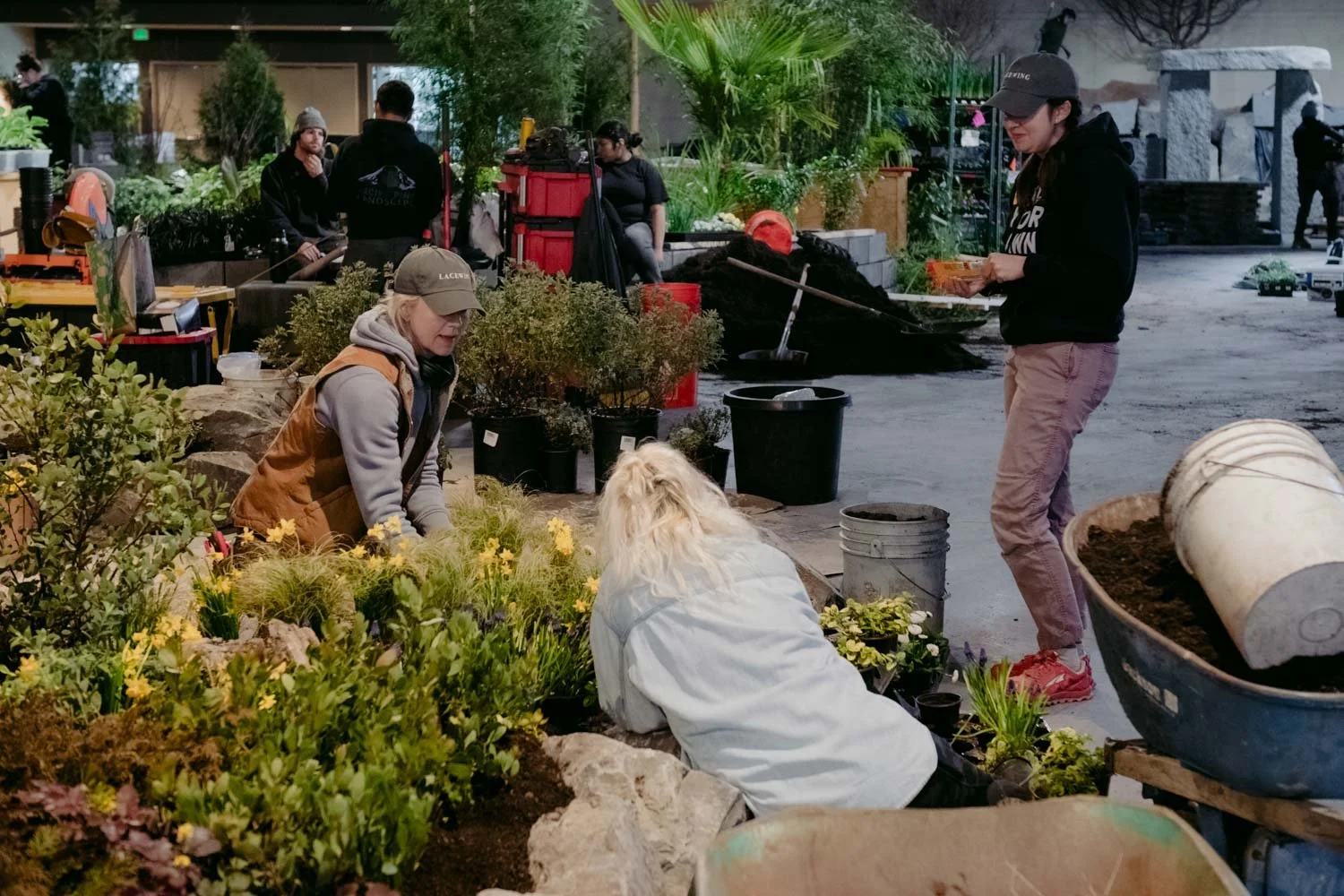
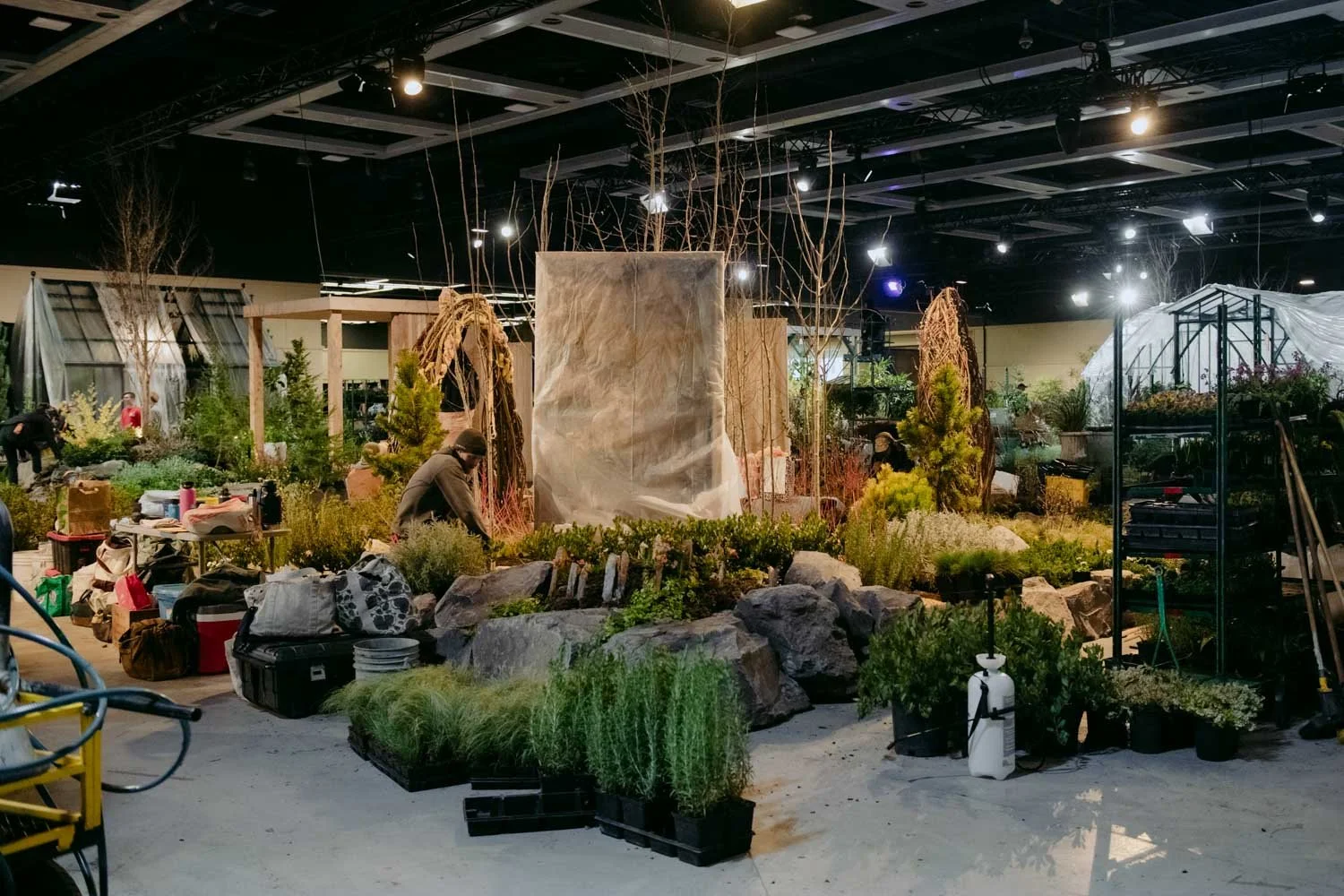
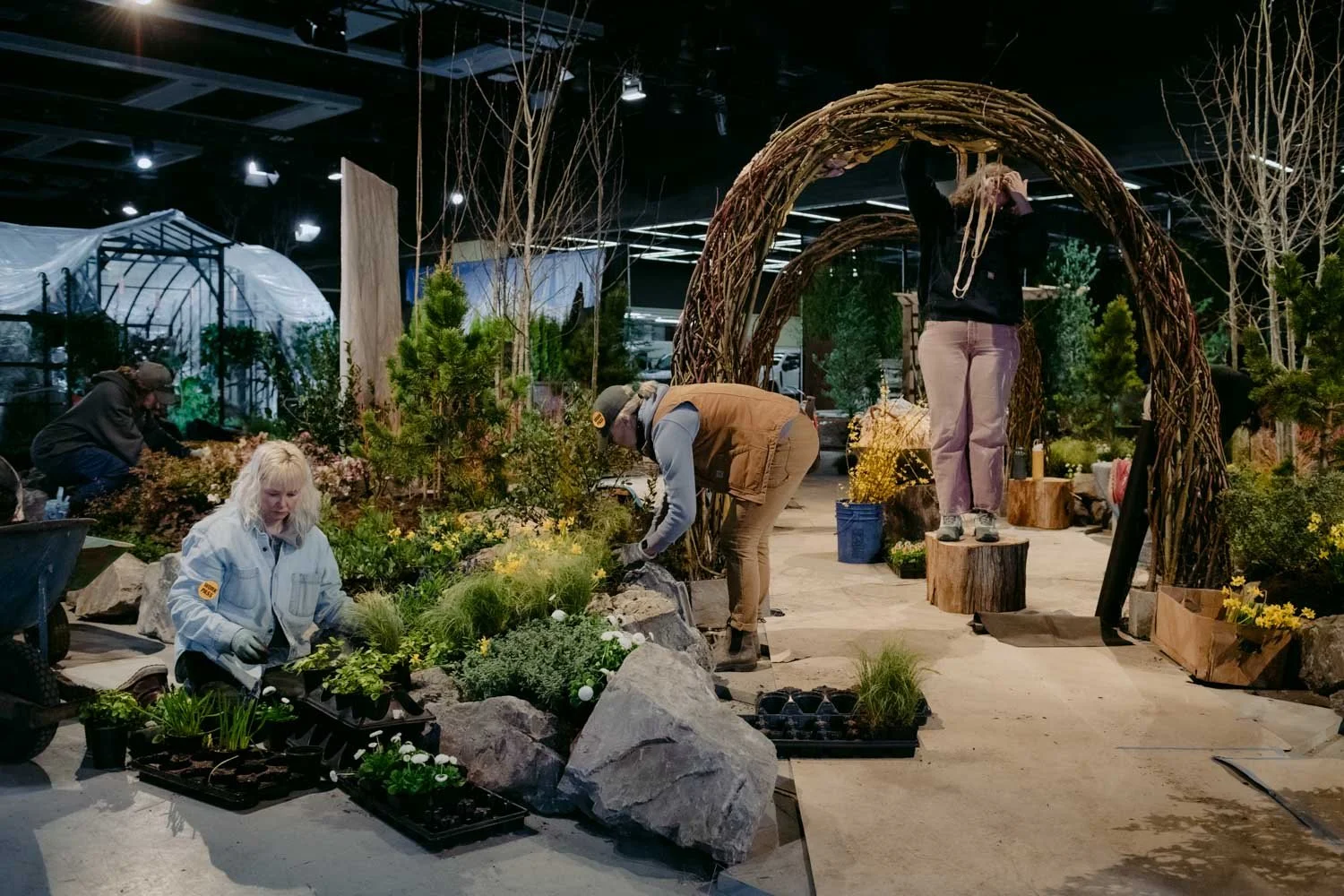
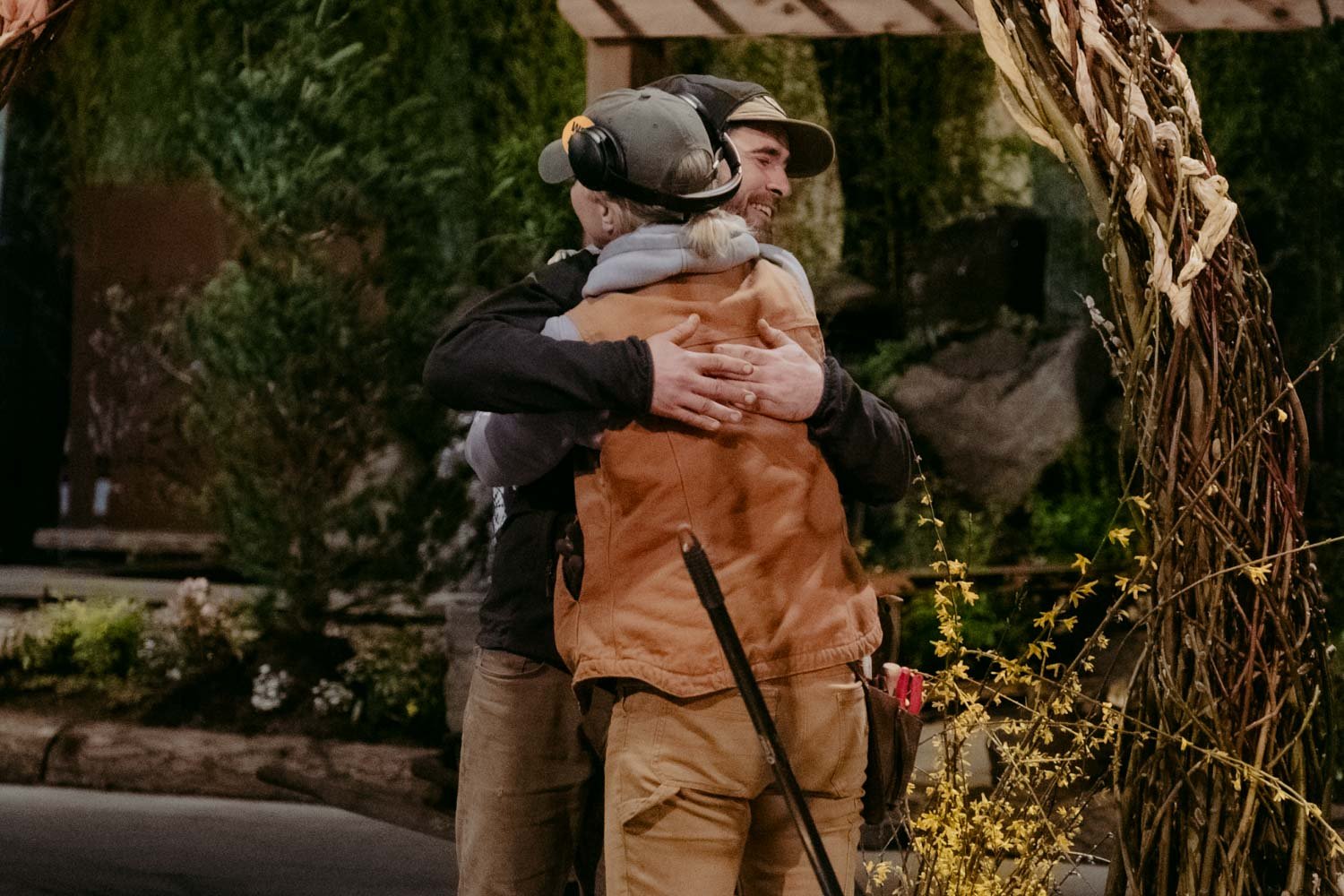
Photos of our work behind the scenes to prepare for the show. This section will be updated as our installation grows. (Photos may take a moment to load)
-
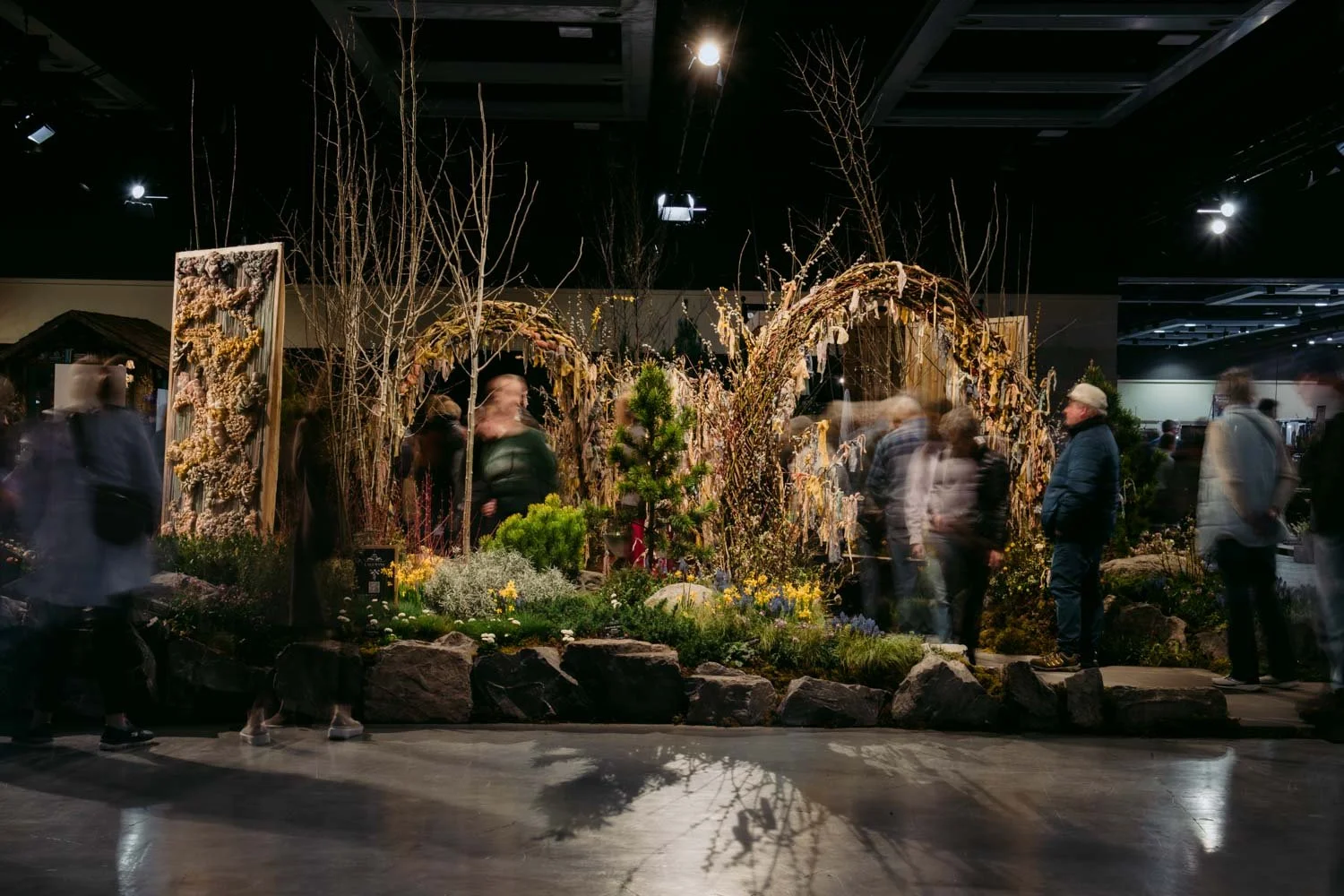
Photos of our installation at the Northwest Flower and Garden Show. (Photos may take a moment to load)
Our Installation





“Shrubscaping promises to be our first real prospect into dangerous gardening. Through shrubscaping, we create gardens and landscapes that emulate shrublands and celebrate their ability to surprise, allure, and exhilarate. Shrubscapes allow us to have deep and resonant conversations with places that we cannot control. They are reminders that the willful non-human Other exists.”
- Excerpt from Shrouded In Light: Naturalistic Planting Inspired by Wild Shrublands by Kevin Philip Williams & Michael Guidi
Images by Kevin Philip Williams & Michael Guidi
Designed by Britt Willey, graphic design and illustration by Liz Forelle, collaboration around the final layout created by the entire Lacewing team.



Grow with us.
Lacewing Fine Gardening and Botanical Design is an ecological landscape design/build company that creates naturalistic outdoor spaces. Our landscape designs celebrate four season interest with a focus on beautiful and beneficial plant choices that support pollinators and create magic in a vase arrangement. Our landscape construction projects prioritize natural materials and building techniques. We are a passionate group of designers, builders, plant nerds, natural stone enthusiasts, dry stack wall builders, and wild floral designers with a deep love and respect for nature. This is our second year at the Northwest Flower and Garden show and we celebrated 10 years of building gardens in November 2025.